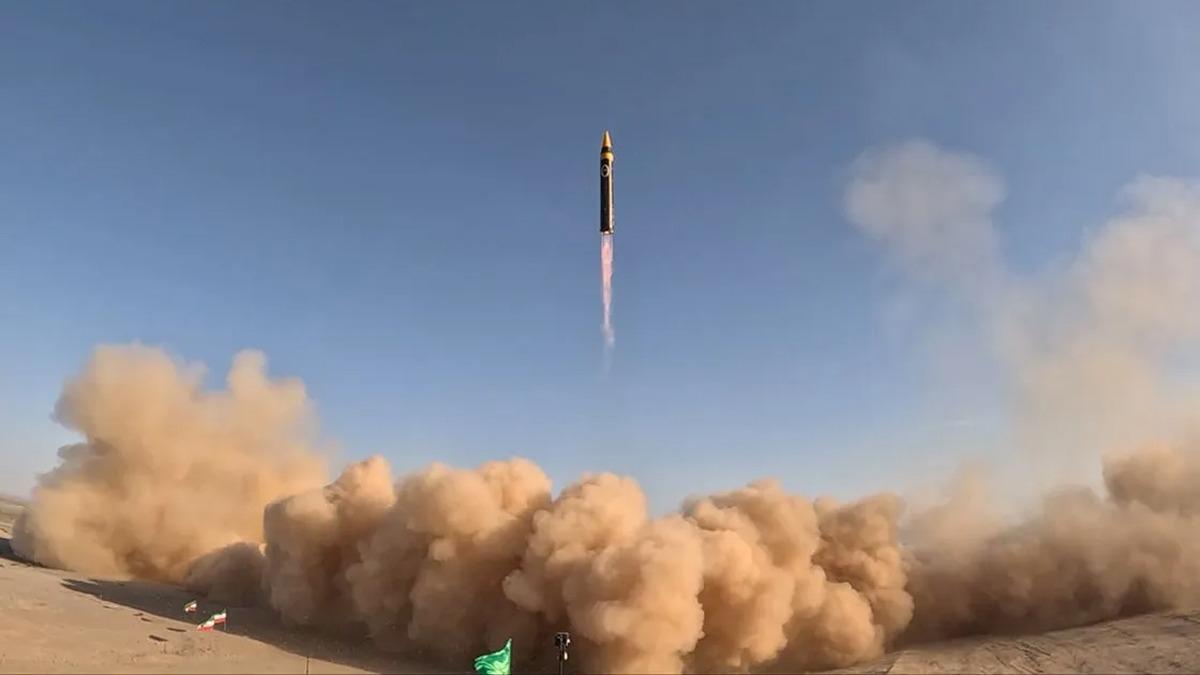
When a newcomer first hears the word "missile" in the context of Iran, the mind conjures images of dramatic launches and dramatic headlines. Yet the reality that U.S. officials are now sharing with journalists is far more nuanced. In an interview with The Wall Street Journal, unnamed U.S. officials disclosed that their latest intelligence assessments place Iran’s missile inventory somewhere between 1,500 and 2,500 units. The range is broad, reflecting the inherent difficulty of counting a clandestine arsenal that is deliberately hidden, frequently moved, and often dispersed across a network of undisclosed sites.
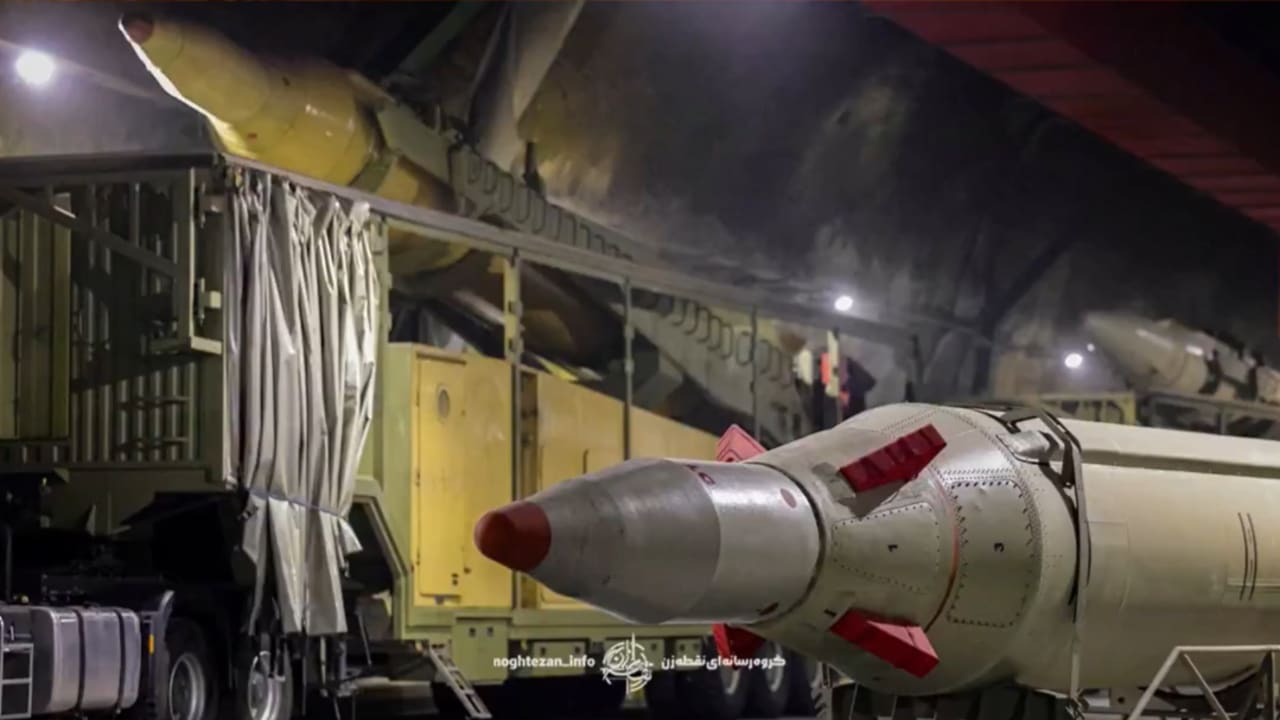
Intelligence work, especially when it concerns weapons of mass destruction, is rarely a matter of exact numbers. The officials themselves admitted that the assessment carries “low reliability” because of the challenges in pinpointing exact stockpiles. Satellite imagery can reveal launch pads and transport convoys, but it cannot always confirm the exact number of warheads stored in underground bunkers. Human sources may provide hints, but they are prone to exaggeration or misinterpretation. As a result, the estimate is presented as a range—1,500 at the low end, 2,500 at the high—rather than a precise figure.
The significance of that range lies not in the arithmetic but in the strategic calculus it forces upon policymakers. A stockpile of 1,500 missiles already places Iran among the world’s more heavily armed regional powers, while 2,500 pushes it closer to the thresholds that trigger deeper diplomatic and military considerations. The uncertainty itself becomes a driver of policy, prompting leaders to plan for the worst-case scenario while hoping the reality may be less dire.
The administration’s contemplation of strikes is not a decision made in a vacuum; it is a response to an intelligence picture that suggests a credible threat.

JUST IN: US intelligence estimates that Iran still has between 1,500 and 2,500 missiles in its arsenal despite months of US and Israeli strikes – WSJ The assessment challenges Trump's claims that Iran's military capabilities have been largely destroyed. US officials say Iran has continued rebuilding its missile stockpile using stored components. The intelligence assessment carries a low level of confidence because it remains difficult to determine how many missiles are ready for launch and how many are in storage. Iran also retains a large number of drones and short-range missiles.
Even as the United States and Israel have stepped up attacks aimed at curbing Iran’s missile capabilities, the intelligence community reports that Tehran continues a “slow production” rhythm. The phrase suggests a deliberate, measured approach: rather than racing to flood the market with rockets, Iran appears to be maintaining a sustainable output that can replenish losses and gradually expand its arsenal.
This persistence matters because it signals a strategic resilience. By continuing to produce missiles despite external pressure, Iran demonstrates an ability to adapt its supply chains, conceal manufacturing sites, and perhaps even innovate in ways that evade detection. For analysts, the steady output undermines any assumption that recent strikes have fundamentally crippled Iran’s missile program. Instead, it paints a picture of a nation that, while constrained, is not on the brink of collapse.
Whether the statement reflected a factual assessment or a political promise, it set a tone that continues to echo in Washington.
According to the same U.S. officials, the missile count estimate has spurred the Trump administration to revisit the possibility of renewed strike options. The mere existence of a sizable missile stockpile—especially one that could potentially reach U.S. bases in the region—creates a strategic imperative to consider preemptive or punitive actions. The administration’s contemplation of strikes is not a decision made in a vacuum; it is a response to an intelligence picture that suggests a credible threat.

US intelligence agencies assess that Iran retains between 1,500 and 2,500 missiles, leaving it with substantial capacity to strike American and allied targets if full-scale war resumes, The Wall Street Journal reported, citing US officials. Officials described the estimate as a low-confidence assessment because of difficulties determining how many missiles Iran has ready to launch or in storage. Despite that uncertainty, they said Tehran retained a formidable arsenal. The rebuilding of Iran’s missile stockpile has factored into Trump administration discussions about whether to resume strikes, the newspaper reported. https://t.co/tsASKedKc1
The ripple effects of the missile assessment extend beyond policy debates. Both U.S. and Israeli military assets are being moved to “safer locations in Israel” as a precaution against Iranian targeting of U.S. bases. This logistical shift underscores the tangible security concerns that arise when a neighboring state possesses a sizable missile force.
Moving assets is a costly and complex operation. It involves redeploying personnel, equipment, and support infrastructure, often under the watchful eye of regional adversaries. The decision to relocate signals that the perceived risk is high enough to warrant a proactive stance, rather than waiting for an incident to force a reaction. For the local populations in Israel, the movement of foreign forces can also have political and social implications, further entangling the regional security tapestry.
The picture that emerges from these fragmented disclosures is one of uncertainty, resilience, and strategic caution. Iran’s missile inventory, estimated between 1,500 and 2,500, remains a focal point for U.S. policymakers who must balance the desire to deter aggression with the risks of escalation. The ongoing, albeit slow, production of missiles suggests that Tehran is not merely a passive holder of weapons but an active participant in maintaining its deterrent.
For a newcomer trying to make sense of the Middle East’s volatile security environment, the key takeaway is that numbers—especially ranges—are more than statistics. They are the raw material for decisions that can shift the balance of power, relocate troops, and shape the rhetoric of world leaders. As the United States continues to monitor Iran’s capabilities, the interplay between intelligence assessments, political statements, and on-the-ground security measures will remain a dynamic, and often uneasy, dance.

Report: Iran is still believed to possess between 1,500 and 2,500 missiles, US officials said, citing US intelligence assessments, with even the lower assessment being over half of its estimated pre-war stockpile. https://t.co/0KgB5ii2YV
The story is far from finished. As satellite technology improves and human intelligence networks evolve, the range of 1,500 to 2,500 missiles may narrow, expand, or be replaced by a more precise count. Meanwhile, diplomatic channels, sanctions, and regional alliances will continue to influence how both Tehran and Washington navigate this precarious landscape. For now, the estimate serves as a reminder that in the world of covert arsenals, certainty is a luxury, and strategic patience is a necessity.