The silence that follows a collision is often louder than the impact itself. For Trevor Galbraith, that silence lasted nearly two years before it was broken by the gavel of justice. On November 27, 2026, the 43-year-old driver stood in court, facing the consequences of a night in August 2025 that would end two lives and dismantle a family forever. He was sentenced to ten years in prison, with a non-parole period of eight years, after pleading guilty to dangerous operation of a vehicle causing death while intoxicated.

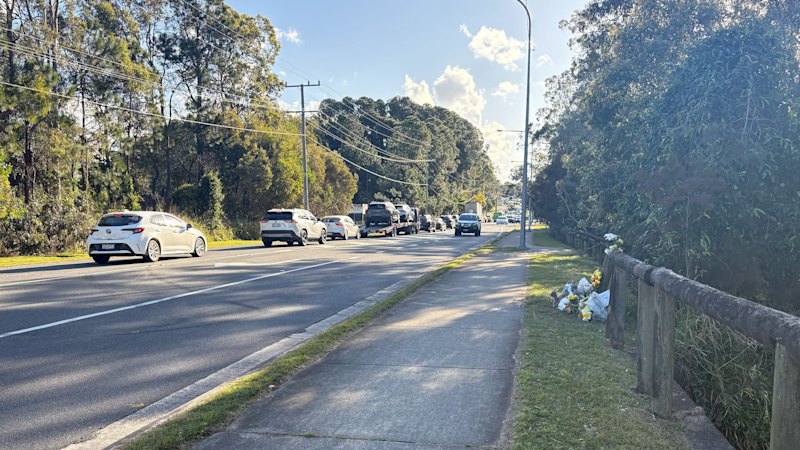
The story begins not in the courtroom, but on Green Road in Regents Park. It was August 1, 2025, when Braiden Timmins, 33, and his young son, Hendrix-hemi Te Rongomau King, were walking along the roadside. They were simply moving through their day, unaware that their path was about to intersect with a vehicle driven by a man who had already crossed every line of safety and sobriety. In a single, violent moment, the routine walk ended in tragedy. The father and son were struck and killed instantly.
To understand the magnitude of what happened that night, one must look at the state of the driver. Prosecutors revealed that Galbraith had consumed an staggering 35 standard drinks. This is not merely a number; it is a physiological catastrophe. To put it in perspective, a "standard drink" contains roughly 10 grams of pure alcohol. Thirty-five of these places a person far beyond any conceivable threshold of impairment. When Galbraith eventually got behind the wheel, his blood-alcohol content was measured at four times the legal limit. He was not just drunk; he was incapacitated, his judgment and motor skills obliterated by poison.
Their lives were cut short in the prime of Braiden’s adulthood and the beginning of Hendrix-hemi’s.
But intoxication was only half the equation. The prosecution argued that Galbraith was also distracted by his phone while driving. In the chaos of a mind clouded by extreme alcohol consumption, attention fractures. He did not see the pedestrians. He did not realize he had collided with them until long after the damage was done. The lack of immediate awareness speaks to a profound disconnect from reality, a hallmark of severe intoxication where the brain fails to process external stimuli correctly.
The timeline of events leading up to the crash reveals a pattern of escalating recklessness. According to reports, Galbraith had been drinking heavily prior to the incident. This detail, while occurring after the tragedy, underscores a lifestyle or mindset that viewed alcohol consumption as continuous and unregulated. It paints a picture of a man whose relationship with intoxication was not occasional, but pervasive. Yet, it was the actions on August 1st that carried the ultimate weight.
When the case finally came to light, Galbraith offered an apology. "I am sincerely sorry and will be for the rest of my life," he said. These words, while necessary, carry the heavy burden of hindsight. They acknowledge the permanence of the loss. For Braiden Timmins and his four-year-old son, there is no future to apologize to. Their lives were cut short in the prime of Braiden’s adulthood and the beginning of Hendrix-hemi’s. The age gap between the victim and the perpetrator highlights the vulnerability of those on foot against the machinery of a car driven by someone who cannot control it.
For the families left behind, the legal proceedings were a slow march toward closure. Peter Geary, representing the victims' side, spoke to the raw emotion of the outcome. "[The] reality is that both of them lost their lives because somebody did the wrong thing," Geary stated. This framing strips away complexity. There were no mechanical failures, no sudden medical emergencies, no acts of God. There was only a choice made by a man who chose to drive after consuming enough alcohol to kill him, metaphorically speaking, let alone endanger others.

The sentencing, therefore, was not just about punishment; it was about recognition. By handing down a ten-year sentence, the court acknowledged the severity of the breach. Eight years behind bars means Galbraith will be released at age 51, having served less than half his term. For the Timmins-King family, this is a fraction of the time they have spent in grief. But for society, it serves as a stark reminder of the stakes involved in operating a vehicle under the influence.
Geary concluded with a sense of finality. "But, when you look at the picture, to us, it is justice done." Justice, in this context, is not about erasing the past. It cannot bring back Braiden or Hendrix-hemi. It is about establishing accountability. It is about ensuring that the narrative of the tragedy does not fade into statistics, but remains anchored in the specific, preventable choices that led to their deaths.
As Galbraith leaves the courthouse to begin his sentence, the road in Regents Park remains quiet. The physical scars of the crash may heal, but the social scar remains open. This case serves as a grim testament to the dangers of combining alcohol, distraction, and speed. It reminds drivers that the wheel is not a toy, nor is it a place for negligence. Every drink consumed reduces the margin for error. Every second spent on a phone divides attention. And every pedestrian on the road deserves the assurance that those sharing the pavement are sober, focused, and respectful of the fragility of human life.
The story of Trevor Galbraith is now part of the legal record, a cautionary tale etched in ten years of confinement. It is a story of a father and son taken too soon, and a driver who paid the price. But more importantly, it is a story about the enduring need for vigilance on our roads, and the absolute necessity of never mixing alcohol with the responsibility of driving.