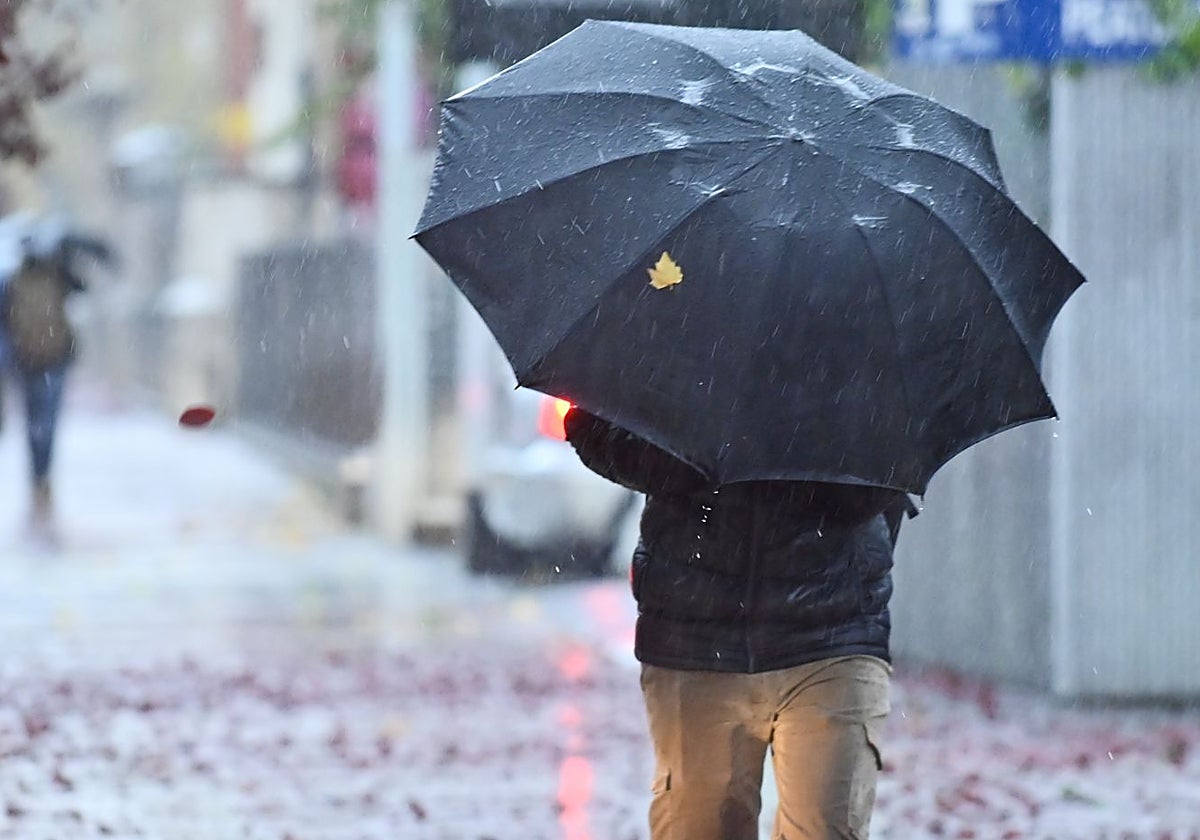
The sky over the southern highlands of Castilla y León darkened on a day that became a distinct emergency, marked by a rare and terrifying designation: a red alert.

The Spanish State Meteorological Agency, AEMET, declared a red alert for the southern part of Ávila province. The forecast was stark and specific: up to 120 liters of rain per square meter falling within a 12-hour period. This event was part of a weather system that brought intense rainfall to the region. The reach was extensive, with neighboring provinces like Salamanca, Zamora, and northern Cáceres simultaneously under their own weather warnings, creating a broad belt of atmospheric instability across the region.
In the face of this incoming deluge, local leadership moved quickly to prepare for impact. The territorial delegate of the Junta de Castilla y León in Ávila, José Francisco Hernández Herrero, assessed the worsening weather forecasts and the rapid increase in river flows. The delegate made the critical decision to declare 'situation 2' of the Inuncyl flood protection plan. This is a high-level operational status that mobilizes resources and puts emergency services into a heightened state of readiness. As Herrero stated in a formal announcement, the regional government had suspended school activity in thirty-two municipalities in the south of Ávila. This suspension was a mandatory measure to protect families from the danger of travel.
There is a reason authorities were particularly vocal about the flood risk in this specific region: the land itself was no longer resilient.
The logistical ripple of this decision was felt by students and families across the region. The authorities suspended the entire transport network that feeds them. Thirty-two school transport routes were cancelled, leaving 943 students without their usual mode of transport. In total, ten schools in the affected area had their classes suspended. The geographic scope of this protection effort covered a population of approximately 49,000 residents in Ávila. For these families, the day meant staying home, because the combination of extreme weather and vulnerable terrain made travel unsafe. The decision to close schools in thirty-two municipalities was a precautionary measure designed to keep children out of a landscape that was actively transforming into a flood zone.
There is a reason authorities were particularly vocal about the flood risk in this specific region: the land itself was no longer resilient. Recent summer wildfires had stripped large swathes of the terrain of its natural vegetation, leaving the soil vulnerable to erosion. Normally, forests and shrubs act as a sponge, soaking up rain and slowing runoff. In their absence, the rain did not soak into the ground; it ran. This rapid runoff exacerbated the threat of river overflows, turning the 120-liter forecast into a physical threat to communities living along waterways. The red alert was not just about water volume, but about the speed at which it would arrive. The scars of the summer were now dictating the shape of the emergency, a cycle of compound disasters that highlights the impact on the Spanish landscape.
While the focus was on Ávila, the entire region was on guard. Yellow alerts were maintained in Salamanca and Zamora, indicating high probability of adverse weather. This layered approach to weather management shows a system under stress, juggling different levels of risk across provincial lines. For the residents of northern Cáceres and the other warning zones, the message was clear: the weather was a force majeure that respected no borders. The regional coordination ensured that no single community was fighting the weather alone.
As the twelve-hour window for the extreme rainfall began to tick away, the reality of the red alert settled in. The suspended classes in ten schools and the cancelled routes for nearly a thousand students were signs of a system working exactly as it was designed to. The activation of level 2 of the Inuncyl plan by José Francisco Hernández Herrero had provided the framework for that immediate action. Now, the focus shifts from prevention to monitoring and recovery. The region now faces the physical task of assessing the impact of the rainfall.