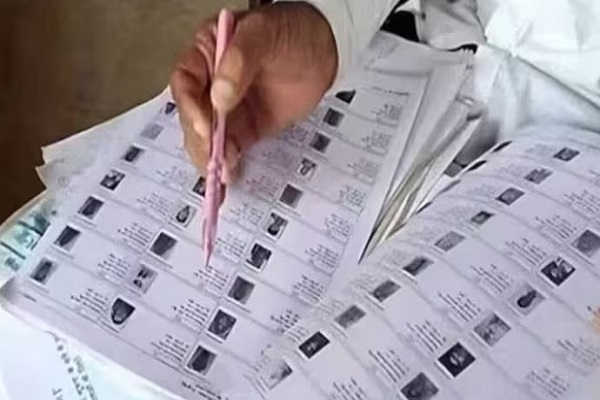
For most people, a voter ID card is just a piece of plastic that sits in a wallet, a quiet artifact of citizenship. But for the Election Commission of India (ECI), the list behind that card is a living, breathing nervous system of the country. It is the definitive record of who is allowed to choose their government. When that list is wrong, it doesn’t just mean a missed name; it means a suspended right. That is why the ECI’s decision this week carries such weight. On Friday, November 6, the Commission issued a stark order: it is time to find the people who fell through the cracks of a massive administrative update, or face the risk of them being gone for good.

To understand why the ECI is acting with such urgency, you have to understand the process they are running: the Special Intensive Revision (SIR). Think of it as a massive, nationwide audit. For months, officials have been scrubbing the electoral rolls to clean out errors, remove deceased voters, and eliminate duplicates. As part of this purge, the system flags specific categories of data that look suspicious. These are the ASDD cases: voters marked as Absent, Shifted (migrated), Dead, or Duplicate.
The problem is that a flag is not a verdict. The system is a machine, and machines make mistakes. A name might be marked "Dead" because of a clerical error. A family might have moved, making their entry "Shifted," but they are still citizens of that state, not just ghosts in the machine. For these individuals, the consequence of the SIR is severe: their names were dropped from the Draft Electoral Rolls. They were effectively locked out of the voting process while the system did its cleaning. The ECI has now realized that thousands of eligible citizens are stuck in this digital limbo, and without intervention, they will remain invisible to their own democracy.
For the people in these areas, this week is their last chance to prove they are real.
The ECI did not issue this directive to the country at large; the problem was most acute in specific regions. The order targets the Chief Electoral Officers (CEOs) in seven states and territories: Delhi, Maharashtra, Haryana, Andhra Pradesh, Jharkhand, Telangana, and Nagaland. For the people in these areas, this week is their last chance to prove they are real.
The Commission has directed these officials to establish a final monitoring mechanism. This is not just a suggestion to "try harder." It is a mandate to ensure that no eligible elector is deprived of the opportunity to be included in the Final Electoral Roll, while simultaneously guarding against the opposite error: the inclusion of duplicates. It is a balancing act of democratic integrity, ensuring that the roll is as accurate as possible before it becomes the final word.
How do you contact a person who the system thinks is dead or has moved? The ECI has laid out a flexible playbook for the Booth Level Officers. These are the ground-level workers who know the neighborhoods. The Commission has authorized them to use various communication methods to reach out to these missing voters.
Publishing booth-wise lists of the dropped voters allows these officers to work with surgical precision. They aren't knocking on doors at random; they are looking at a specific list of names for their specific polling station and going after them directly. This transforms the SIR from a top-down database cleanup into a bottom-up rescue mission.


#WATCH Delhi: senior Congress leader Digvijaya Singh says, "Will democracy survive in this country or not? A healthy democracy requires a healthy and impartial Election Commission. If the Supreme Court does not even listen to us, then will democracy survive? The Election Commission has also taken voter registration into its own hands. We cannot accept this behaviour. Our biggest issue is voter theft, and our second biggest issue is donation theft... Our Satya Sanatan Swabhiman Yatra is on these 2 points..."
The ECI’s decision is a reminder that the state’s list of voters is a promise made to the individual, and that promise is being honored by giving them one last chance to be seen.