
On November 19, 2026, the skyline of Shenzhen, China, served as the backdrop for a diplomatic encounter that felt less like a standard summit and more like a pivot point for the century. There, in the shadow of China's technological prowess, President Xi Jinping sat across from U.S. President Donald Trump and Russian President Vladimir Putin. It was a tableau of the modern era: three men representing the tectonic plates of global power, brought together by the necessity of a shared, albeit uneasy, stability.
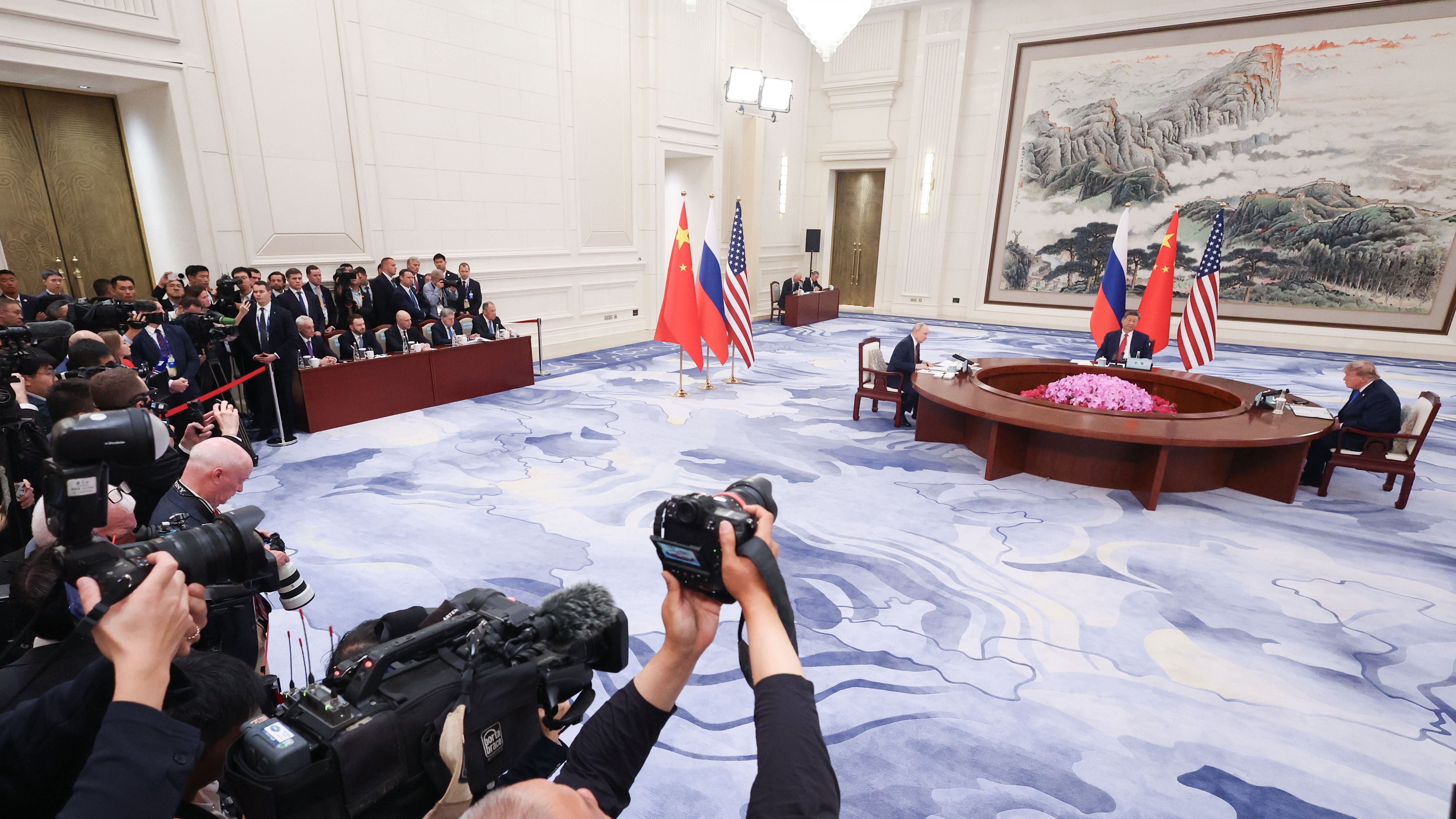
For China, the host nation, the gathering was not merely a diplomatic courtesy but a calculated effort to reshape the global order. The framing of the event was clear: an attempt to preserve world peace and promote strategic stability in relations between the great powers. This wasn't just about managing disagreements; it was about establishing a framework where the most powerful actors on the planet could communicate without the immediate threat of escalation. The centerpiece of this effort was the emergence of a document the participants collectively termed a "Peace Declaration." This closing statement was intended to signal a unified front, a moment where the friction of competing interests might be smoothed over by the shared language of international security.
President Xi Jinping did not stop at the signing of a single document. Characterizing the meeting as "historic," Xi moved to institutionalize the moment. He proposed the establishment of a regular exchange format among the three powers, suggesting that the dialogue held in Shenzhen should not be a fleeting anomaly but a recurring mechanism. By proposing these regular exchanges, Xi sought to create a permanent channel of communication—a diplomatic safety valve designed to prevent the miscalculations that so often lead to global volatility. The goal was to move from a state of reactive crisis management to one of proactive, structured engagement.
The meeting was marked by a profound irony that observers could not ignore.
Yet, beneath the formal dignity of the Peace Declaration, the air remained thick with the complexities of ongoing violence. The meeting was marked by a profound irony that observers could not ignore. While the leaders spoke of peace, the realities of their respective foreign policies remained in stark opposition to the spirit of the declaration. President Xi found himself mediating between two figures whose actions have defined the current era of instability.
On the other side of the table sat Vladimir Putin, whose presence brought the immediate, visceral reality of the war in Ukraine into the room. Despite the collaborative tone of the Shenzhen summit, the fundamental driver of European instability remained unchanged: Putin’s refusal to end the attacks on Ukraine. This refusal creates a jarring dissonance between the "Peace Declaration" signed in China and the kinetic reality of warfare on the ground. The declaration seeks to build a future of strategic stability, but that future is being actively undermined by the refusal to conclude existing hostilities.
As the leaders departed Shenzhen, the world was left to weigh the promise of the Peace Declaration against the stubborn persistence of conflict. The proposal for regular exchanges offers a roadmap for future diplomacy, yet the effectiveness of such a mechanism depends entirely on the willingness of its participants to align their actions with their words. For now, the Shenzhen meeting stands as a moment of intense, highly orchestrated hope, even as the ghosts of the Iran war and the ongoing invasion of Ukraine haunt the edges of the agreement. The question remains whether this historic meeting is a genuine turning point or merely a temporary pause in a much longer, more violent struggle for global dominance.