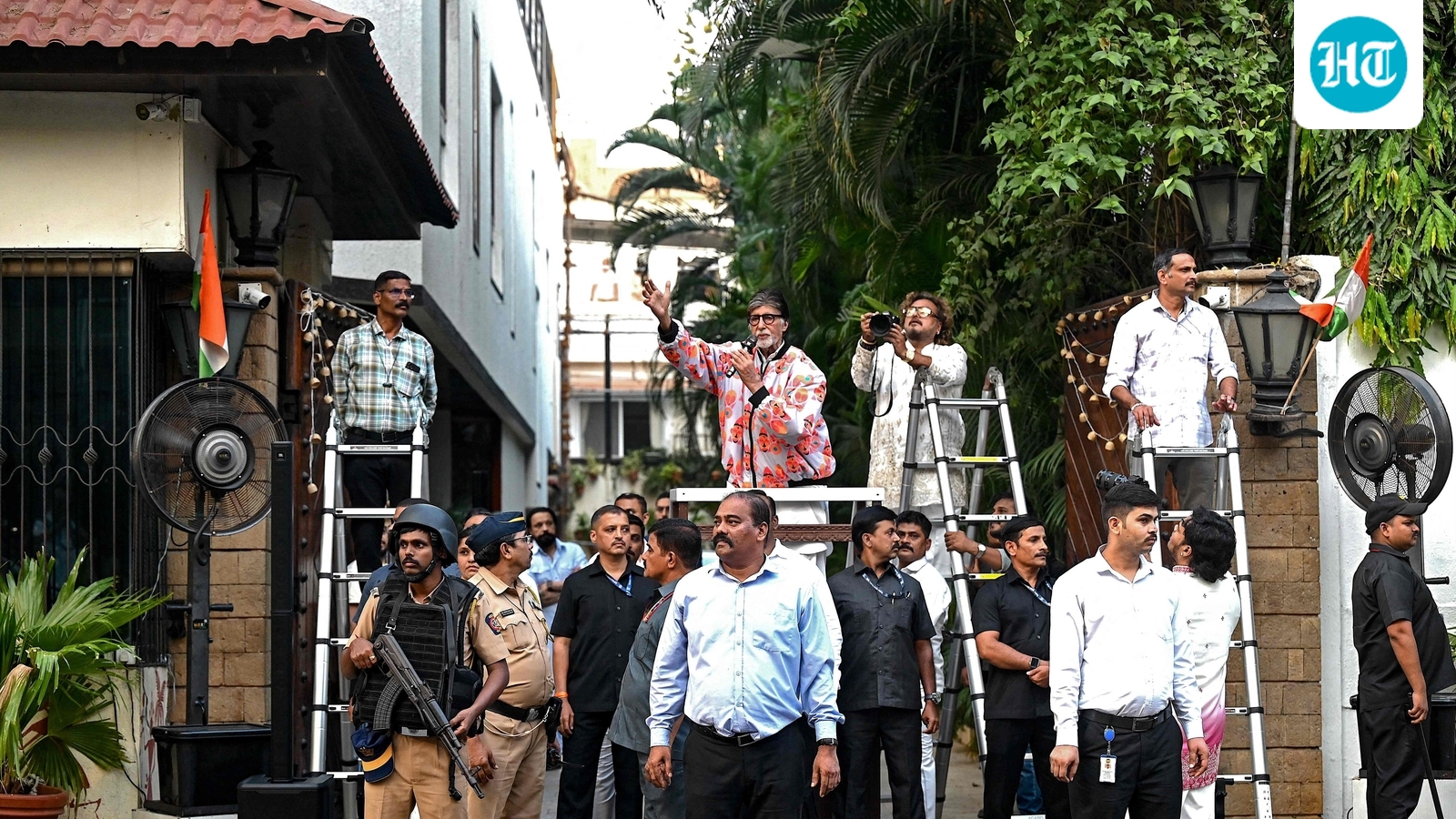
The morning of November 12, 2026, began like any other for the city of Mumbai, but it would soon be interrupted by a communication that bridged the gap between celebrity culture and civic security. An email, written in the Devanagari script of the Hindi language, arrived in the digital inboxes of two distinct figures in the Indian entertainment industry: the legendary Bollywood actor Amitabh Bachchan and the rising Punjabi singer Diljit Dosanjh. This was not a standard piece of correspondence; it was a threat. The message was specific, targeting Bachchan's private residence, a place of relative seclusion for one of the most recognized faces in cinema history. By naming his bungalow, the sender attempted to elevate the stakes of a digital message into a physical danger, forcing a collision between the private lives of public figures and the responsibilities of urban safety. The use of the native script signaled a localized intent, a threat crafted not just for a global audience but specifically for the cultural and linguistic landscape of the region.

What made the threat on November 12, 2026, particularly complex was its scope. The email did not limit itself to individual personalities. It expanded the list of potential targets to include the Mayor’s office, a symbol of civic governance and administrative authority. By including the Mayor’s office, the sender was asserting a challenge to the state’s ability to maintain order, suggesting that even the halls of municipal power were not beyond the reach of their intent. The list did not stop at government; it extended to the financial and legal pillars of the city. Banks and courts were mentioned, representing the systems of commerce and justice that keep Mumbai’s economy and society functioning. To threaten these institutions is to threaten the daily rhythm of millions of residents who rely on the stability of their savings and the fairness of their legal recourse. Furthermore, the airport and the Mahalaxmi Racecourse were added to the list of targets. The airport represents the city’s primary gateway, a point of mass transit and international connection, while the Mahalaxmi Racecourse is a landmark recreational space. By grouping these diverse locations together, the email painted a picture of a city under siege, where no single sector of public life was considered safe.

Mumbai was placed on high alert after a bomb threat email named multiple locations, including the airport, Mayor’s office, Amitabh Bachchan’s residence. Authorities are investigating the threat, while the sender’s identity remains unknown. #MumbaiNews #BombThreat #AmitabhBachchan #MumbaiPolice #BreakingNews https://t.co/1NtjRcWuDe
The threat reached a particularly futuristic and disquieting note when it shifted focus to Diljit Dosanjh. The email claimed that an upcoming concert by the singer in Mumbai would be attacked using an 'iPhone bomb.' This detail stood out for its technological specificity, referencing a device that is now a ubiquitous part of modern life. The concept of an 'iPhone bomb' suggests a threat that leverages personal technology for malicious ends, blurring the line between a common consumer item and a potential weapon. For Dosanjh, who had been gaining traction in the Hindi-speaking market, this threat targeted not just his career but the very venue where he was planning to perform. It was a direct assault on a future event, an attempt to disrupt the anticipation of a concert by introducing the fear of a device-based attack. The juxtaposition of a high-profile musical performance with the threat of a smartphone-based explosion created a stark narrative tension.
The response was swift, reflecting the standard protocols for handling credible threats to public figures and infrastructure.
In the immediate aftermath of the email’s receipt, the situation moved from the digital realm into the procedural one. Law enforcement and investigative agencies were alerted to the content of the message. The response was swift, reflecting the standard protocols for handling credible threats to public figures and infrastructure. Investigators began the process of tracing the origin of the email, analyzing the metadata, and assessing the plausibility of the claims made within it. The investigation was not just about preventing an attack on Bachchan’s bungalow or Dosanjh’s concert; it was about securing the broader list of targets mentioned, including the Mayor’s office, banks, courts, and the airport. The agencies worked to determine if the threats were a coordinated effort or isolated messages, and if the 'iPhone bomb' described was a real capability or a fabricated detail designed to cause maximum psychological impact.
As the news of the threats spread, the city of Mumbai found itself in a state of heightened alert. The mention of the Mayor’s office in particular resonated with citizens who view the municipal government as the first line of defense against local threats. The inclusion of banks and courts added a layer of economic and legal anxiety, prompting institutions to review their own security postures. For the public, the threat to the Mahalaxmi Racecourse and the airport meant that everyday leisure and travel were now viewed through the lens of potential risk. The concert planned by Diljit Dosanjh became a focal point for security officials, who had to ensure that the event could proceed without causing undue panic or, conversely, that it was not proceeding in an environment of genuine danger. The entire episode highlighted how a single email could disrupt the sense of normalcy in a major metropolis, forcing a reevaluation of how digital threats intersect with physical safety.
Amitabh Bachchan and Diljit Dosanjh represent two different eras and styles in the Indian entertainment industry, yet they were both drawn into the same web of threats. Bachchan, a veteran of the industry, has long been a cultural icon, his image deeply embedded in the national consciousness. Dosanjh, as a Punjabi singer breaking into the wider Hindi market, represents the evolving landscape of Bollywood and its influence. The fact that both were targeted suggests that the threat was not a personal vendetta against a specific individual, but rather a broad-based attempt to instill fear in the cultural elite. This dynamic is significant because it shows how security protocols for celebrities have become entangled with public safety. The protection of a bungalow or a concert is not just about safeguarding a person; it is about managing the public perception of safety in a city that relies on its cultural exports and civic stability.
As of the latest updates, the investigation into the November 12, 2026, threats is ongoing. Law enforcement agencies continue to work through the details of the email, attempting to identify the sender and the network behind the threats. The list of targeted locations—Bachchan’s bungalow, the Mayor’s office, banks, courts, the airport, and the Mahalaxmi Racecourse—remains the focal point of security assessments. The claim regarding an 'iPhone bomb' at Dosanjh’s concert has led to increased scrutiny of digital security at public events. For now, the situation remains one of active monitoring, with the city of Mumbai navigating the tension between maintaining its daily rhythm and addressing the serious implications of a threat that has touched upon its most prominent figures and institutions. The episode serves as a reminder that in the digital age, the boundaries between private life and public safety are increasingly blurred, and that a single message can have far-reaching consequences for a major metropolis.