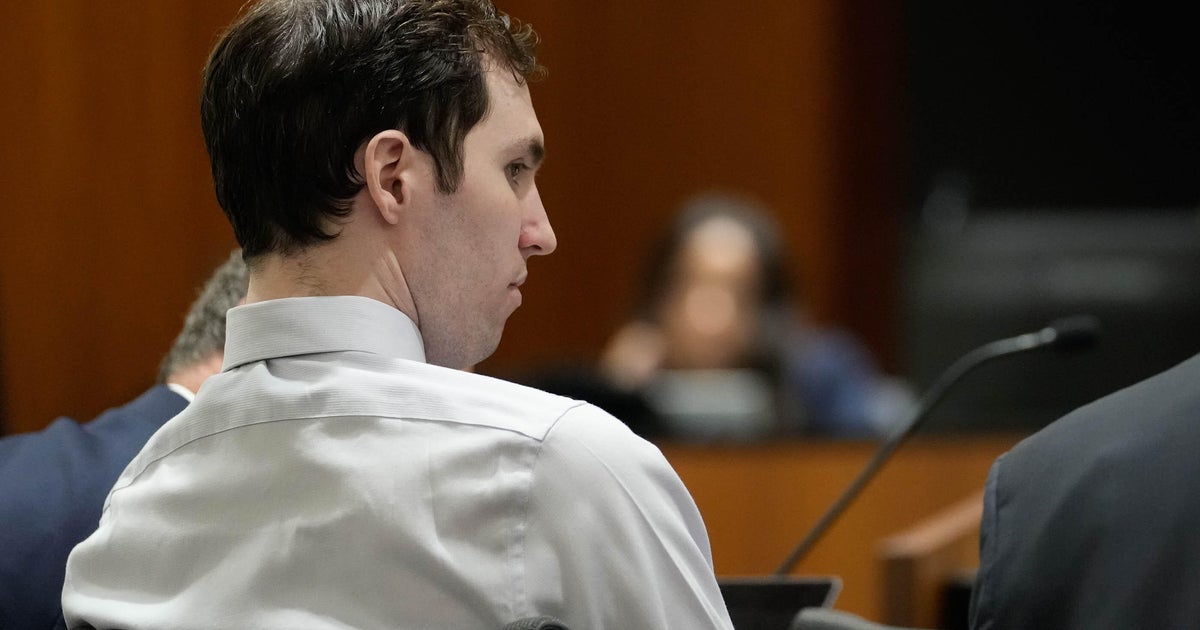
It was a crisp autumn morning in September 2026 when the campus of Utah Valley University in Provo, Utah, was silenced by gunfire. From a vantage point atop a building, a 23-year-old student named Tyler Robinson opened fire on Charlie Kirk, a far-right political pundit who had been delivering a lecture to a packed audience. The shot was fatal. In the chaotic aftermath, as sirens wailed and crowds scattered, a specific narrative began to coalesce around the accused: Robinson allegedly did not act out of random malice, but rather was motivated by deep-seated grievances over Kirk's political views. That initial confrontation on the rooftop would set in motion a legal odyssey that has now consumed years of public debate, pitting the demands for swift retribution against the procedural rhythms of the American judicial system.

Following his capture, Robinson was formally charged with aggravated murder, the most serious homicide offense in Utah. But the legal team representing the state did not stop at the single act of shooting. Prosecutors expanded the case, adding two counts of witness tampering and two counts of obstruction of justice, allegations that suggest Robinson attempted to interfere with the investigation once the law enforcement dragnet was in motion. Throughout the pre-trial proceedings, Robinson has maintained his plea of not guilty. For the defense, the trial is not just about the bullet that struck Kirk, but about the intent behind it and the subsequent actions taken by the defendant. The charges have evolved from a simple murder case into a complex web of crimes against the administration of justice, a shift that has complicated the path to trial and heightened the stakes for both sides.
For Erika Kirk, the widow of the slain pundit, the legal calendar has felt less like a timeline and more like a prolonged wound. Her family, having lost their patriarch to violence, advocated aggressively for a swift resolution. They pushed the court to schedule the trial for October 2027, a date that would have brought a verdict within a year of the shooting. To them, any delay beyond that window felt like an erosion of accountability. The urgency in her stance was palpable; she wanted the public and the jury to hear the evidence while the emotional shock of the event was still fresh, and while the memory of her husband was not yet dulled by the slow motion of bureaucracy. Her argument was straightforward: justice delayed is justice denied, particularly in a case that had become a national spectacle.
Graf’s ruling signaled that while the court respected the emotional weight of the case, it was not willing to abandon standard procedural safeguards.
Conversely, the defense attorneys took the opposite approach, arguing that the clock needed to be slowed, not sped up. They petitioned Judge Tony Graf to defer the trial entirely until January 2029. Their reasoning, typical in high-profile cases, likely centered on the need for adequate preparation time to review the mountain of evidence, secure expert witnesses, and construct a robust legal strategy against the expanded charges. For the defense, a rushed trial risks errors; a delayed one allows for a meticulous dismantling of the prosecution's narrative. They viewed the October 2027 target as insufficient time to fairly represent a 23-year-old facing the most severe criminal penalties in the state. This standoff created a legal stalemate where two powerful interests—grief and legal prudence—pulled in opposite directions.
Caught between these competing pressures, Presiding Judge Tony Graf had to find a balance that satisfied neither party fully but maintained the integrity of the court. He rejected both the widow’s call for October 2027 and the defense’s plea for January 2029. Instead, he settled on a date in early July 2028. This middle-of-the-road decision was a pragmatic compromise. It pushed the trial back from the deadline the Kirks wanted, but it did not concede to the defense’s desire for nearly a two-year extension. Graf’s ruling signaled that while the court respected the emotional weight of the case, it was not willing to abandon standard procedural safeguards. The choice of July 2028 became a fixed point, a date now etched into the records of Utah’s court system, marking the moment when the abstract dispute over timing would become a concrete reality in a courtroom.
The scheduling dispute did not remain confined to legal circles; it spilled into the highest echelons of politics. President Donald Trump, a vocal figure in the public discourse surrounding Kirk’s death, criticized the timeline with uncharacteristic directness. He took aim not just at the delay, but at the presiding judge himself. In a pointed remark, Trump declared, “This case should be tried within a month, not three years – and it should be over with!” His frustration was clear, framing the delay as an insult to the deceased. He further accused the legal process of “desecrating the memory of the Great Charlie Kirk, while taking forever to ask questions that people already know the answer to.” This intervention transformed a procedural matter into a political flashpoint, suggesting that the slow pace of justice was not just an administrative issue, but a moral failing in the eyes of the executive branch.
As the trial date looms, the prosecution is building its case on evidence that goes beyond the physical act of shooting. Central to their narrative is a confession, or at least statements that imply one, provided by Robinson’s former roommate. This piece of evidence has introduced a new, intimate layer to the investigation. The roommate’s account suggests that Robinson expressed regret, admitting that “He wishes he hadn’t done it.” This quote, attributed to the roommate, carries significant weight. It humanizes the accused in a way that complicates the binary of victim and villain. If Robinson expressed regret before the trial, does that negate the premeditation required for aggravated murder? Or does it simply confirm guilt? The prosecution plans to present this confession as a cornerstone of their argument, aiming to show a defendant who was not just present at the scene, but who internally acknowledged his actions. This psychological evidence will likely be a focal point during the July 2028 proceedings, offering a window into the mind of the 23-year-old accused.

Today, the clock ticks toward early July 2028. The trial of Tyler Robinson in Provo, Utah, is no longer just a local matter but a symbol of how the American legal system handles high-profile violence. For the Kirks, the wait is a daily reality. For Robinson, it is a period of anticipation under the shadow of aggravated murder charges. The political noise has not subsided, with the president’s criticism continuing to echo in the public square. As the courtroom prepares for its opening, the question remains: can a trial that is three years in the making still deliver the kind of swift, decisive justice that the public, and particularly the president, demanded? The answer will be written not in the headlines, but in the careful, deliberate process of the court.