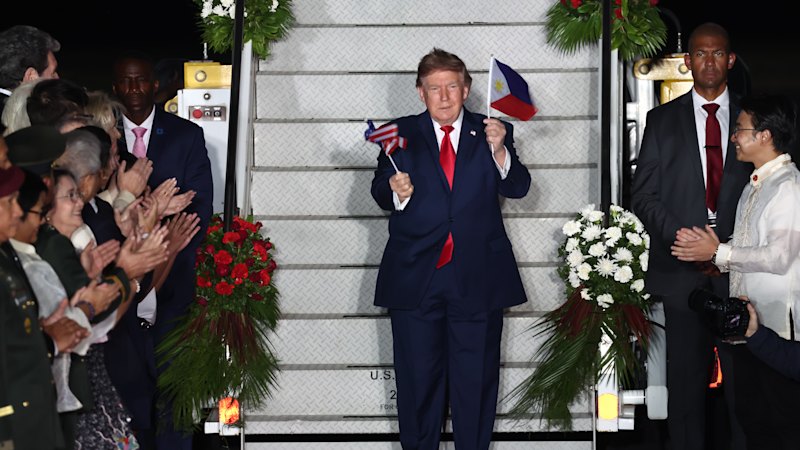
The tarmac at Manila's international airport was barely cool before Air Force One touched down, carrying a figure who has reshaped global diplomacy: Donald Trump. The former and current President of the United States arrived in the Philippines for a diplomatic tour that would include a crucial, if brief, meeting with three key allies. Among them was Australian Prime Minister Anthony Albanese, who found himself with less than an hour to make his case as the world watched.

The meeting in Manila represented something of a comeback for the Quad partnership—a strategic dialogue between Australia, India, Japan, and the United States. The four nations had not held leaders' meetings since 2024, making this encounter all the more significant. Now, with Trump back in the international fold, the partnership was making its return to the diplomatic stage.
What made this particular Quad meeting unusual was its brevity. The four leaders—Trump, Albanese, Indian PM Modi, and Japanese PM Takaichi—were scheduled to meet for just 55 minutes. Such a short duration suggested that the gathering was less about producing substantive outcomes and more about sending a political signal. Whether the summit would generate a new agreement or declaration was less important than the message it sent by simply happening.
The Quad partnership has always been viewed through the lens of regional security and counterbalancing Chinese influence.
That message was clearly aimed at one country above all: China. The Quad partnership has always been viewed through the lens of regional security and counterbalancing Chinese influence. The brief meeting in Manila, coming as it does amid rising tensions in the Indo-Pacific, was a deliberate demonstration of unity among these four democratic powers. As analysts Raji Rajagopalan and Justin Bassi noted, "Whether the summit produces a substantive new outcome is less of an issue than the political signal they send to the region and above all China by coming together."
For Albanese, the meeting represented both an opportunity and a challenge. With limited time to engage with Trump, the Australian Prime Minister needed to make every moment count. The stakes were particularly high given the broader geopolitical context—this meeting occurred just before separate summits involving Chinese President Xi and Russian President Putin. Albanese's presence in Manila was a statement about Australia's commitment to regional stability and its alignment with the Quad partners.
In his remarks ahead of the meeting, Albanese emphasized the importance of cooperation in addressing what he called "the urgent challenges that confront each of our sovereign nations." "At this important moment we need to cooperate on the urgent challenges that confront each of our sovereign nations," Albanese stated, adding that "Australia is working with Quad partners to address the most pressing issues."
The timing of this Quad meeting was no accident. Coming after a period of relative inactivity for the partnership, the gathering in Manila served as both a restart and a reassertion of the Quad's relevance. The decision to hold the meeting during Trump's diplomatic tour in the Philippines underscored the importance of personal relationships in international diplomacy, even as it demonstrated the institutional strength of the partnership itself.

As the Quad leaders dispersed after their brief but significant meeting in Manila, the partnership had reestablished itself as a visible player in regional diplomacy. The 55-minute session may have been short on concrete outcomes, but it was long on symbolism—particularly in its clear message to China. For Albanese and the other leaders, the meeting represented a commitment to working together in an increasingly complex geopolitical landscape, with the Quad partnership positioned as a key mechanism for addressing shared challenges and maintaining regional stability.