For months, the United States has waged a quiet war against Iran, one fought not with troops on the ground but with warships on the sea. The naval blockade has been devastatingly effective, restricting Iran's ability to export crude oil. Yet Tehran has not been idle. According to a Reuters investigation, Iran has created a secret network to import at least $2 billion in hardware, evading existing sanctions. Now, the US military is moving to close these escape routes.

The maritime blockade has been the cornerstone of American pressure against Iran. By restricting Iran's ability to sell its primary export—crude oil—the United States has crippled the Iranian economy, cutting off what officials describe as the lifeblood of its regional ambitions. The success of this naval strategy has now prompted Washington to expand its campaign to land borders and the Caspian Sea, creating what officials call a comprehensive "ironclad" containment strategy.
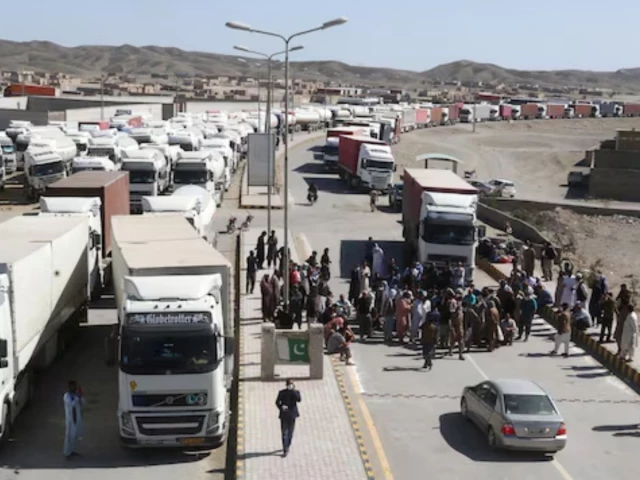
While the sea lanes were effectively sealed, Iran adapted. According to a Reuters investigation, Tehran established a sophisticated smuggling network to import critical goods through Russia, Central Asia, and China. This network has funneled weapons components, dual-use technologies, and heavy equipment into the country, allowing Iran to sustain its military industrial complex and support regional proxies despite the naval restrictions. The $2 billion in imports represents a significant investment in Iran's ability to circumvent international sanctions.
The expansion of the blockade to land borders and the Caspian Sea is likely to have significant implications for regional stability.
The United States has announced the creation of Task Force Iron Gate, a new operational group designed to coordinate the next phase of pressure against Iran. The task force will focus on three key areas: preventing the flow of advanced weapons, restricting dual-use technologies that can have both civilian and military applications, and cutting off alleged illegal revenue streams that fund Iranian activities abroad. Adm. Brad Cooper, who directed the formation of the task force, emphasized that this expansion builds on the success of the existing naval blockade.
What makes Task Force Iron Gate different from previous efforts is its emphasis on coordination across US government agencies. The task force will work closely with the intelligence community, financial regulators, and diplomatic channels to create a multi-pronged approach to containing Iran. This "whole-of-government" strategy aims to close loopholes that have allowed Iran to maintain its military capabilities despite years of sanctions.
One of the most significant challenges facing the new task force is the Caspian Sea, a body of water bordered by Russia, Iran, and several Central Asian nations. The Caspian has long been a smuggling route for illicit goods, and its unique legal status—neither fully international waters nor internal waters—has made it difficult to enforce restrictions. Task Force Iron Gate will need to develop new strategies to monitor and interdict shipments in this semi-enclosed sea.
The expansion of the blockade to land borders and the Caspian Sea is likely to have significant implications for regional stability. Countries like Russia and China, which have maintained closer ties with Iran, may face increased pressure to comply with US sanctions. Meanwhile, Iran's neighbors could become flashpoints as smuggling routes shift and tensions rise along shared borders.

Beyond the geopolitical maneuvering, the expanded blockade will have real consequences for ordinary Iranians. The import restrictions will likely lead to shortages of essential goods, from medical supplies to automotive parts, exacerbating economic hardship for a population already suffering under years of sanctions. The Iranian government has framed the measures as an attack on its sovereignty and a violation of international law.
The timing of the announcement is noteworthy, coming amid reports of possible progress in contacts between Washington and Tehran mediated by Qatar. The establishment of Task Force Iron Gate could be interpreted as either a sign of increased pressure or a bargaining chip in ongoing negotiations. Some analysts suggest that the United States may be using the expanded blockade to strengthen its position in potential talks over Iran's nuclear program.
Adm. Brad Cooper has made clear that the goal of Task Force Iron Gate is not merely to punish Iran but to fundamentally alter its calculus. "The establishment of Task Force Iron Gate reinforces the success of our ironclad blockade against Iran at sea," Cooper stated. "Urging closer cooperation with interagency partners will further limit Iran's ability to fund terrorism, rebuild armaments factories, and replenish its armed forces."
The creation of Task Force Iron Gate represents an unprecedented level of coordination in the US effort to contain Iran. By combining naval power with land-based interdiction and financial pressure, the United States is attempting to create a comprehensive containment strategy that leaves few avenues for evasion. Whether this approach will succeed where previous efforts have failed remains to be seen, but one thing is clear: the shadow war between Washington and Tehran has entered a new, more dangerous phase.
As Task Force Iron Gate begins operations, the world will be watching to see how the new strategy unfolds.