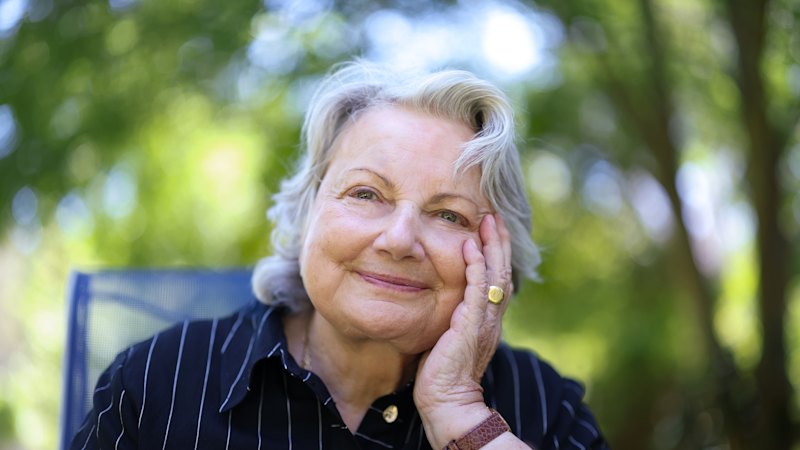
In the quiet moments before her death, surrounded by family in Australia, Sharman Stone made one final defiant statement. Not with words, but with actions that spoke volumes about a woman who had spent her career challenging convention and orthodoxy. At 75, after a long battle with an aggressive form of brain cancer, the former Liberal minister chose to end her life through voluntary assisted dying—a decision that perfectly encapsulated the principles she had championed throughout her remarkable life.
Stone's journey in federal parliament spanned approximately two decades, beginning with her election in 1996. For twenty years, she represented the seat of Murray, becoming one of Australia's most recognizable and independent voices in politics. As a minister in the Howard government, she carved out a reputation for herself as someone willing to cross party lines when her conscience demanded it. This independence often put her at odds with her own party, particularly on contentious 'life' issues, as former Prime Minister Tony Abbott noted: "Sharman and I disagreed on 'life' issues … but she was always upfront about what she thought and always handled disagreement well."
Beyond her parliamentary career, Stone served as Australia's Ambassador for Women and Girls, a role that reflected her lifelong commitment to gender equality. Her advocacy extended to regional Australia and Indigenous rights, causes she championed with the same determination that characterized her approach to all her work. Wendy Lovell, a colleague and friend, remarked on Stone's exceptional qualities: "a profound privilege to have enjoyed her friendship over the years, and to have seen up close her courage, determination, intelligence, and kindness."
It is incredibly cruel in that way," she reflected, demonstrating her characteristic concern for others even in her own suffering.
When Stone was diagnosed with frontal-lobe glioblastoma in December 2024, she approached her illness with the same principled stance that defined her political career. The aggressive brain cancer gave her almost two years to live—a longer prognosis than many receive. "I've had almost two years. So many people only get six months. I've been lucky. Others are not, especially children. It is incredibly cruel in that way," she reflected, demonstrating her characteristic concern for others even in her own suffering.
In her final weeks, Stone made the most personal choice of all—exercising her right to determine how and when she would die. This decision was not sudden but the culmination of a lifetime spent advocating for individual bodily autonomy. "I've always believed that any individual has the right to decide whether they must leave their life or not. It's their choice," she had long maintained. Her family found comfort in the way she chose to depart: "It's a great comfort we could spend final time with her at home and amongst the community she loved."
Stone's death marked the end of a political career that had been defined by independence and principle. She leaves behind a legacy that transcends party politics—a testament to the power of conviction in the face of opposition. Whether challenging her own party on medical research, advocating for women's rights, or making the deeply personal decision about her own death, Stone remained true to herself until the very end.
In a political landscape often characterized by rigid adherence to party lines, Stone's life stood as a counterpoint—a demonstration that it is possible to serve with integrity while remaining true to one's convictions. Her final act, like much of her life, was an assertion of personal autonomy that resonated far beyond her immediate circle. As Australia reflects on her legacy, it is clear that Sharman Stone lived—and died—exactly as she wanted: on her own terms, with her convictions intact, and surrounded by those she loved.