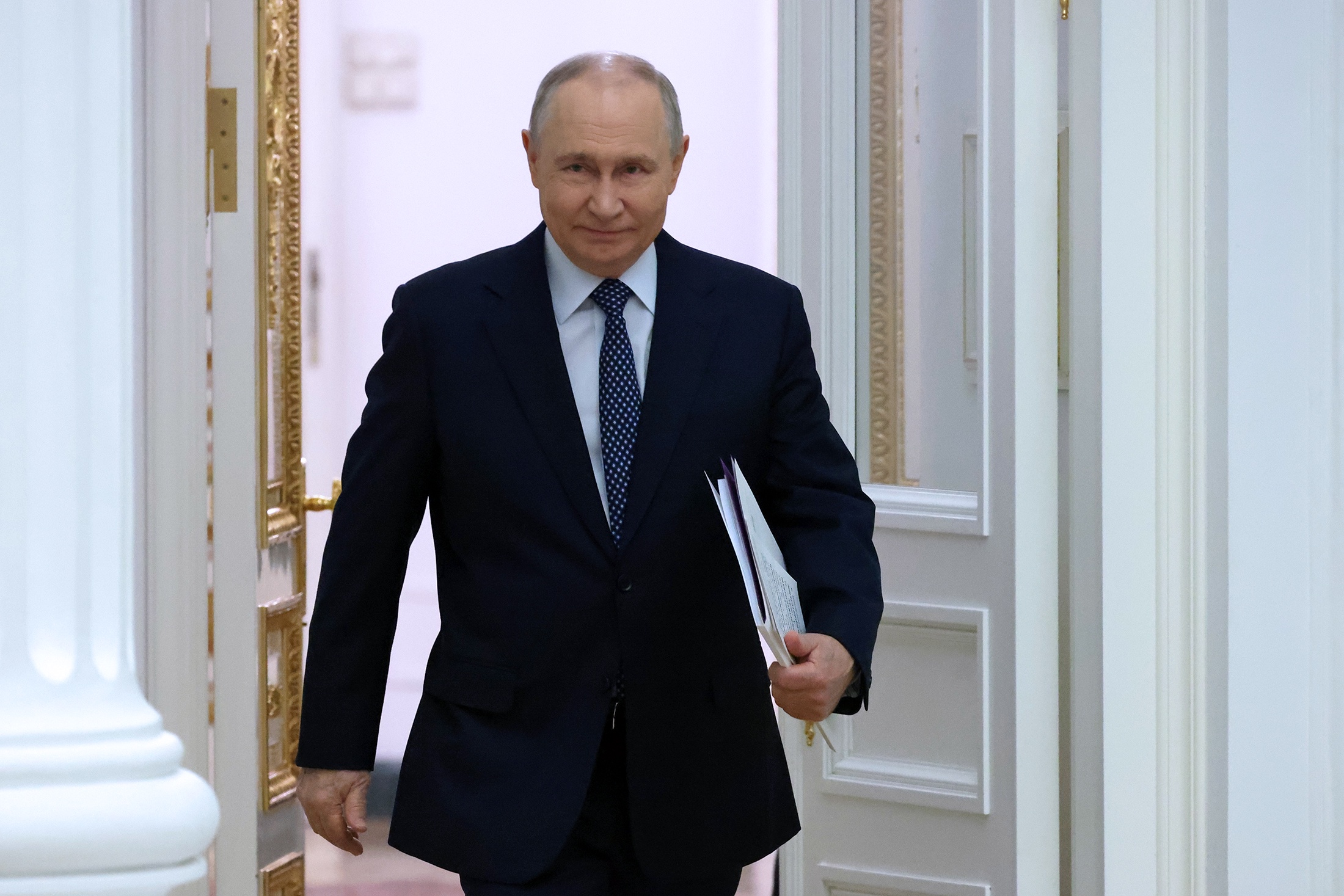
In the bustling tech hub of Shenzhen, a significant diplomatic gathering is set to unfold as Russian President Vladimir Putin travels for the APEC summit on Wednesday, November 18. This meeting represents more than just another international conference—it marks a strategic moment for Russia as it seeks to deepen its economic and political ties in the Asia-Pacific region. The summit's theme, 'Building an Asia-Pacific Community for Shared Prosperity,' resonates particularly with Russia's ambitions as it prepares a bid to chair APEC in 2035, signaling its long-term commitment to this dynamic part of the world.
Putin's program begins with the APEC Business Summit, where he will showcase Russia's investment potential to an international audience. The event promises to be substantial, with over 2,000 participants expected, including representatives from more than 30 Russian companies. As Yuri Ushakov, Putin's aide, described it: 'Это солидное и крупное мероприятие, ожидается участие более двух тысяч человек, представляющих компании всех экономик - участниц форума, и некоторых крупных бизнесменов из Великобритании, Франции, Германии и Швейцарии.' This gathering provides a crucial platform for Russian businesses to explore opportunities and partnerships across the Asia-Pacific region.
The Russian delegation arriving in Shenzhen is substantial, reflecting the importance of this diplomatic mission. Vice-Premiers Tatyana Golikova, Anton Siluanov, and Dmitry Chernyshenko will be joined by seven ministers, forming what Ushakov termed 'Достаточно большая наша команда.' This comprehensive team ensures that Russia's interests across various sectors—from economic development to foreign policy—are robustly represented during the high-level negotiations.
While economic cooperation will feature prominently, the discussions between Putin and Xi will extend to broader geopolitical matters.
At the heart of Putin's Shenzhen agenda are the high-level Russian-Chinese negotiations, marking the fifth contact between Putin and Xi Jinping this year. This frequency of meetings underscores the deepening strategic partnership between the two nations. The economic relationship is particularly noteworthy, with bilateral trade volume exceeding 200 billion dollars in recent years, firmly establishing China as Russia's leading trade partner. This economic interdependence forms a critical foundation for their broader political alignment on global issues.
While economic cooperation will feature prominently, the discussions between Putin and Xi will extend to broader geopolitical matters. Key topics include the situation in the Asia-Pacific region, the ongoing conflict in Ukraine, and developments on the Korean Peninsula. These conversations occur against a backdrop of shifting global dynamics, where Russia and China find increasing alignment in their approaches to international relations and their shared vision for a multipolar world order.
In a particularly significant diplomatic move, Putin will brief Xi on his recent contacts with the United States. This exchange highlights the complex trilateral relationship between Moscow, Beijing, and Washington. As Russia navigates its relationship with the West while simultaneously strengthening ties with China, these consultations become increasingly important for coordinating foreign policy positions and maintaining strategic coherence.
Russia's bid to chair APEC in 2035 represents a forward-looking strategy to enhance its influence in the Asia-Pacific region. This long-term objective, coupled with the immediate diplomatic and economic engagements in Shenzhen, demonstrates Russia's commitment to repositioning itself in the evolving global landscape. As Putin and Xi meet in Shenzhen, the foundations are being laid for deeper cooperation that could shape regional dynamics for years to come.