
In the quiet halls of Dublin, European leaders gathered on November 13 to address one of the continent's most pressing challenges: the ongoing war in Ukraine. What emerged from their discussions was a significant shift in how Europe would approach diplomatic efforts, moving away from a single representative toward a more collective voice. European Council President Antonio Costa announced that the European Union would send a unified negotiating team to future talks on Ukraine, rather than designating one individual as Europe's primary voice.

Costa described this new approach as comprising both EU institutions and what he termed the 'E5' coalition—a group of five key European nations: France, Germany, Italy, Poland, and the United Kingdom. This 'coalition of the willing' represents some of Europe's most influential powers, all deeply invested in the outcome of Ukraine conflict. The decision reflected a broader consensus that Europe must speak with one voice in these delicate negotiations, a principle Costa emphasized repeatedly during the Dublin summit.

🇪🇺 Europe may finally join Ukraine peace talks but can't agree who to send. U.S. envoys say Putin is willing to let Europe join the next round after leaving it out of earlier talks. But now the problem is within Europe itself. EU foreign policy chief Kaja Kallas believes she and European Council President António Costa should represent the bloc. Germany, on the other hand, prefers a wider group of countries, while France wants Europe to agree on its demands first. That leaves Zelensky waiting for a decision he wants by the end of November. Source: bne IntelliNews / Writer: Daniyal
The move toward a multi-member delegation came after a notable public suggestion from EU High Representative for Foreign Affairs Kaja Kallas. She had indicated that, based on her 2024 mandate, she should be Europe's primary representative in these talks. However, Kallas herself acknowledged a significant obstacle: Russia's position on her participation. "I know that the Russians don't want me," she told reporters, "but do we have a say who is representing Russia? No, we don't, and really we have to have a strong team."
From Moscow's viewpoint, European participation was deemed essential when discussing broader security arrangements.
Beyond the diplomatic maneuvering, European leaders affirmed a fundamental principle that would guide their approach: only Ukraine possesses the legitimacy to make decisions regarding its own territory and sovereignty. This stance, articulated by Costa, reinforced the international legal framework underpinning the conflict and positioned Europe as a steadfast supporter of Ukraine's right to self-determination. "Europe's security begins with Ukraine's security," Costa stated, encapsulating the interconnected nature of the crisis.

German Chancellor Friedrich Merz on who represents Europe in talks with Moscow: Kaja Kallas is of course part of it, but the E3 format has also proven very successful. We include Italy and Poland at any time. That was also the case last night. From my point of view there is currently no need to conduct an institutional debate.
The Dublin summit's decision came just days after preliminary talks in Abu Dhabi on November 10, which brought together Russia, the United States, and Ukraine—notably without European representation. This absence highlighted the need for a more structured European approach to ensure that European perspectives and interests were properly represented in future negotiations. The Abu Dhabi discussions focused on security matters, underscoring the complex geopolitical dimensions of the conflict.
From Moscow's viewpoint, European participation was deemed essential when discussing broader security arrangements. Russian presidential press secretary Dmitry Peskov clarified that "a conversation with Europeans would be needed when it comes to discussing Russia and Ukraine's security and the future of the security system in Europe." This acknowledgment, coming directly from the Kremlin, validated the European Union's decision to develop a coordinated approach to the negotiations.

🇪🇺🇷🇺│ EU countries have split into three camps over the choice of who should lead negotiations with Russia, reports Politico. Some support European Council President António Costa, while others favor representatives from France and Germany, as they are unwilling to grant Brussels a monopoly on the talks. A third group backs Kaja Kallas; however, some diplomats consider her too anti-Russian to engage in dialogue with Moscow.
As the Dublin summit concluded, Costa announced that EU leaders had formally agreed on the composition of the delegation for expert talks on Ukraine. This team would include representatives from both EU institutions and the E5 countries, creating a multi-layered diplomatic presence. "The EU summit has agreed on a delegation for expert talks on Ukraine, as it will consist of representatives from EU institutions and members of the so-called coalition of the willing," Costa explained, emphasizing the unity behind this approach.
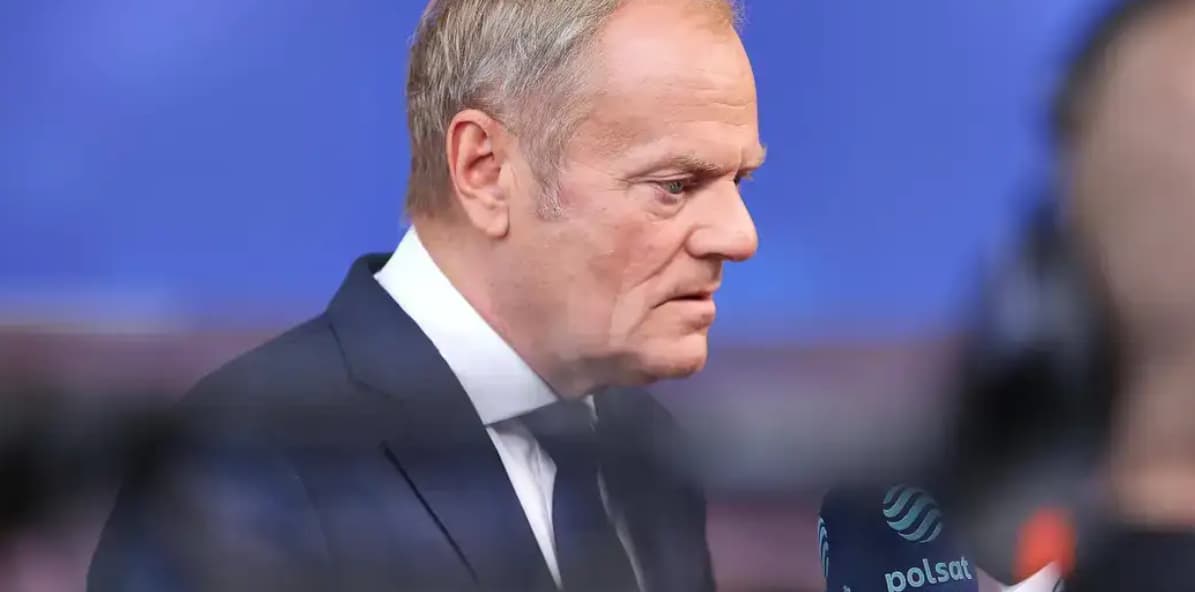
With this agreement, Europe established a clear structure for its diplomatic engagement on Ukraine. The collective nature of the delegation reflected both the complexity of the negotiations and the diversity of European interests involved. As Costa noted, "all diplomatic efforts aimed at bringing Russia to the negotiating table" would benefit from this coordinated approach. The European team, he assured, would "continue to act in close coordination in full unity," ensuring that Europe's voice would be heard clearly in the critical discussions ahead.