The dust of the Middle East has barely settled over Abu Dhabi, yet the geopolitical temperature is rising in Eastern Europe. On a single, chaotic afternoon in late November 2026, the world witnessed a convergence of high-stakes diplomacy that would redefine the conflict in the Donetsk region. While the United States and Ukraine negotiated prisoner exchanges and European representatives held their own talks in the United Arab Emirates, the man at the center of it all was Vladimir Putin. Standing in the Kremlin, he did not speak of tanks or troop movements. Instead, he offered a humanitarian lifeline to a city that had been at the epicenter of the fighting for months.

The announcement was precise and calculated. Putin stated that the Russian Federation needed five days to clear the mines around Kostyantynivka. It was a demand wrapped in the language of aid, but it carried the weight of a territorial claim. "If Kyiv considers the city under its control, then let it ensure safety on its side," Putin said, setting a condition that would test the resolve of the Ukrainian government. This was not merely a statement of military capability; it was a political maneuver designed to force a decision on the status of the city.
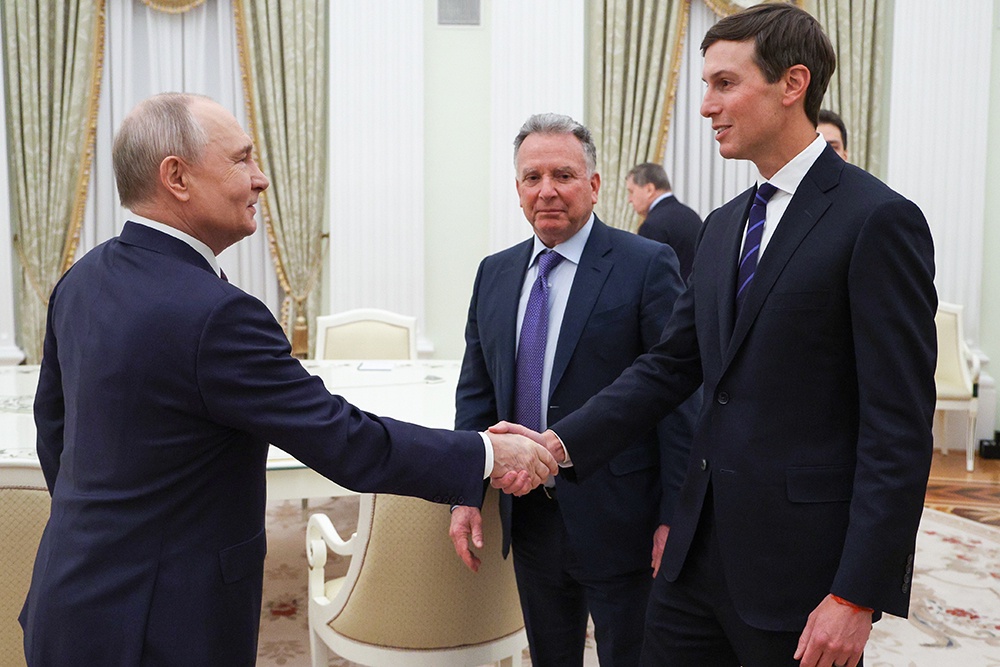
The timing of this announcement was no accident. Just hours earlier, on November 12, 2026, Steve Witkoff and Jared Kushner had arrived at the Kremlin for talks with Putin. Their presence signaled a renewed American interest in the region, a signal that was echoed by the simultaneous negotiations in Abu Dhabi between the United States, Ukraine, and Russia. The prisoner exchange agreement reached that day added a layer of complexity to the situation, creating a fragile window of opportunity for diplomatic engagement amidst the violence.
Yet, the claims of Russian control over Kostyantynivka remain a point of intense contention.
The proposal to evacuate civilians from Kostyantynivka drew an immediate parallel to the Oleshky operation, a previous humanitarian mission that had garnered significant attention. By invoking this precedent, Putin was attempting to frame the conflict not as an invasion, but as a rescue operation. He suggested that the mission could include Ukrainian and Russian human rights officials, a detail that hinted at a desire to internationalize the process and perhaps legitimize Russian control over the area.
Yet, the claims of Russian control over Kostyantynivka remain a point of intense contention. While the Russian leadership presents the city as a territory under their influence, the Ukrainian side views it as an integral part of their sovereign territory. This discrepancy in perception creates a volatile environment for any humanitarian mission. The proposal to include human rights officials from both nations suggests a desire to create a buffer zone of oversight, but it also risks becoming a mechanism for Russian forces to consolidate their hold on the ground.
As the five-day window for demining begins to close, the international community watches closely. The humanitarian mission in Kostyantynivka represents a new front in the war, one that blurs the lines between military action and humanitarian aid. It is a test of the international community's ability to intervene and protect civilians in a conflict zone that is rapidly becoming a focal point of global tension.