
On November 7, 2026, a commercial vessel cleared an Iranian port and set a course through some of the most heavily monitored maritime territory on Earth. Bound for another destination, the merchant ship moved into corridors where the margins for error had already narrowed to near zero. What followed in the Gulf of Oman and the Strait of Hormuz was a direct, violent confrontation that underscored how fragile stability has become along the world's most critical sea lanes.

As the vessel advanced, it encountered American maritime patrols enforcing strict naval blockades in the area. According to announcements from U.S. Central Command, known as CENTCOM, the ship's crew repeatedly violated patrol boundaries and ignored multiple explicit warnings from military authorities. Rather than altering course or standing down, the vessel continued its attempt to breach the maritime blockade established around Iran.
The standoff reached its flashpoint when forces from the U.S. Navy intercepted the merchant ship. When the crew refused to comply with warnings, the U.S. military deployed high-precision munitions, hitting the vessel with an American missile. The strike succeeded in damaging and disabling the ship in the Gulf of Oman, halting its journey entirely.
It follows a volatile sequence of direct military engagements, including a series of attacks by the United States and Israel against Iranian targets.
This forceful intervention marks a sharp enforcement of maritime restrictions in a region where commercial navigation and military operations increasingly overlap. By disabling the ship, military forces signaled a rigid zero-tolerance posture toward any attempts to break the naval blockade.
The encounter in the Gulf of Oman did not occur in a vacuum. It follows a volatile sequence of direct military engagements, including a series of attacks by the United States and Israel against Iranian targets. Those strikes provoked swift retaliatory actions from Iran, creating an ongoing conflict that has left regional security in a precarious state.
With both sides actively engaged in retaliatory maneuvers, the conflict remains entirely unresolved. Military analysts and regional observers view every blockade enforcement and naval strike as a spark capable of triggering renewed hostilities across the wider theater.
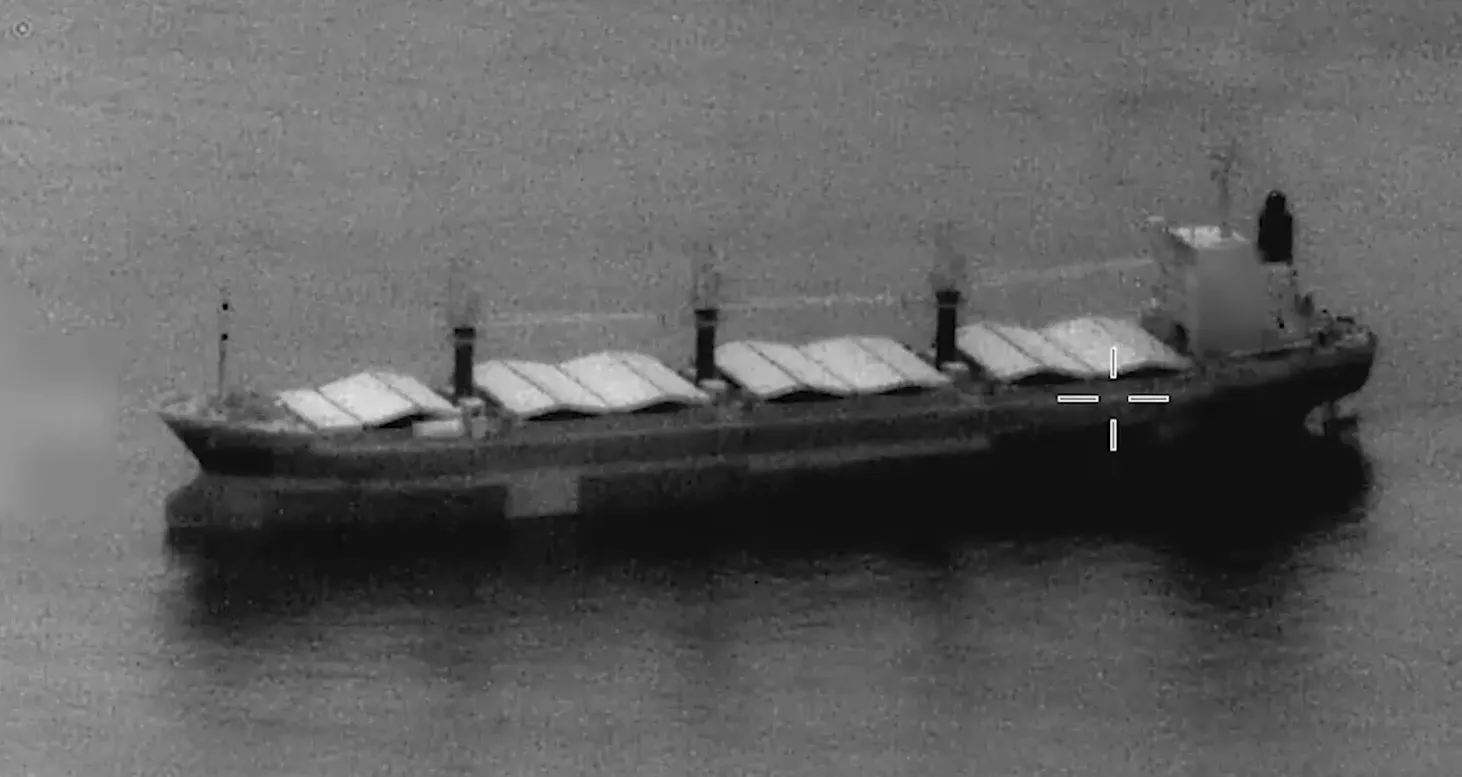
CENTCOM forces disabled a commercial vessel in the Gulf of Oman, Nov. 7, after the ship’s civilian crew ignored repeated warnings and attempted to violate the naval blockade against Iran multiple times. A U.S. military aircraft fired precision munitions at the stern of St. Kitts-flagged M/V Huda, disabling the ship after CENTCOM forces directed the crew to abandon targeted spaces. The cargo vessel tried to depart regional waters after visiting an Iranian port. Read the full release online: https://t.co/5wW1LqN1oW
While the military outcome of the November 7 intercept was immediate, the broader impact on commercial maritime traffic has reverberated across international shipping networks. The enforcement of blockades and the threat of missile strikes have turned routine commercial transit into a high-risk operation.
According to operational figures, the ongoing tensions and military engagements have forced 147 commercial ships to alter their intended routes to avoid danger zones. In total, 5 commercial ships have been disabled amid the unfolding maritime friction, highlighting the severe toll the unresolved security crisis is taking on global trade routes passing through the Strait of Hormuz and adjacent waters.
CENTCOM's public confirmation of the strike emphasizes that military authorities intend to maintain strict enforcement of maritime restrictions around Iran. As merchant ships navigate altered paths and damaged vessels remain sidelined, the sea lanes remain an active arena of military posturing.
With Iran, the United States, and regional allies locked in an unyielding cycle of strike and retaliation, the threat of further military action against non-compliant vessels remains high. For now, the waters of the Gulf of Oman remain defined by enforced blockades, disrupted commerce, and the persistent danger of broader conflict.

According to a release from U.S. Central Command (CENTCOM), CENTCOM forces subjected a commercial vessel in the gulf of Oman to disabling fire after it ignored warnings that it was in violation of the U.S. blockade of vessels traveling to and from Iran. Per the release, U.S. aircraft fired precision munitions at the stern of the vessel, the St, Kitts-flagged M/V Huda, after they warned the crew to evacuate the areas of the vessel that were to be targeted.