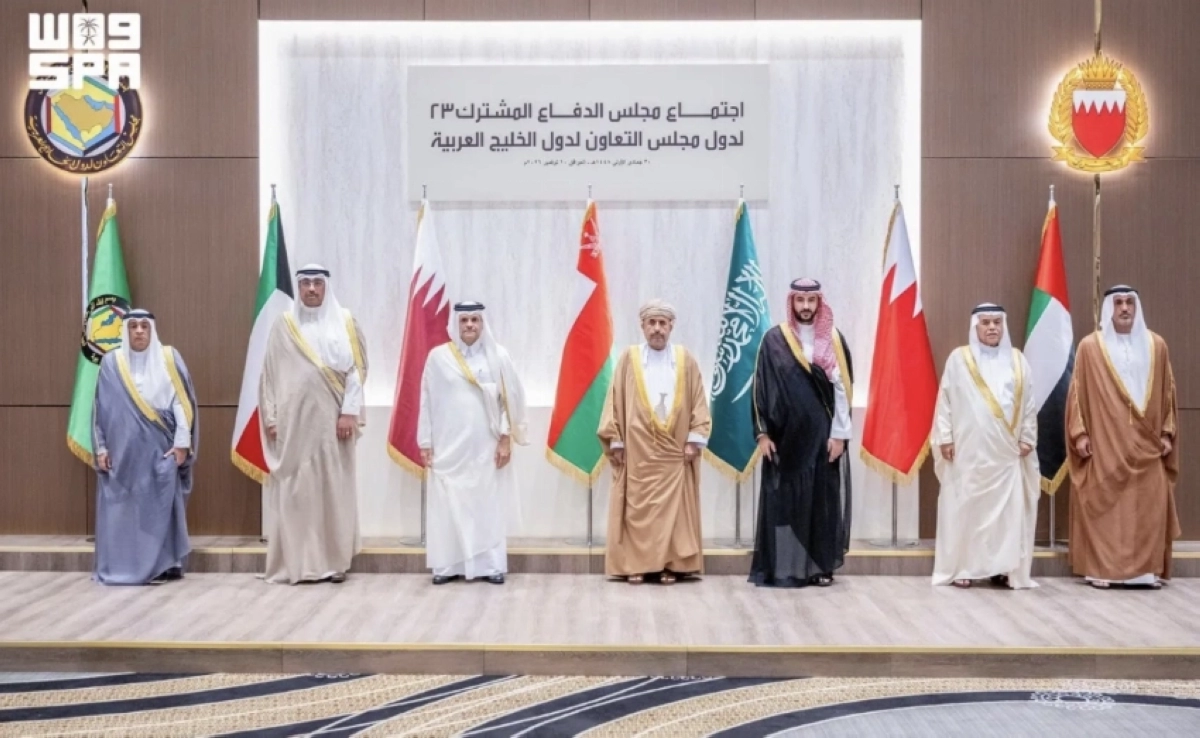
In the heart of Manama, Bahrain, a significant step was taken toward strengthening regional security as Defense Ministers from the Gulf Cooperation Council (GCC) countries convened for their 23rd Joint Defense Council session on November 10, 2026. The meeting marked a pivotal moment in the evolution of Gulf military cooperation, culminating in the approval of an advanced headquarters for the Unified Military Command to be established in Kuwait. This decision represents a tangible advancement in the collective security architecture of the Gulf region, reflecting the member states' commitment to addressing shared challenges through unified action.

At the forefront of discussions was the establishment of this new command center, which will serve as the nerve center for coordinated military operations among GCC nations. The approval to open the headquarters in Kuwait came alongside decisions regarding the allocation of forces to this unified command structure. This development signifies a deepening integration of military capabilities and resources among the Gulf states, enabling more effective responses to security threats that transcend national borders. The move demonstrates the GCC's determination to enhance its collective defense posture in an increasingly volatile regional environment.
The council session was held against a backdrop of regional instability, with GCC Secretary General Jasem Mohamed Albudaiwi explicitly addressing the challenges confronting the Gulf region. In his remarks, Albudaiwi highlighted the "treacherous Iranian attacks" as a manifestation of the rapid developments affecting regional security. This characterization underscore the serious nature of the threats perceived by Gulf states and the rationale behind strengthening their unified military capabilities. The secretary general's comments reflected a growing concern over activities that destabilize the region and threaten the security of GCC member states.
The secretary general's comments reflected a growing concern over activities that destabilize the region and threaten the security of GCC member states.
Amid discussions about future developments, Albudaiwi took the opportunity to commend the existing military coordination mechanisms among GCC states. This acknowledgment of current cooperation frameworks provided context for the new initiatives being considered, suggesting that the approval of the unified command headquarters represents an evolution rather than a departure from established practices. The praise for existing coordination likely served to build consensus among member states regarding the expansion of joint military efforts, reinforcing the value of collective security approaches in the Gulf region.

🇺🇸🇧🇭⚔️🇮🇷 A video showing ATACMS launches from Bahrain toward Iran. It is impossible to determine from the footage who is carrying out the strike, but it appears that Bahrain may be allowing the United States to use its territory to launch attacks on Iran. However, direct GCC participation cannot be ruled out. A few days ago we reported that the GCC’s Peninsula Shield Force, now known as the Unified Military Command of the Gulf Cooperation Council, deployed HIMARS launchers configured to fire ATACMS to Bahrain. However this information is interpreted, the situation does not look good for Bahrain.
The decisions reached during the 23rd session of the GCC Joint Defense Council went beyond the establishment of the unified command headquarters. The council approved a range of measures aimed at expanding joint Gulf military cooperation and integration across multiple domains. By broadening the scope of their military collaboration, GCC states are seeking to create a more resilient and responsive security apparatus capable of addressing the complex challenges facing the region in the coming years.
The participation of Qatari Deputy Prime Minister and Defense Minister Sheikh Saoud bin Abdulrahman in the meeting underscored the commitment of all GCC member states to this new phase of military cooperation. As the Gulf region continues to navigate a complex security landscape, the establishment of the unified military command headquarters in Kuwait represents a significant step toward creating a more cohesive and capable defense structure. This development reflects the GCC's recognition that collective security is essential in an environment where threats increasingly require coordinated responses, positioning the Gulf states to better protect their shared interests and maintain stability in the region.