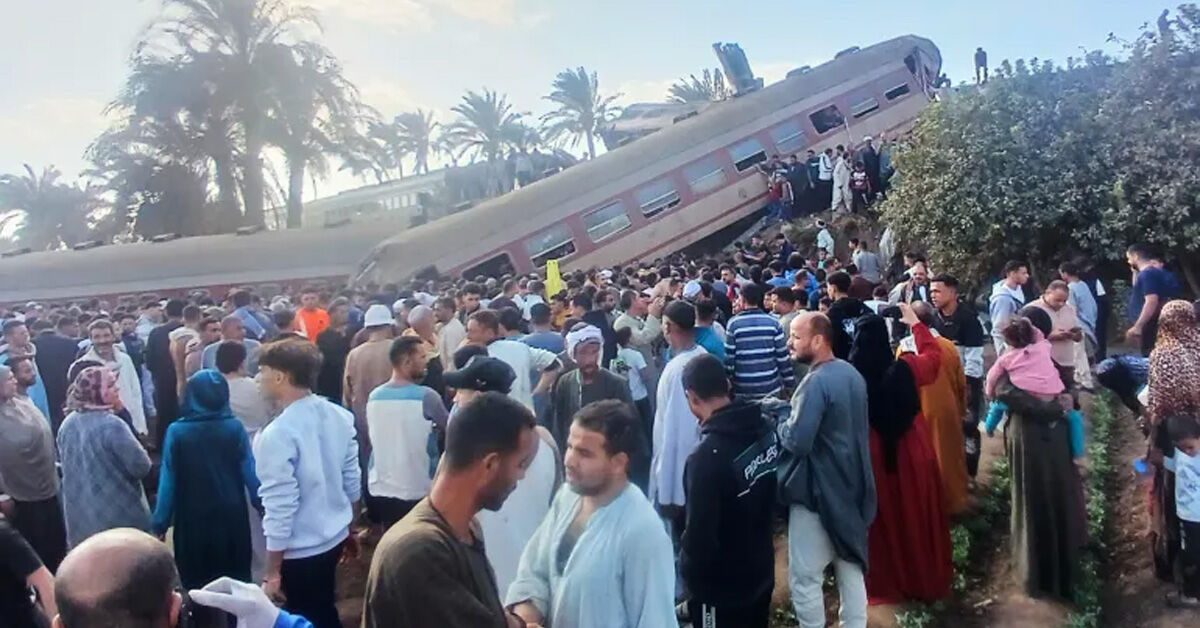
On a Sunday in June 2024, the quiet rhythm of the Egyptian rail network was shattered by the violent physics of a collision. In Giza province, roughly 52 kilometers south of the bustling capital of Cairo, two trains met with a force that transformed massive steel carriages into instruments of chaos. The collision was not a head-on meeting of locomotives, but a rear-end impact, where one train struck the back of another, triggering a sequence of mechanical failures that the landscape had not seen in years.

The physics of the crash were unforgiving. Following the initial impact, the momentum proved too great for the tracks to contain. One of the trains derailed, its heavy cars losing their grip on the rails and flipping over in a tangle of metal. For those traveling through the Giza province, what was meant to be a routine journey became a struggle for survival as the carriages overturned, trapping passengers within the wreckage.
As the dust settled and the screeching of metal subsided, the human cost became clear. At least seven people lost their lives in the wreckage. Beyond the fatalities, the scale of the injuries was immense, with over 100 people requiring medical attention. The sheer number of casualties necessitated a massive logistical response to manage the unfolding crisis.
For many in Egypt, the sight of overturned carriages and the heavy presence of emergency services evokes a painful collective memory.
In the immediate aftermath, the scale of the emergency was met by a significant mobilization of state resources. Fifty-two ambulances were deployed to the scene, racing through the area to reach the injured and transport them to medical facilities. The coordination of these emergency vehicles was critical in the race to stabilize the more than 100 victims caught in the collision's wake.

Collision between 2 trains in Egypt kills 7 and injures more than 100 (Egypt) https://t.co/9sJXRGJE3o
For many in Egypt, the sight of overturned carriages and the heavy presence of emergency services evokes a painful collective memory. The tragedy in Giza serves as a grim reminder of the country's rail history, most notably the catastrophic train disaster in 2002. In that earlier instance, 370 people were killed, a number that underscores the profound stakes involved whenever the nation's rail infrastructure fails.
As the investigation into the cause of the collision began, the highest levels of government responded to the tragedy. Egyptian President Abdel-Fattah el-Sissi addressed the incident, emphasizing the need for a thorough examination of what went wrong. The President did not merely express sympathy; he moved to ensure that the mechanics of the disaster were scrutinized for any human error.
"I ordered an investigation and urged state agencies to hold accountable anyone found to have been negligent," President el-Sissi stated. This directive sets the stage for a formal inquiry, as authorities work to determine whether the collision was a result of mechanical failure, signaling errors, or a lapse in oversight. The focus now shifts from the immediate rescue efforts to the legal and procedural scrutiny of the state agencies responsible for the safety of the lines.

As of now, the focus remains on the wreckage in Giza and the ongoing efforts to provide care for the injured. The collision has left the nation looking toward the results of the official investigation, waiting to see if the call for accountability will lead to systemic changes in how the rails are managed.