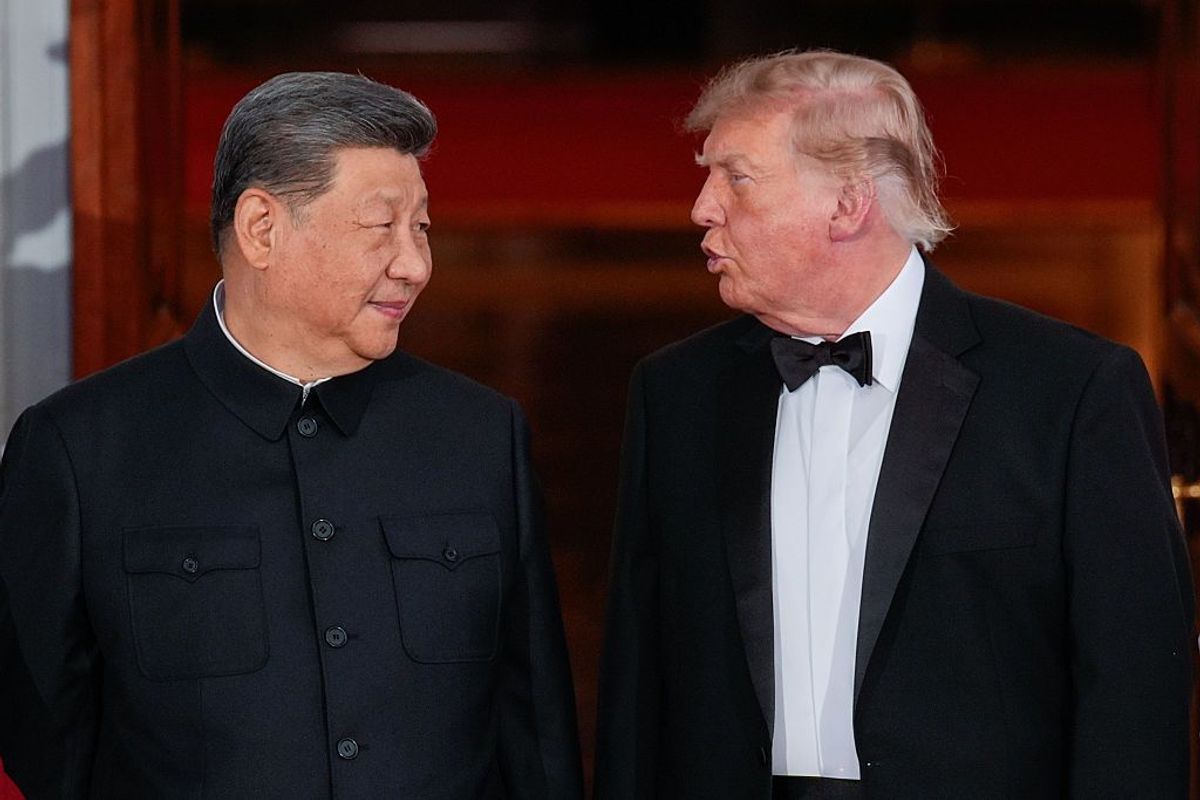
On November 19, the geopolitical landscape will undergo a rare and profound realignment. In the Chinese city of Shenzhen, on the sidelines of the Asia-Pacific Economic Cooperation (APEC) summit, three of the world's most powerful leaders are set to convene for a first-ever trilateral meeting. US President Donald Trump, Chinese President Xi Jinping, and Russian President Vladimir Putin will sit at a table that has, until now, remained divided by decades of suspicion and competing interests.

The primary driver for this gathering is not territorial dispute, but the terrifying math of global survival. The central pillar of the agenda is nuclear non-proliferation. The urgency of this topic is driven by a looming deadline: the New START treaty, the last major agreement governing the nuclear arsenals of the United States and Russia, expired in February. Without a new framework, the world enters a period of unprecedented strategic uncertainty.
To understand the stakes, one must look at the scale of the stockpiles involved. While the United States and Russia each hold over 5,000 warheads, the landscape is shifting. Pentagon estimates suggest that China’s nuclear arsenal has grown to over 600 warheads. While this remains significantly lower than the American and Russian totals, it represents a growing force that the White House believes must be addressed within a broader framework of global arms reduction.
While the trilateral meeting is the headline event, the summit will also be defined by its bilateral movements.
Despite the intense global focus on the conflict in Ukraine, the White House has signaled that this specific trilateral setting is unlikely to serve as a venue for resolving the war. The logic is one of diplomatic architecture: China is not a party to the existing US-Russia negotiations regarding Ukraine. Because the current track of negotiations on the matter does not include Beijing, the trilateral summit in Shenzhen is being structured to bypass the war in favor of more universal existential threats.
Instead, the conversation is expected to pivot toward other volatile flashpoints. A senior U.S. official indicated that the President intends to bring the issue of Iran to the table during the discussions with Xi and Putin. By focusing on Iran and nuclear stability, the summit seeks to find common ground on issues that affect the global order, even as specific regional conflicts remain outside the immediate scope of this particular meeting.

Trump to meet Xi and Putin in China at APEC summit next week https://t.co/YjcHz6C5NO
While the trilateral meeting is the headline event, the summit will also be defined by its bilateral movements. President Trump is scheduled to hold a meeting with President Xi Jinping, marking his fourth one-on-one encounter with the Chinese leader since returning to office in January 2025. These individual sessions allow for a more concentrated dialogue on the complex relationship between Washington and Beijing.
Interestingly, the schedule reveals a notable gap in the diplomatic itinerary: no one-on-one meeting between Trump and Putin has been scheduled. The interaction between the American and Russian leaders will be mediated through the broader trilateral context or the APEC summit itself, rather than a private, isolated session.

Even the attendees not seated at the main table carry significant weight. Elon Musk is expected to accompany President Trump on the trip to China, though he will not participate in the trilateral meeting itself. His presence underscores the intersection of high-level diplomacy and the influential figures who navigate the modern global economy.
As the world watches the preparations for November 19, the mission is clear. The White House has framed the summit as a necessary step toward managing the "very dangerous" proliferation of nuclear weapons. Whether this historic meeting can bridge the gap between three competing superpowers remains to be seen, but for one day in Shenzhen, the focus will be on the weapons that could end the world, rather than the wars currently reshaping it.

President Trump will participate in the first-ever trilateral meeting between the leaders of the U.S., China and Russia on the sidelines of the Asia-Pacific Economic Cooperation Summit in China next week, senior U.S. officials told reporters. https://t.co/n3ptiG4pGc