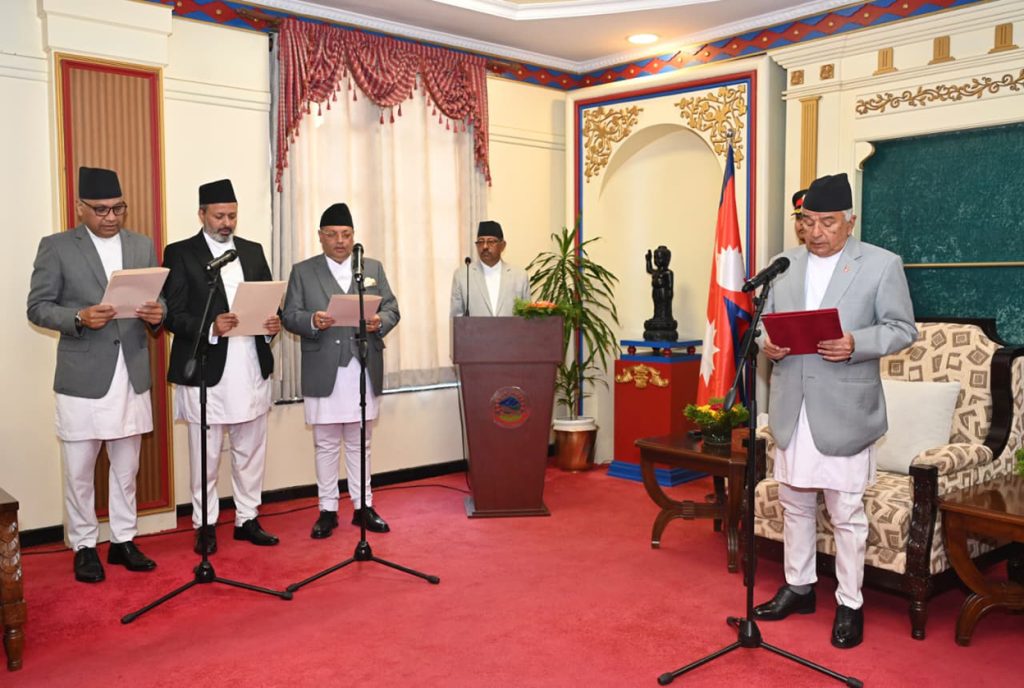
There is a quiet weight to the rituals of statecraft, moments where administrative machinery translates into human presence on the global stage. At the Office of the President, known as Shital Niwas, that weight settled onto the shoulders of three diplomats. President Ram Chandra Paudel stood ready to administer the solemn oath of office and secrecy to the newly appointed envoys, marking a pivotal transition in Nepal's diplomatic posture. These ceremonies are more than mere formalities; they are the constitutional bridge connecting executive recommendation with international representation, setting the stage for how a sovereign nation engages its most critical regional and global partners.
The path to Shital Niwas began deep within the legal framework of the nation, anchored specifically in Article 282, Sub-section 1 of the Constitution of Nepal. This constitutional provision grants the executive branch the authority to shape foreign missions through deliberate appointments. Operating under this clear legal mandate, the Council of Ministers had previously deliberated and forwarded a substantial slate of candidates to fill vacant diplomatic posts abroad, initiating a rigorous vetting process designed to ensure that Nepal's voice in foreign capitals would be backed by institutional legitimacy and thorough governmental backing.
Yet, executive ambition must always face legislative scrutiny, a principle vividly illustrated during this specific diplomatic cycle. When the Council of Ministers initially placed its trust in a roster of 13 candidates for ambassadorial positions, the process was far from a rubber stamp. It fell to the Parliamentary Hearing Committee to examine the fitness, capability, and background of each nominee. Through this critical filter, the initial pool of 13 was whittled down to 10 approved names. This legislative check ensures that those who ultimately represent the country abroad have cleared a rigorous parliamentary examination, surviving the political and public vetting necessary for high office.
Approval at home, however, is only half the battle in the intricate dance of international relations.
Approval at home, however, is only half the battle in the intricate dance of international relations. Once the Parliamentary Hearing Committee gave its green light to the 10 approved candidates, a secondary, delicate phase unfolded behind closed doors: securing formal consent from the respective host governments. In the complex world of diplomacy, a host nation must explicitly accept a foreign envoy before any official appointment can be finalized. For the three specific missions in question, those critical diplomatic clearances—known as agreements—finally arrived, clearing the final procedural hurdle for India, China, and Israel.
With clearances secured and domestic hurdles cleared, the appointments crystallized around three vital geopolitical destinations. President Paudel officially appointed Dr. Nischalnath Pandey (also referenced as Dr. Nischal Nath Pandey and Dr. Nishchal Raj Pandey) as the resident ambassador to India, Dr. Kalyanraj Sharma (also noted as Dr. Kalyan Raj Sharma) as the resident ambassador to China, and Suresh Kumar Karna (also referred to as Suresh Karna) as the resident ambassador to Israel. Each of these three nations occupies a distinct and monumental sphere of influence for Nepal, making the selection of these resident ambassadors a matter of profound strategic significance.
The culmination of this intricate administrative journey arrived on Monday, November 16, 2026. Gathered at Sheetal Niwas, the newly minted ambassadors—Dr. Pandey, Dr. Sharma, and Karna—stepped forward to formally assume their responsibilities. President Paudel administered the traditional oath of office and secrecy, transforming nominees into active representatives of the state. With words spoken and signatures sealed, the legal and ceremonial transformation was complete, leaving the three envoys ready to pack their bags and take up their posts in New Delhi, Beijing, and Tel Aviv as Nepal's official diplomatic standard-bearers.