For months, the political landscape in Hungary has felt static, defined by the entrenched power of the governing coalition and the resigned posture of the opposition. That stillness shattered on November 9, 2026, not with a protest in the streets, but with a notification on a social media feed. Péter Magyar, who has spent the last decade as a central figure in the Hungarian opposition and later as Prime Minister, broke the news himself. He announced on X that Áron Orbán, the brother of the incumbent Prime Minister Viktor Orbán, had been taken into custody. The charge, according to Magyar, was suspicion of human smuggling. It was a headline that no one expected. While high-level corruption cases are not uncommon in European politics, a criminal detention of such personal proximity to the head of government is an event that typically signals a deeper fracture in the state. Magyar’s post was brief, citing press reports to confirm the detention and noting that the National Asset Recovery and Protection Office and the National Bureau of Investigation were continuing their inquiry. By sharing the information directly, Magyar forced the narrative into the public domain, stripping the authorities of their usual grace period to manage the optics. The moment marked a sharp pivot in the country’s political discourse, moving from policy debates into the realm of criminal justice and personal family loyalty.

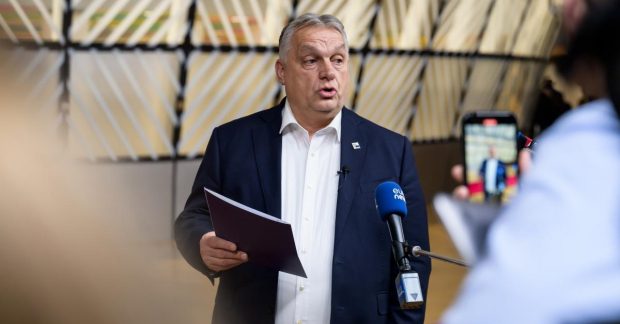
The reaction from the Orbán camp was immediate and unapologetic. Viktor Orbán did not attempt to distance himself from the allegations or express concern for his brother’s legal situation. Instead, he launched a counter-attack that framed the detention not as a matter of criminal law, but as an act of political persecution. Orbán alleged that the government is conducting a "political witch hunt." He argued that the authorities are desperate to distract the public from an upcoming review by the National Security Committee of communist-era secret police archives. In this framing, the detention of Áron Orbán is not the end of an investigation but the beginning of a smokescreen. Orbán claimed that the true target is himself, and that his brother is being used as a proxy to attack the opposition and the ruling coalition. This is a classic deflection tactic: by suggesting the motives are political rather than judicial, the accused can challenge the legitimacy of the process itself. The reference to communist-era secret police tactics was particularly charged, invoking a dark chapter of Hungarian history to suggest that the current state apparatus has reverted to authoritarian methods. It was a move designed to rally the base and cast doubt on the integrity of the National Bureau of Investigation.

The close associates of the former Hungarian Prime Minister's brother have previously been detained in relation to a criminal case connected with a labour hire agency and influence peddling. https://t.co/Il5xuyR5zJ
Péter Magyar’s response was swift and personal. In a retort that eschewed diplomatic distance, he accused Orbán of blaming others as usual. Magyar suggested that the Prime Minister was attempting to shift the focus away from the evidence, or the lack thereof, and onto the motives of the accusers. He warned Orbán that he would reap what he sows, a phrase that carries heavy moral weight in a political context. It implies that the current crackdown is a consequence of past actions or policies, perhaps referring to the alleged networks of influence surrounding the Orbán family. The exchange between the two men became the central drama of the day. While the legal team and the public waited for statements from the courts, the politicians engaged in a high-stakes verbal duel. The contrast between the two men was stark: Magyar positioned himself as the transparent agent of truth, releasing information as it became available. Orbán positioned himself as the victim of a rigged system, using historical trauma to legitimize his defiance. The public was left to parse which narrative held more weight: the official investigation into human smuggling or the political counter-narrative of a witch hunt.
The contrast between the two men was stark: Magyar positioned himself as the transparent agent of truth, releasing information as it became available.
As of now, the situation remains in a legal and political limbo. The National Asset Recovery and Protection Office and the National Bureau of Investigation have confirmed they are continuing their inquiry, but the details of the evidence have not been publicly disclosed. The mention of the National Security Committee’s review of communist-era archives adds a layer of complexity to the timing. Critics of the Orbán government have long argued that the state has become an instrument for political survival, using legal mechanisms to neutralize threats. Supporters argue that the opposite is true, that the Orbán regime is besieged by an opposition that seeks to destabilize the country. The detention of Áron Orbán has transformed a criminal case into a referendum on the rule of law. If the charges stick, it would be a major blow to the governing coalition, confirming the existence of a smuggling ring tied to the head of government. If the charges collapse, it will serve as vindication for Orbán’s narrative of a political frame-up. Until the courts issue a definitive ruling, the Hungarian public is watching a high-wire act where the stakes are the very legitimacy of the state institutions. The brother in custody is no longer just a family member; he has become a symbol of the contest for control over Hungary’s future.