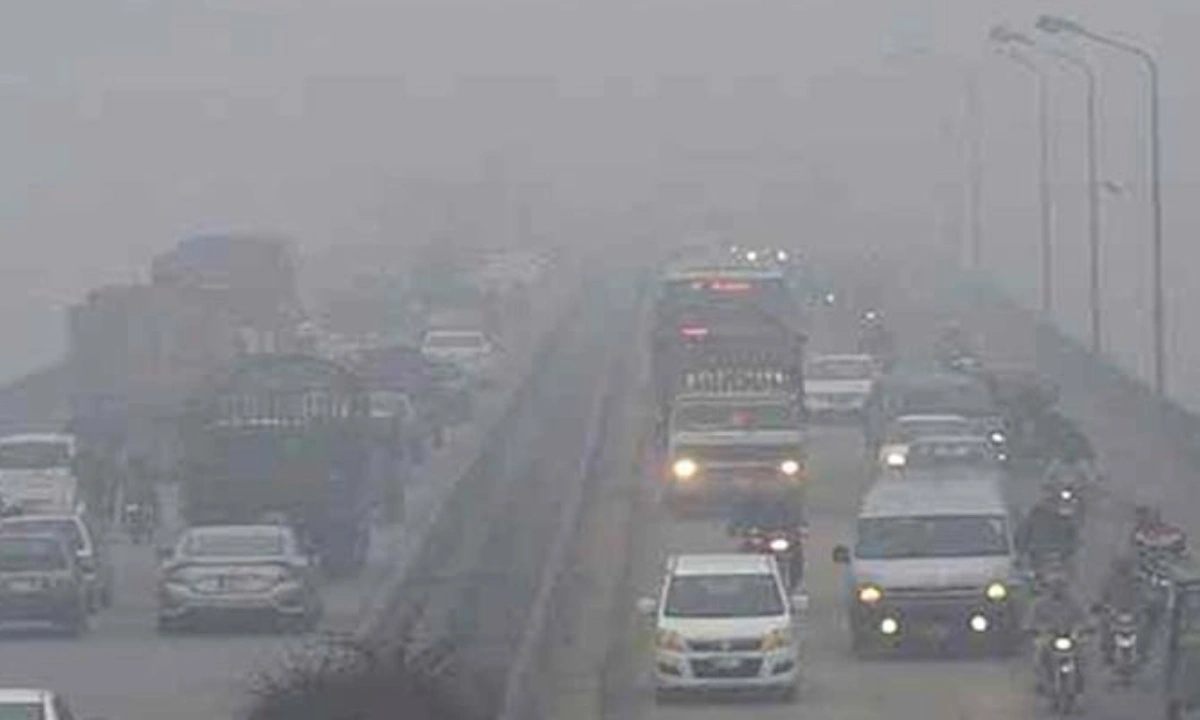
The dawn broke over Lahore not with the promise of a new day, but with a thick, hazardous haze that obscured the skyline. This wasn't just another foggy morning—it was a pollution emergency. As residents of Lahore woke up, they found themselves breathing in air that would soon be recorded as the most polluted on Earth that day. The city had once again claimed the unwelcome title of having the worst air quality globally, a distinction that has become tragically routine.

The measurements were staggering. Lahore's air pollution levels reached 291 particulate matter, a level that health authorities consider extremely dangerous. To put this in perspective, anything above 150 is considered unhealthy, while levels above 250 are classified as hazardous. But Lahore wasn't alone in its struggle. Across Punjab province, other cities were grappling with their own pollution crises.

Construction workers in Lahore are facing growing difficulties as dense smog and toxic air blanket the city, posing serious health risks and disrupting their daily livelihoods https://t.co/DWFepMiPen
The environmental crisis extended far beyond Lahore's borders. In Nankana Sahib, the particulate matter reading reached a staggering 685. Dera Ghazi Khan wasn't far behind, with measurements at 611. Jhang recorded 498, Multan reached 301, and Gujranwala and Faisalabad both hovered around 296. These weren't just numbers—they represented a public health emergency affecting millions of people.
Lahore has frequently topped global pollution charts, particularly during the winter months when weather conditions trap pollutants close to the ground.
With such extreme pollution levels, health concerns have escalated dramatically. The thick haze in the air can lead to respiratory problems, cardiovascular issues, and other serious health complications. The microscopic particles in the air are so small they can penetrate deep into the lungs and even enter the bloodstream, causing widespread damage throughout the body.

Lahore remains the world’s most polluted city as smog pushes its overall AQI to 297. Air quality reaches 429 in Allama Iqbal Town, 358 on Barki Road and 289 in Model Town, making breathing difficult across several cities. #SamaaTV https://t.co/7dsz2qnRDW
In response to the crisis, local authorities have issued advisories urging residents to take precautions. The recommendations are stark: avoid outdoor activities whenever possible, and wear protective masks when going outside. For vulnerable populations—the elderly, children, and those with pre-existing conditions—the advice is even more urgent: stay indoors as much as possible.
This isn't an isolated incident but part of a worsening pattern. Lahore has frequently topped global pollution charts, particularly during the winter months when weather conditions trap pollutants close to the ground. The combination of vehicle emissions, industrial waste, agricultural burning, and construction dust creates a toxic cocktail that lingers in the air.

Stronger Traffic Enforcement Safer Lahore (Report October 2026) 🔹Digital Challans: 376,552 🔹Lifter Action Against Illegal Parking: 15,048 🔹License Processed: 106,647 🔹Special Campaign Challans: 278,046 🔹Anti Smog Challans: 67,914 🔹Panic Buttons Installed: 4,376 1/2 https://t.co/Se4iJ5pDGc
The situation in Lahore reflects a broader environmental challenge facing many rapidly developing cities worldwide. As urban populations grow and industrialization expands, air quality has become an increasingly critical issue. What makes Lahore's case particularly alarming is the extreme nature of its pollution levels, which consistently rank among the highest globally.
As the pollution crisis continues, questions are being raised about long-term solutions. Environmental advocates are calling for stricter emissions standards, increased green spaces, and better public transportation systems. The challenge is immense, requiring coordinated efforts between government agencies, industries, and citizens.
Behind the statistics are real people suffering real consequences. Parents worry about their children playing outside. Workers commute through hazardous conditions. The elderly and sick face increased health risks. The air in Lahore and other Punjab cities has become a silent but deadly adversary in daily life.
The pollution crisis in Punjab serves as a stark reminder of the intersection between environmental health and human wellbeing. As Lahore once again claims the top spot on global pollution charts, the urgent need for meaningful action becomes impossible to ignore. The health and future of millions depend on it.