
In the quiet corridors of political life decades ago, the pace of power was dictated by the physical movement of paper. To reach the public or the press, one did not simply tap a screen; one searched for a fax machine. It was a world of manual processes, where sending a press release was a deliberate, sometimes cumbersome task that required navigating a landscape of physical infrastructure. For Narendra Modi, these memories are not merely nostalgic—they are the baseline against which the staggering velocity of modern India is measured.
During his early political career, the work was tactile and localized. Managing party events along Ashoka Road required a different kind of stamina, one rooted in the logistical realities of a pre-digital age. In those years, the connection between a leader and the citizenry was mediated by slow-moving channels, a far cry from the instantaneous, hyper-connected reality that defines the current political epoch.
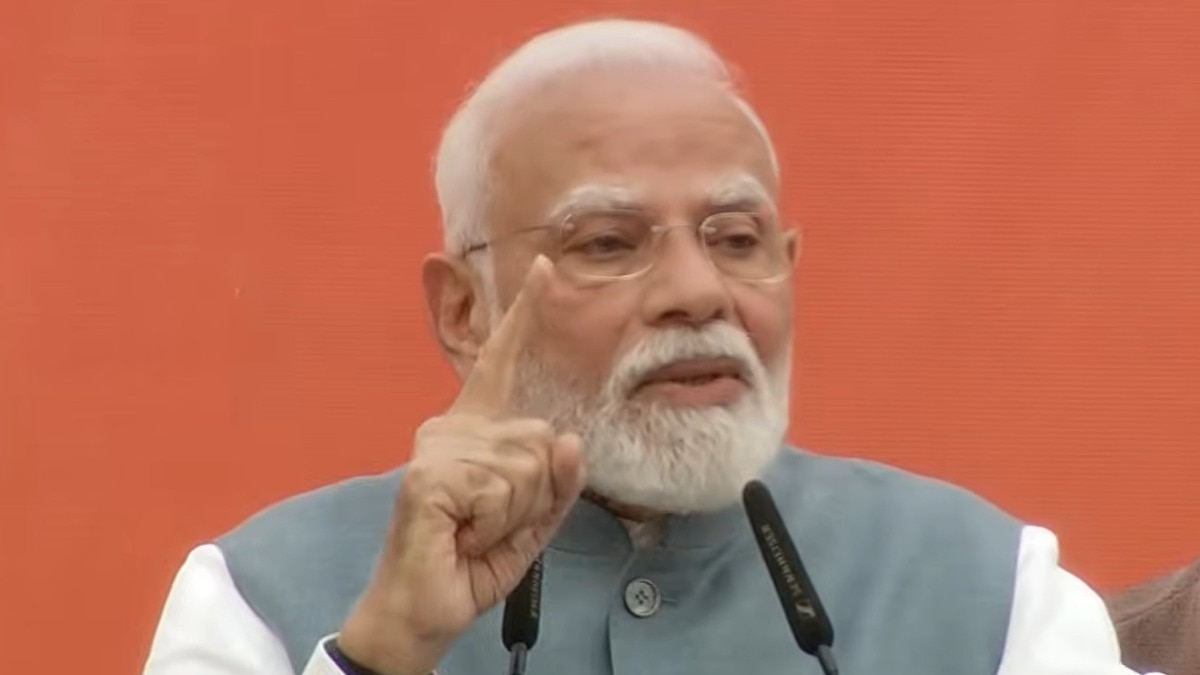
Speaking at an event in New Delhi, the Prime Minister reflected on how the last 25 years have fundamentally reconfigured the DNA of both media and politics. The transition has been nothing short of radical. The tools of engagement have shifted from the mechanical whir of the fax machine to the rapid-fire visual language of Instagram reels and social media. This evolution has not just changed how information is delivered; it has changed the very nature of how political actors interact with the world.
This surge in solar capacity is part of a broader narrative of systemic overhaul.
This technological leap has collapsed the distance between the governing and the governed. Where once a message might take hours or days to propagate through traditional media channels, it now moves in seconds. This instant connectivity has created a new landscape of opportunity, but as Modi noted, it has also introduced a fresh set of challenges that come with the speed of the digital age.
Amidst this discussion of technological flux, a sense of temporal urgency emerged. For the current administration, the evolution of the country is not a drifting process but one governed by specific, ambitious milestones. The focus has shifted from the incremental to the monumental, anchored by a singular, looming target.
"Today our country is also working with a deadline," Modi remarked during a Diwali Milan event. "This deadline is 2047." This year represents the horizon for 'Viksit Bharat'—the vision of a fully developed India. It is a deadline that serves as both a motivator and a metric, a point in time against which all current progress is measured.
To understand the scale of the ambition behind the 2047 goal, one must look at the shifts occurring in the country's foundational sectors. The transition from an analog past to a digital future is mirrored by a massive pivot in energy and economic structures. In the realm of renewable energy, the scale of change is quantifiable: over a period of 12 years, India has seen its solar generation capacity increase 50-fold.

This surge in solar capacity is part of a broader narrative of systemic overhaul. It is a move away from the old ways of energy production toward a more modern, decentralized, and technologically driven model. This capacity for rapid scaling is presented as a blueprint for how the nation intends to meet its broader developmental requirements.

Prime Minister Narendra Modi on Thursday urged Indian media to focus on the country's success stories and highlight its development journey while addressing journalists at the Diwali Milan event at the BJP headquarters in New Delhi. Modi also highlighted his government's achievements, claiming that 50 crore people had moved above the poverty line over the past 12 years, citing World Bank figures. He further called on the media to spread awareness about drug abuse and expressed confidence that India would become a developed country. #NarendraModi #PMModi #DiwaliMilan #IndianMedia #IndiaDevelopment #DrugAbuseAwareness
While the high-tech shifts in media and energy capture the headlines, the administration points to a more fundamental transformation in the lives of the population. The goal of a developed nation is often measured by the floor it provides for its most vulnerable citizens. In this context, the government highlights a significant shift in the economic landscape, claiming that 50 crore people have been lifted out of poverty.
This movement of hundreds of millions of people represents a massive shift in the country's socio-economic fabric. It is a statistic used to argue that the momentum of the last two decades is not merely about digital connectivity or energy grids, but about the fundamental material conditions of the Indian people.
This economic evolution is further fueled by a burgeoning ecosystem of innovation. The growth of the startup ecosystem has become a cornerstone of the modern Indian identity, bridging the gap between the technological tools used in politics and the economic engines driving the country forward. This ecosystem represents the practical application of the digital revolution, turning connectivity into commerce and ideas into scalable enterprises.
It is a cycle of growth where technology enables new economic players, and those players, in turn, drive the nation closer to its developmental targets. The connectivity that once only served to send a fax now serves to launch global enterprises.
As the nation moves through this period of intense transition, there is a palpable sense of institutional confidence. The argument being made is that India has moved past the era of setting goals and failing to meet them. Instead, the country has entered a phase where it consistently meets the targets it sets for itself.
This confidence is rooted in the belief that the tools of the present—the digital connectivity, the solar capacity, the startup energy—are sufficient to bridge the gap between the current reality and the 2047 vision. "When we can do so much, we can also fulfill the dream of a developed India," Modi stated, framing the country's recent achievements as proof of concept for its future ambitions.
As the conversation moves from the nostalgic streets of Ashoka Road to the digital frontiers of social media, the trajectory of India remains fixed on a specific destination. The radical changes in media and politics are not ends in themselves, but part of a larger, technological metamorphosis designed to propel the nation toward its deadline.
The journey from the manual to the digital, and from poverty to development, is being navigated with a sense of calculated urgency. Whether through the lens of a solar panel or the scroll of an Instagram reel, the message remains the same: the tools have changed, the speed has increased, and the deadline is approaching.