On November 13, 2026, the United States experienced a sudden and unprecedented disruption to its air traffic system. A technical failure, the exact nature of which remains unspecified, triggered a nationwide ground stop by the Federal Aviation Administration (FAA) at 20:54 UTC. This single event brought American air travel to a standstill, affecting not just domestic flights but international connections as well. The FAA, the government body responsible for regulating civil aviation in the United States, had to make the extraordinary decision to halt all flights across the country, creating a ripple effect that would soon be felt thousands of miles away.

The immediate impact was staggering. When the ground stop was issued, 4,042 flights were already in the air or scheduled to arrive at US airports. By the time the situation began to stabilize, over 5,000 flights had been cancelled—the equivalent of removing an entire day's worth of air traffic from the system. Major hubs like Chicago O'Hare bore the brunt of the cancellations, with 229 flights scrubbed there alone. Atlanta's Hartsfield-Jackson International Airport, typically one of the world's busiest, saw 1,114 departures affected. The chaos wasn't limited to cancellations; delays stretched into hours as airports struggled to manage the backlog once the ground stop was lifted.

BREAKING: The Federal Aviation Administration ordered a nationwide ground stop Friday for all airlines "due to extraordinary circumstances and for reasons of safety." https://t.co/PU3fT4R5QO
Even after the FAA lifted the ground stop, the nation's airports remained in a state of turmoil. Chicago O'Hare, New York's LaGuardia and JFK airports reported the highest cancellation rates, demonstrating that the initial technical failure had created cascading problems throughout the system. Flights weren't just delayed—they were hours behind schedule, if they departed at all.
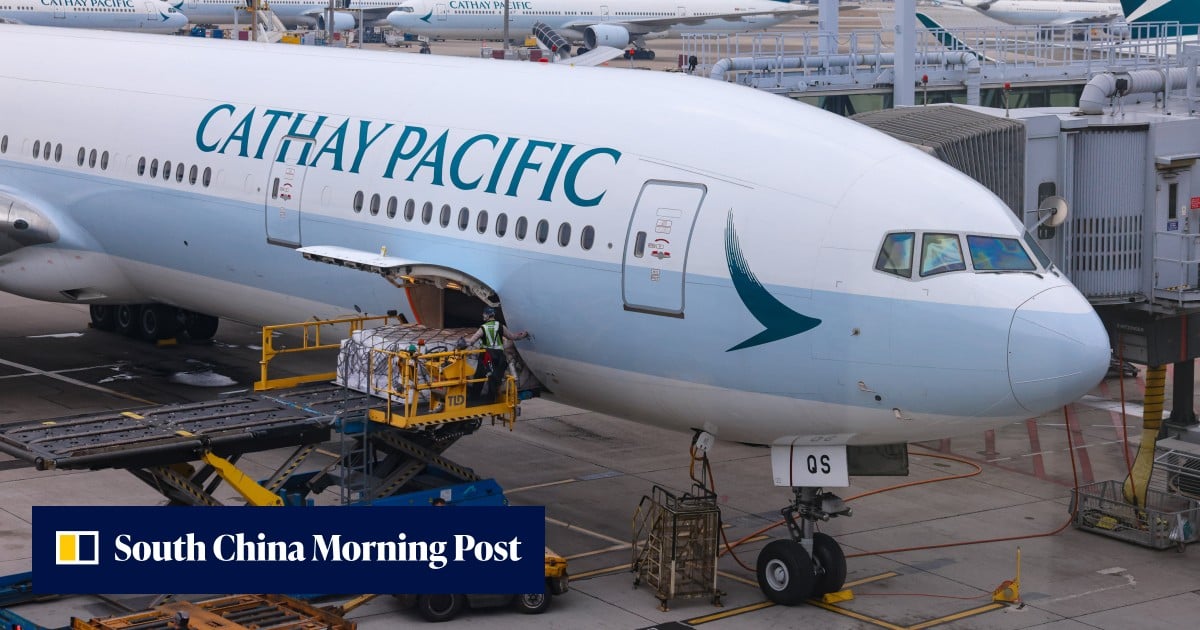
The airline, which operates numerous flights between Hong Kong and various US destinations, was forced to warn passengers of potential delays and cancellations.
The disruption in US air travel didn't stay contained within American borders. For international carriers like Cathay Pacific, the chaos across the Pacific created significant challenges. The airline, which operates numerous flights between Hong Kong and various US destinations, was forced to warn passengers of potential delays and cancellations. Hong Kong, a major global aviation hub, suddenly found itself at the receiving end of America's air traffic crisis. Flights bound for Hong Kong from the United States faced uncertainty as the situation in America remained fluid, leaving travelers in the dark about their itineraries.

⚡️BREAKING: The US Federal Aviation Administration has suspended all departures from every airport across the country The reason is a frequency issue in the National Airspace System (NAS).
Behind the numbers and technical explanations were thousands of individual stories of disruption. The FAA's decision, while necessary for safety, came at a significant cost to the traveling public and the airlines that serve them.
In the days following the ground stop, the focus shifted to recovery. For passengers, the experience served as a stark reminder of how interconnected the global aviation system is and how quickly a single point of failure can bring it to a halt. The question on many minds was whether this was a one-time event or a sign of deeper vulnerabilities in the system.

US airports latest: Airspace reopens after 'extraordinary circumstances' grounded flights - but delays expected https://t.co/EeU45YDYJX
As the situation gradually improved, attention turned to preventing similar disruptions in the future. Meanwhile, airlines like Cathay Pacific continued to monitor the situation in the United States, adjusting their operations to minimize the impact on their passengers. The incident highlighted the delicate balance between efficiency and safety in aviation, and the challenges of maintaining a global air travel network in an increasingly complex technological environment.

While the immediate crisis had passed, the long-term implications remained uncertain. Would the FAA implement additional safeguards to prevent a recurrence? How would airlines adjust their contingency plans to better handle such widespread disruptions? For now, travelers could only hope that the skies over the United States—and the connections that span the globe—would remain stable in the months to come.