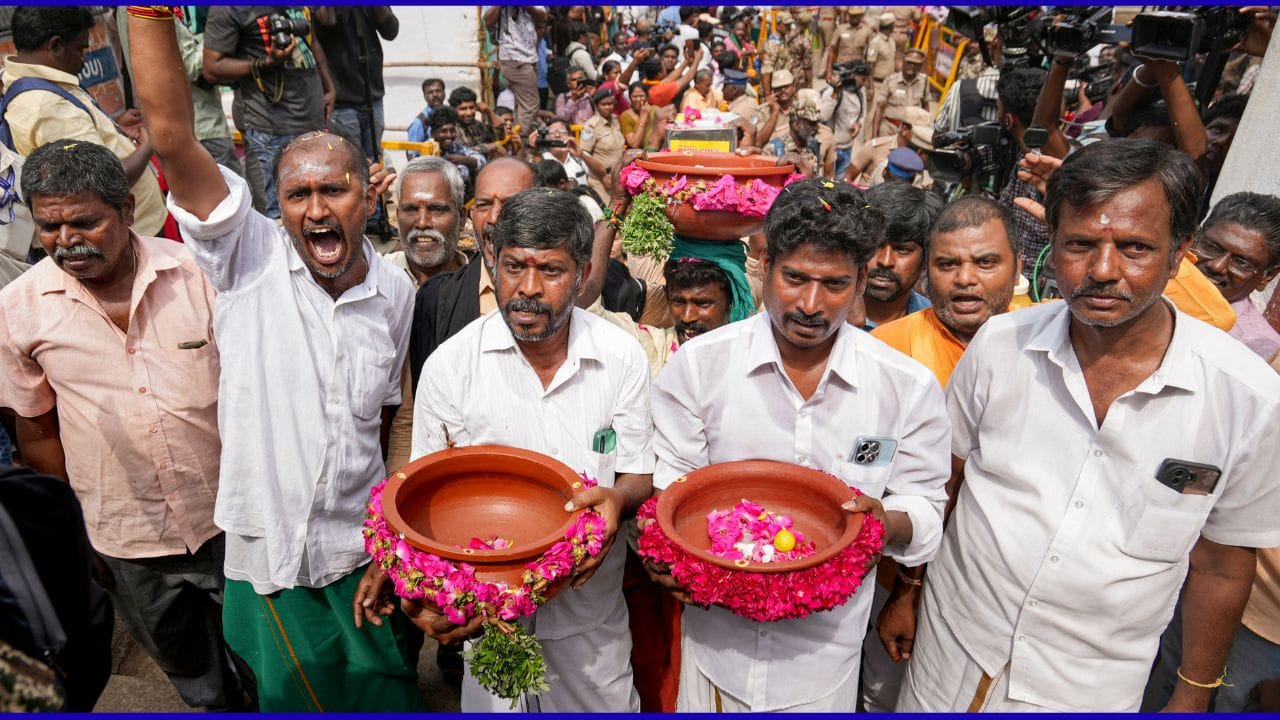
In the quiet, pre-dawn hours of Madurai district, the stillness of Thirupparankundram was broken not by the usual sounds of the waking town, but by the arrival of the Central Reserve Police Force. It was midnight when the personnel arrived, their presence a heavy, uniform response to a tension that has been simmering in the local landscape. This was no routine patrol. The deployment was a direct consequence of a legal struggle that has moved from the quiet halls of government offices to the very streets where religious tradition meets the strict requirements of the law.

The arrival of the CRPF—a paramilitary force tasked with internal security—marks a significant escalation in how the state intends to manage the upcoming Karthika Deepotsavam. For the residents of the area, the sight of federal officers was met with a sense of welcome, a signal that the upcoming religious observances would be conducted under a watchful, stabilizing eye. The aim is simple in theory but complex in execution: to ensure that the ritual proceeds without the friction that has defined the recent months.
The heart of this friction lies at the Deepathoon pillar, a site of profound ritual importance located near the Sikandar Badusha Dargah. For those observing the Karthika Deepotsavam, the lighting of a lamp at this specific pillar is not merely a gesture; it is a central component of the tradition. However, the path to this ritual has been anything but direct. In an attempt to manage potential security risks, local authorities had made the decision to divert the ritual away from the pillar, redirecting it instead to the Ucchi Pillayar temple.
The Supreme Court of India has stepped into this local impasse with a clarity that has left the Tamil Nadu government in a difficult position.
This diversion was framed as a matter of public safety, a pragmatic move by local administrators to avoid the complexities of conducting a Hindu ritual in such close proximity to a Muslim holy site. Yet, what the authorities saw as a security precaution, the judiciary saw as a failure to uphold a specific mandate. The tension between administrative discretion and religious right has now been mediated by the highest court in the land.
The Supreme Court of India has stepped into this local impasse with a clarity that has left the Tamil Nadu government in a difficult position. The court had previously issued an interim order specifically requiring that the lamp be lit at the Deepathoon pillar, as tradition dictates. When the local government moved to bypass this instruction by rerouting the ceremony to the Ucchi Pillayar temple, the response from the bench was one of sharp dissatisfaction.
The Supreme Court did not merely disagree with the government's decision; it signaled that such non-compliance carries heavy consequences. By warning that the failure to follow the interim order could constitute contempt of court, the judiciary has elevated this from a local administrative dispute to a matter of constitutional importance. The court's stance suggests that the mandate to honor the ritual at its traditional site is not a suggestion to be weighed against local convenience, but a directive that must be met.
As the legal dust settles and the security apparatus settles into place, all eyes are now fixed on November 24th. This is the date set for the Deepotsavam, the moment when the lamp is scheduled to be lit at the Deepathoon pillar. The presence of the CRPF serves as a buffer, a way to bridge the gap between the judicial requirement to hold the ritual at the pillar and the state's responsibility to maintain order near the Sikandar Badusha Dargah.
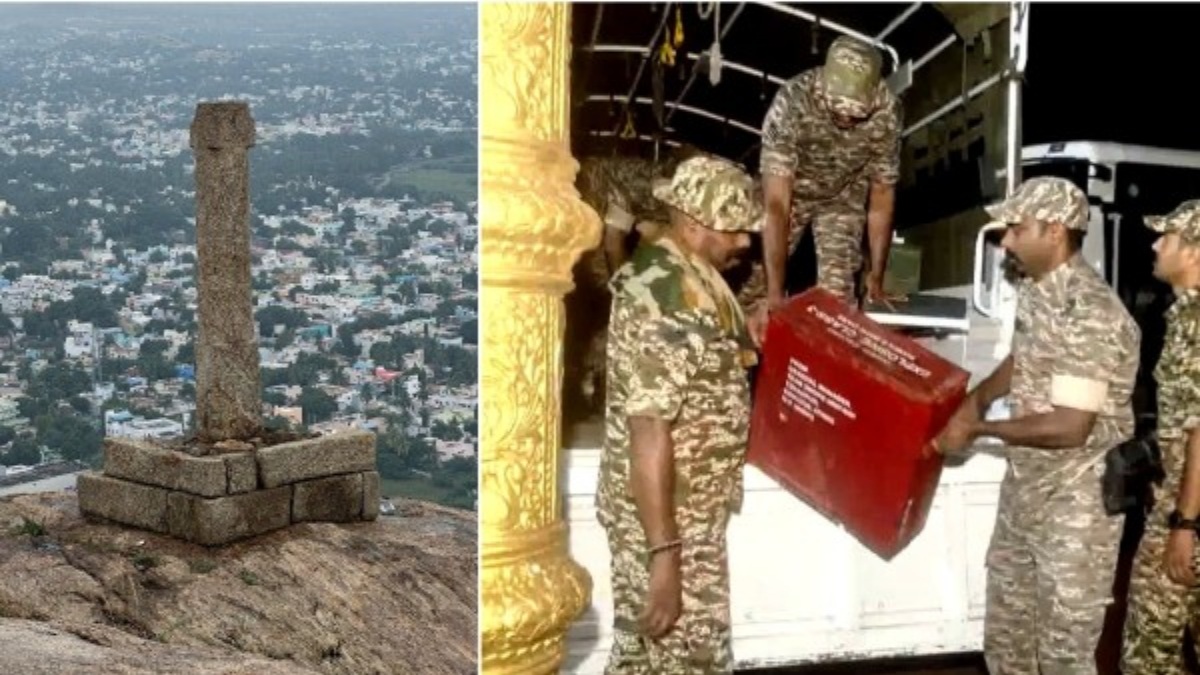
The atmosphere in Madurai remains one of watchful anticipation. The deployment of federal forces at midnight was a preemptive strike against chaos, an attempt to ensure that when the flame is finally lit on the 24th, it is a moment of religious observance rather than a flashpoint of civil unrest. The stage is set, the law has spoken, and the security forces are in position to witness the outcome.