
On November 9, 2026, citizens across India observed the major festival of Diwali, with national leaders extending traditional greetings to mark the occasion. President Droupadi Murmu and Prime Minister Narendra Modi both issued official wishes to the nation. Yet as the day unfolded, a holiday statement delivered by Congress President Mallikarjun Kharge swiftly transformed a moment of national celebration into an intense political dispute in New Delhi.
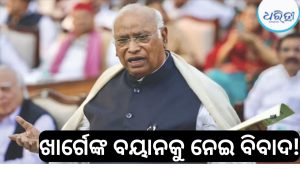
Speaking during a press interaction, Kharge sought to frame the festival around themes of broad communal harmony and familial reunion. However, his choice of words immediately drew public scrutiny when he used a phrase borrowing cross-cultural terminology to describe the Hindu festival of lights.
During his media exchange, Kharge referred to Diwali using the phrase 'Khushi Ka Eid'—or an 'Eid of joy.' In his full statement, the Congress chief elaborated on his framing of the holiday, offering a broad message of peaceful togetherness across the country.
In his response, Bandaari linked Kharge's festive remarks to a broader pattern of policy under the party's current leadership.
"This is an Eid of joy for all. It is a big festival of our India which everyone celebrates. The reason is that it is an Eid of joy. It will be an Eid for a long time. It is a good festival for people to live in peace and happiness and meet their families. I extend good wishes to all people of the country," Kharge stated during the press interaction.
While Kharge intended the remarks as an inclusive message highlighting peace and social cohesion, the specific cross-referencing of terms immediately became a lightning rod for opposition critics.
The ruling Bharatiya Janata Party (BJP) launched a sharp and rapid counterattack against the Congress president. Speaking from New Delhi, BJP spokesperson Pradeep Bandaari—also identified as Pradeep Bandhale—rejected the notion that Kharge’s phrasing was merely benign holiday rhetoric. Instead, the BJP framed the statement as a calculated political strategy designed to cater to specific religious constituencies.
Bandaari alleged that Kharge’s remarks were evidence of ongoing 'vote bank' tactics, arguing that Congress was prioritizing political maneuvering even during major religious observances. The party asserted that describing a traditional Hindu festival using terms associated with Islamic holidays revealed an underlying insensitivity toward traditional practices.

In his response, Bandaari linked Kharge's festive remarks to a broader pattern of policy under the party's current leadership. "Even on an occasion like Diwali, Congress has chosen vote-bank politics. The Congress president called Diwali 'Eid of joy'. Remember, Sonia Gandhi wept for 'babri'. Previously, when Sanatani was called 'dengue, malaria and AIDS', Congress remained silent. The policy of Congress under the leadership of the Gandhi-Bhadra family is anti-Sanatani and anti-Hindu," Bandaari said.
By citing past controversies—specifically referencing earlier public incidents where Sanatani concepts were disparaged as diseases like dengue, malaria, and AIDS while Congress kept quiet—the BJP sought to demonstrate what it characterized as long-standing ideological negligence. Bandaari directly labeled the party's stance, declaring plainly that "Congress is anti-Sanatan."
To solidify its accusations of an anti-Hindu stance, the BJP brought up historic events surrounding the Babri Masjid demolition. The party referenced a recent interview given by senior Congress leader Sonia Gandhi to The Guardian, in which she spoke openly about her reaction to the event.
In that interview, Sonia Gandhi recalled watching live broadcast coverage of the destruction, admitting: "I shed tears when watching the Babri Masjid demolition." BJP representatives seized upon her confession of shedding tears during the live footage of the demolition, presenting it as further proof that the party under the Gandhi-Bhadra leadership harbors hostility toward Sanatan Dharma.
The controversy underscores the deep political divide surrounding religious rhetoric and identity in contemporary Indian governance. While Congress framed Kharge's message as an effort to promote universal goodwill and family unity, the BJP successfully turned the phrasing into a focal point for accusations of appeasement.
As the festival of Diwali drew to a close on November 9, 2026, what began as a routine exchange of holiday greetings remained frozen in a sharp battle over religious sensitivity, historical memory, and political messaging.