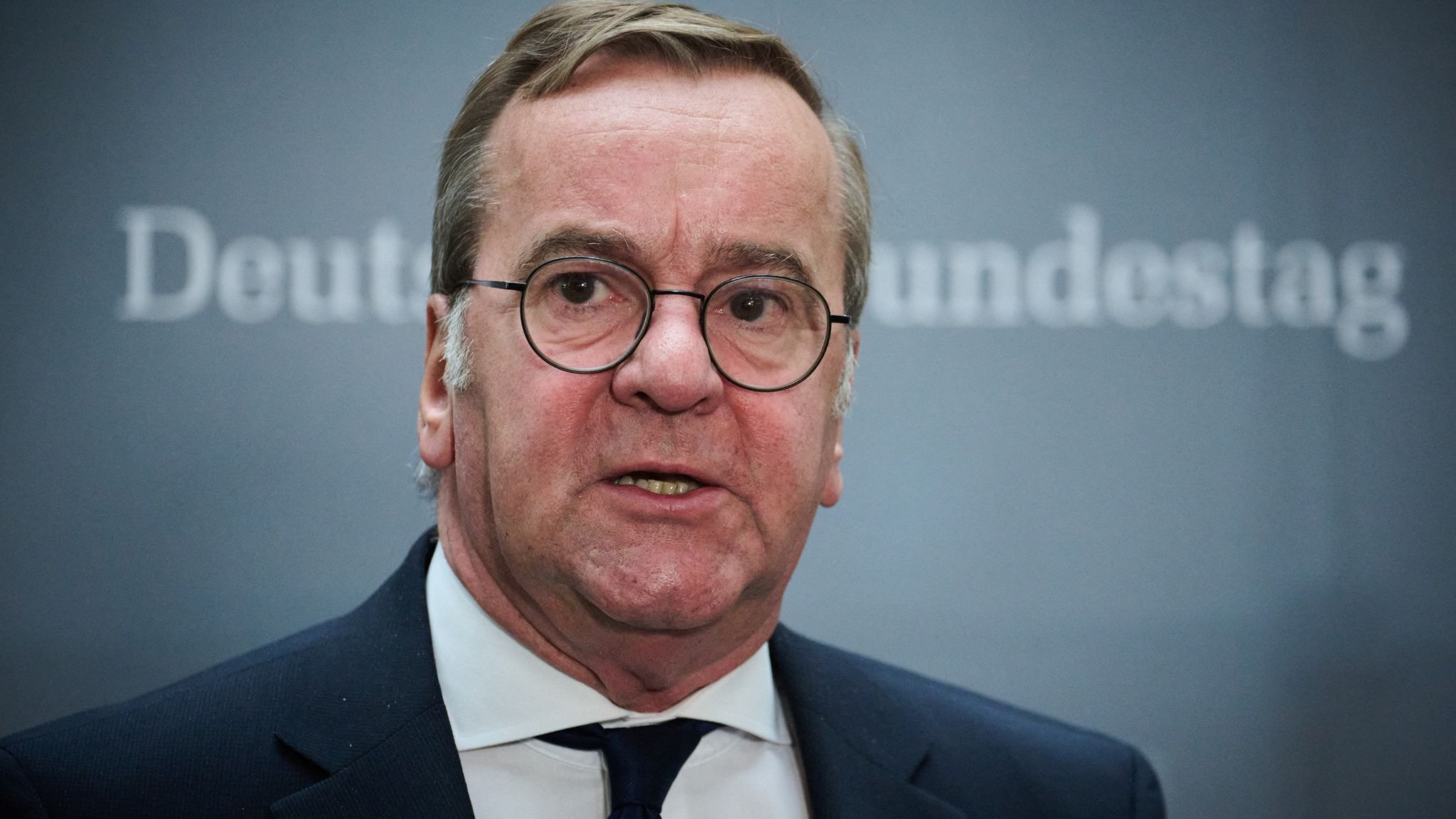
Recently, German Defense Minister Boris Pistorius stood before the Defense Committee to deliver a message that was as blunt as it was necessary. For years, the Bundeswehr—Germany’s armed forces—has sought to position itself as an attractive employer in an era where personnel expansion is a strategic necessity. But the reality behind the uniform, as presented in a new "hidden field study" (Dunkelfeldstudie), paints a far more troubling picture. "Politics begins with looking at reality," Pistorius told the committee. "I can only take effective measures if I acknowledge and recognize that reality."

That reality, according to the study conducted by the Bundeswehr Center for Military History and Social Sciences, is that sexualized misconduct is a widespread issue. The study, which reached out to approximately 45,000 soldiers and achieved an 18% response rate considered scientifically representative, provides a new perspective on the scale of the problem.
The numbers are stark. When looking at the entire duration of their service, 72% of female soldiers and 31% of male soldiers reported experiencing at least one instance of verbal harassment. The data becomes even more alarming when narrowed to the 12 months preceding the survey. In that single year, 38% of women and 16% of men reported experiencing verbal sexualized misconduct. Physical harassment was reported by 9% of women and 3% of men, while 2% of both female and male soldiers reported experiencing sexual violence.
It is not negotiable, and it stands at the center of internal leadership.
Beyond the physical and verbal, the study highlights the modern face of harassment. Among the female soldiers surveyed, 40% reported experiencing sexualized remarks, while 15% faced harassment via digital manipulation. These findings represent a significant challenge for a military institution that prides itself on "inner leadership" (Innere Führung), a concept rooted in the idea that soldiers are "citizens in uniform" whose conduct must reflect the democratic values of the state.
In response to these findings, Pistorius has drawn a hard line. "There is zero tolerance for sexualized misconduct in the Bundeswehr," he declared. "Zero tolerance is the line." For the Defense Minister, this is not merely a matter of discipline but a fundamental constitutional requirement. "It is about nothing less than the respect for human dignity from our Basic Law, and that applies even more so in the Bundeswehr. It is not negotiable, and it stands at the center of internal leadership."
This study was initiated by the former Parliamentary Commissioner for the Armed Forces, Eva Högl, as part of an effort to bring transparency to the military's internal culture. By categorizing everything from inappropriate remarks to severe sexual violence, the report has forced the Ministry of Defense to confront the gap between the military's stated values and the daily experiences of its personnel.
Following the presentation of the study, Pistorius introduced an action plan designed to address the findings. While the details of the plan are now under scrutiny, the political pressure to act is mounting. Ahead of the meeting, the Greens party called for the establishment of an external reporting office for victims of sexualized misconduct.

As the Bundeswehr seeks to recruit new talent, the findings pose a significant hurdle. If the military is to succeed in its mission, it must reconcile its need for growth with the urgent requirement to foster an environment where human dignity is more than just a phrase in the Basic Law. For now, the "zero tolerance" policy serves as the official standard, but the true test will be whether the action plan can bridge the divide between the reported reality and the culture the German military aspires to embody.