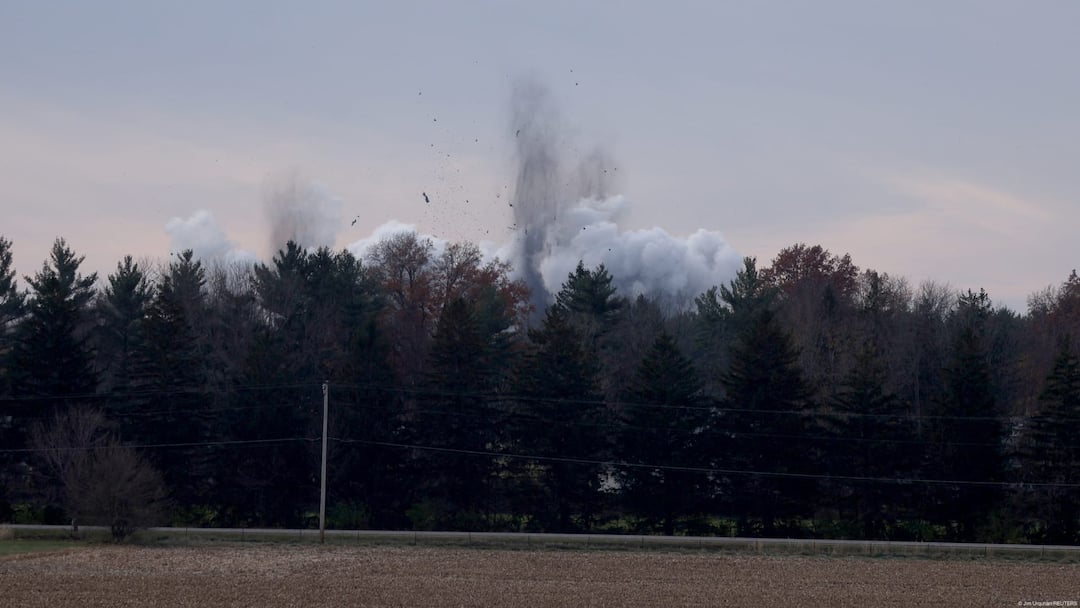
Imagine a chemical so unstable that touching it in the wrong form could trigger an explosion. That was lead azide, a primary explosive used in detonators, and by the spring of 2023, it had become a ticking time bomb in the hands of the US Army.

Lead azide is not just a regular explosive; it is a primary explosive, meaning it is highly sensitive and reacts to shock or friction. The Army had been storing nearly 5 tonnes of it at the Iowa Army Ammunition Plant since January 2009. For over a decade, it sat quietly. But in March 2023, a routine inspection revealed a disturbing change: the chemical had partly crystallized.
Crystallization is the process where a liquid or solution turns into a solid structure. In lead azide, this transformation is dangerous. The crystalline form is significantly more sensitive to heat, shock, and friction than the original substance. As one official, Rob Cekada, put it bluntly: "It's not a matter of if, it's a matter of when, and that would not be a great place for us to be in." The realization was stark, summarized by Eric Shirley: "Inaction is no longer an option."
The evacuation was a logistical challenge, moving thousands of people out of their homes to ensure their safety from the lingering toxic cloud.
With the stockpile growing more unstable by the day, the Army faced a difficult decision. They could not simply store it. They could not easily move it without risking a catastrophic failure in transit. The only solution was to destroy it.
On May 10, 2023, the Army executed a controlled blast at the Iowa plant. The goal was simple: detonate the entire national stockpile of lead azide in a safe, controlled environment. The volume was massive—nearly 5 tonnes of the volatile chemical. The explosion was not just about removing a threat; it was about ending the era of this specific, problematic chemical inventory for the US military.
However, detonating lead azide came with its own set of hazards. The chemical is heavy, and when it explodes, it creates a cloud of toxic lead dust. The Army calculated that this dust could travel and settle up to 40 miles (64 kilometers) from the site. To mitigate this, officials erected physical barriers and used water to suppress the particles, aiming to prevent the dust from drifting into surrounding communities.
The most heavily affected area was Burlington, a city with a population of 25,000. As a precaution, residents within a 5-mile radius were evacuated. This was not because an immediate explosion was imminent in their homes, but because the wind and distance meant they were in the zone where toxic lead particles might settle. The evacuation was a logistical challenge, moving thousands of people out of their homes to ensure their safety from the lingering toxic cloud.
Amidst the evacuation and the controlled destruction of a national stockpile, the tone of the official communications was one of controlled urgency. Adam Telle, a voice for the operation, addressed the public directly: "We don't believe that the public should be in a panic. Our goal is to keep as much of it as we can here on our Iowa Army Ammunition plant to prevent it from traveling."
This statement highlighted the dual nature of the event. On one hand, it was a dangerous operation involving toxic materials. On the other, it was a successful containment effort. The Army was not just blowing something up; they were stopping it from blowing up later, in an uncontrolled, unpredictable location.
Days after the detonation, the highest office in the country weighed in. President Donald Trump offered a supportive assessment of the Army’s handling of the crisis. "Early reports from Iowa are that the Army's mitigation efforts have far exceeded expectations," he stated.
This endorsement served to validate the military's strategy. The use of barriers, water suppression, and evacuation had effectively managed the toxic fallout. The chemical that had been a silent threat for 14 years was no longer sitting in a warehouse, crystallizing and growing more dangerous. It was gone.
Today, the lead azide stockpile is destroyed. The immediate threat of a spontaneous explosion in the Iowa warehouse is no longer a reality. However, the event stands as a case study in how aging infrastructure and chemical inventories can create modern hazards.
The dust has settled, both literally and figuratively. The barriers are down, the residents have returned, and the chemical is no longer a factor in the Army’s logistics. But the lesson remains: materials that sit untouched for years can change in ways that demand immediate, decisive action. The Army managed to keep the danger on their own turf, and for once, that was exactly where it needed to be.