
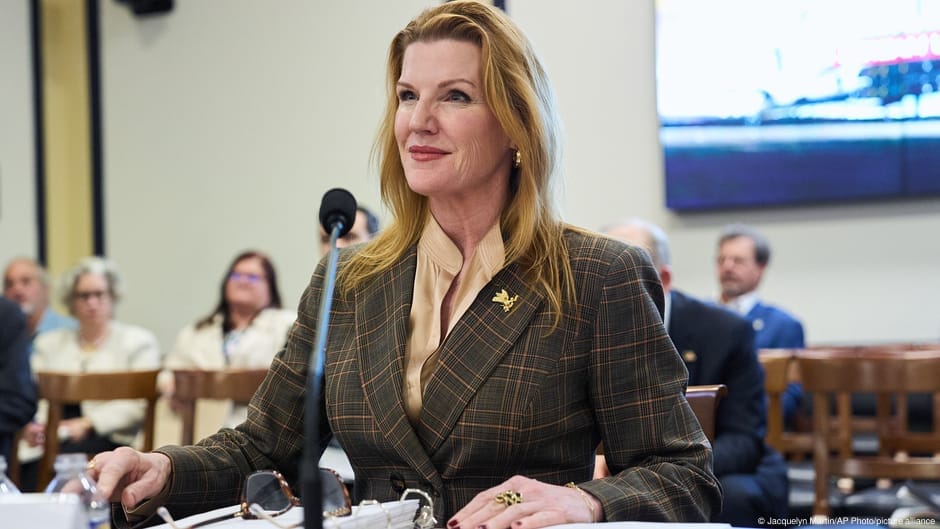
In a significant shift in America's cybersecurity leadership, Kirsten Davies, the acting chief information officer at the Defense Department, is set to replace Sean Cairncross as the national cyber director. The transition, effective November 20, 2026, arrives during a period of heightened concern about the nation's digital defenses. Davies, who serves as the acting chief information officer at the Defense Department, steps into the role as the United States faces a string of cyber outages and tech failures.
Sean Cairncross, who served as the Senate-confirmed national cyber director for more than a year, is leaving his post amid questions about his qualifications for the demanding role. A source close to the White House revealed that President Donald Trump "fully supported firing Sean Cairncross from his position as he lacked the strong cyber credentials to perform the job." The dismissal reflects the administration's focus on ensuring leadership in an increasingly complex digital environment.
Despite his departure, Cairncross maintained a positive public stance, releasing a statement praising President Trump's leadership. "It has been the honor of a lifetime to serve President Donald J. Trump," Cairncross wrote in his farewell message. "I leave my role as Director of Cyber incredibly proud of our work to strengthen America's cybersecurity, protect our critical infrastructure, confront foreign threats, and position America to lead the world in Super Intelligence." The outgoing director also noted his role in dealings with major AI firms during his tenure.
The leadership change comes at a pivotal moment in the nation's cybersecurity journey.
The transition has drawn political scrutiny, with Democrats criticizing the administration's response to recent cyber disruptions. Party officials warn that the nation's cyber defenses are not keeping pace with rapidly evolving AI-driven threats. Meanwhile, President Trump has downplayed the severity of the recent outages, while Secretary of State Marco Rubio stated there was "zero evidence that hackers or foreign governments were involved in the disruptions."
As Davies assumes her new responsibilities in an acting capacity, she faces the immediate challenge of navigating the complex relationship between government agencies and private technology companies. Her background in the Defense Department suggests a focus on securing military and defense-related systems, but the national cyber director must also oversee broader efforts to protect civilian infrastructure. The position has taken on greater significance as artificial intelligence technologies continue to advance.
The leadership change comes at a pivotal moment in the nation's cybersecurity journey. As Cairncross noted in his statement, the goal is to "position America to lead the world in Super Intelligence"—a vision that now falls to Davies to advance. With cyber threats growing more sophisticated, the effectiveness of the new leadership will be closely watched by the public. The administration's ability to balance technological advancement with robust defense mechanisms will likely shape the nation's digital landscape.