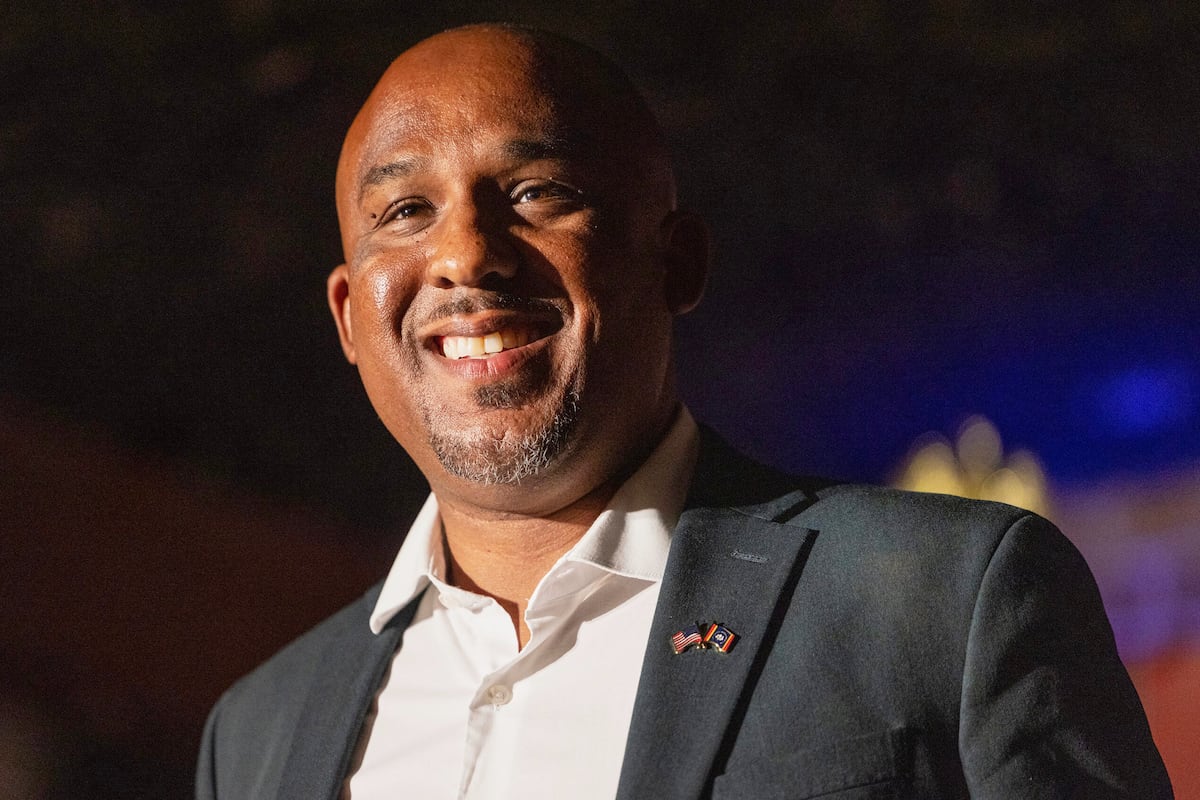
There is a specific kind of isolation that comes with running a campaign where the conventional wisdom of political geography treats your candidacy as an impossibility. For Scott Colom, a 43-year-old district attorney stepping into the grueling arena of a statewide race, that isolation was measured in unanswered telephone calls. In a heavily Republican state where party lines can feel as immutable as the soil itself, there were moments when donors simply would not pick up the phone. They did not believe a moment like this was possible.
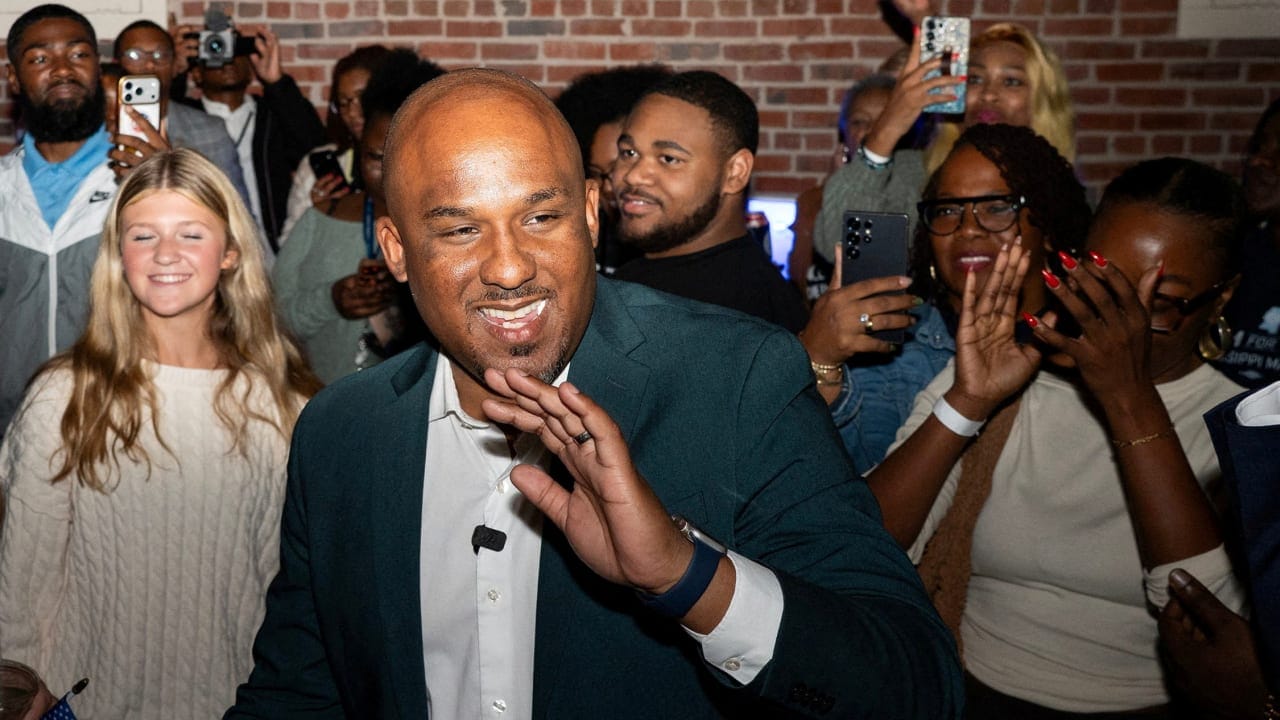
Yet, tucked away in the everyday exhaustion of long campaign days, Colom held onto a personal anchor. Facing an incumbent Republican like Cindy Hyde-Smith in Mississippi means fighting against decades of entrenched voting patterns. There were times when he was tired, and he felt like he could not keep going, but he kept the faith. Reflecting on the lonely stretches of the race, he noted simply: "There were times that I couldn't get donors to answer the phone... They did not believe a moment like this was possible. But I kept the faith."
The political map of Mississippi has long possessed a predictable gravity. For nearly four decades, the state's Senate seats had been entirely outside the Democratic column, locked away since John Stennis won election in 1982. When the results projected following the nationwide midterm elections held across the United States on November 3, that long drought shattered in an instant.
What happened in Mississippi on November 3 did not happen in a vacuum.
Colom's victory over Hyde-Smith was not merely a narrow squeaker; it was a profound historical pivot. By defeating the incumbent Republican, Colom became the Southern state's first Black senator since the Reconstruction era that followed the US Civil War. It was a stunning upset that completely upended expectations in a deeply conservative stronghold, proving that beneath the surface of entrenched political certainties, change can arrive with seismic force.

THANK YOU, MISSISSIPPI! This victory belongs to all of us and I am honored to be your new senator-elect. https://t.co/J2oy1oUVDz
What happened in Mississippi on November 3 did not happen in a vacuum. It was part of a sweeping, nationwide drubbing that the Democrats delivered to President Donald Trump's Republicans during the November 3 midterm elections. Across the country, voters expressed a profound shift in sentiment that reverberated through every level of federal governance.
In the House of Representatives, the scale of the Democratic advance became immediately clear as the results rolled in. Democrats gained 41 seats in the House so far, pushing their total footprint to 254 House seats held by Democrats. Meanwhile, the counterweight of the Republican caucus shrank to 168 House seats held by Republicans, with 13 House races yet to be called as votes continued to be tabulated.
The cumulative effect of these localized battles and sweeping congressional gains was a total realignment of power in the nation's capital. Republicans lost control of both chambers of Congress, leaving President Donald Trump facing a hostile, Democratic-controlled Congress as he navigates the remainder of his term.

In the 100-member Senate, the arithmetic shifted decisively. Democrats secured a working majority, establishing a 55-44 Senate advantage held by Democrats. Even as final questions lingered—such as in the Alaska Senate race, where the winner was yet to be determined—the broad strokes of the new political reality were already unmistakable. The legislative branch had changed hands entirely.
For Colom, the journey from a district attorney's office to the floor of the United States Senate represents a bridge across epochs. Standing at the intersection of modern political rebellion and deep historical memory, his victory encapsulates a grit forged in the face of long odds and institutional skepticism.
Summarizing the inner resilience required to defy the pollsters, the donors, and the historical record, Colom returned to the simple mantra that sustained him through the darkest weeks of the campaign. "There were times when I was tired, and I felt like I couldn't keep going," he reflected, "but I kept the faith, and that is another tradition of our state."