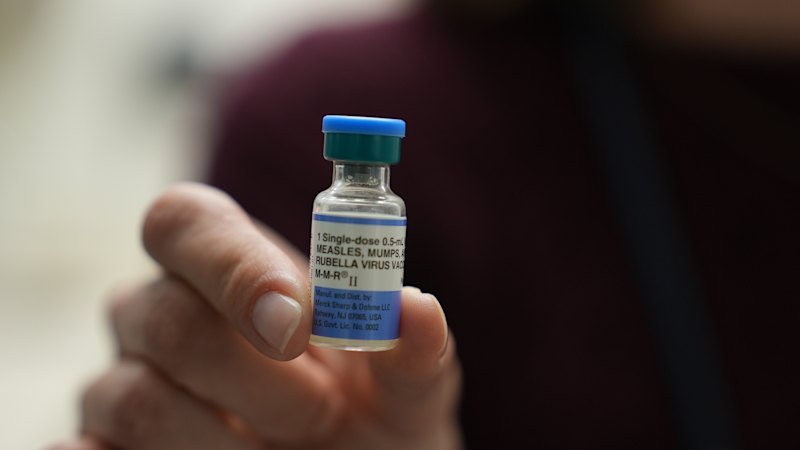
In the carefully controlled world of medicine, maintaining proper vaccine storage is non-negotiable. So when staff at Sydney's Kareena Private Hospital noticed something unusual on July 31, 2026—frosting on vaccine packaging—it triggered immediate concern. The discovery would lead to a significant patient notification, affecting thousands of families who had trusted the hospital with their most vulnerable patients.

The issue wasn't immediately apparent to patients. Vaccines for respiratory syncytial virus (RSV), measles-mumps-rubella (MMR), and hepatitis B had been stored at temperatures lower than recommended due to a cold chain breach. While the hospital quickly confirmed that incorrectly stored vaccines don't cause harm, the potential loss of potency presented a different kind of risk. The vaccines might not provide the full protection they were designed to offer, leaving babies and mothers vulnerable to preventable diseases.

We're reporting only a fraction of measles cases in the US; some estimates put it as low as 20% in states like PA. This outbreak is much larger than what's reported and is spilling into highly vulnerable communities like babies and pregnant women. We will lose our Measles elimination status this month, and it will take years of responsible public health management to get it back. https://t.co/YZwdcl2bDE
On August 11, 2026, South Eastern Sydney Public Health Unit was formally notified of the breach. By then, the hospital had determined the scope of the problem: 2,837 families needed to be contacted. This included mothers vaccinated in the past seven years and families of babies vaccinated in the past five years. The number represented not just statistics but thousands of individual stories of trust placed in the healthcare system.
Bernadette Eather, addressing the growing concern among affected families.
"Most importantly, we want to reassure families there are no safety risks to mothers or babies from having received these vaccines," stated Dr. Bernadette Eather, addressing the growing concern among affected families. The hospital's messaging was clear: while the vaccines themselves were safe, their effectiveness might have been compromised. This distinction became crucial as the notification process unfolded.

“could envision a scenario in which administering a dose of MMR vaccine at age 6 months becomes more routine.” https://t.co/D4s5e9th3P
The hospital faced a complex challenge in its communication. "This is because we cannot say with 100 per cent certainty which individual vaccines may have been affected and over what period of time," Dr. Eather explained. Without complete records of exactly which vaccines were stored improperly and when, the hospital had to cast a wide net, contacting all potentially affected families rather than trying to identify specific cases.
For most families, the message was straightforward: continue with your regular vaccination schedule. "The overwhelming majority of families will have continued their childhood vaccination schedule, and therefore no further action is required," Dr. Eather reassured. The hospital emphasized that families should maintain their vaccination appointments to ensure proper protection.
Behind the clinical explanations lay a clear acknowledgment of failure. "We are incredibly sorry that this has occurred, and our priority is to ensure each family is communicated with and supported as part of this process," Dr. Eather stated. The apology wasn't just about the error itself but about the anxiety it caused families who had placed their trust in the hospital's care.

The incident at Kareena Private Hospital serves as a reminder of the delicate balance in healthcare between transparency and reassurance. While no patients were harmed by the temperature deviation, the breach highlights the critical importance of proper vaccine storage protocols and the responsibility healthcare providers have when those protocols fail. The hospital's response—contacting thousands of families out of an abundance of caution—demonstrates a commitment to patient safety that extends beyond the immediate clinical setting.