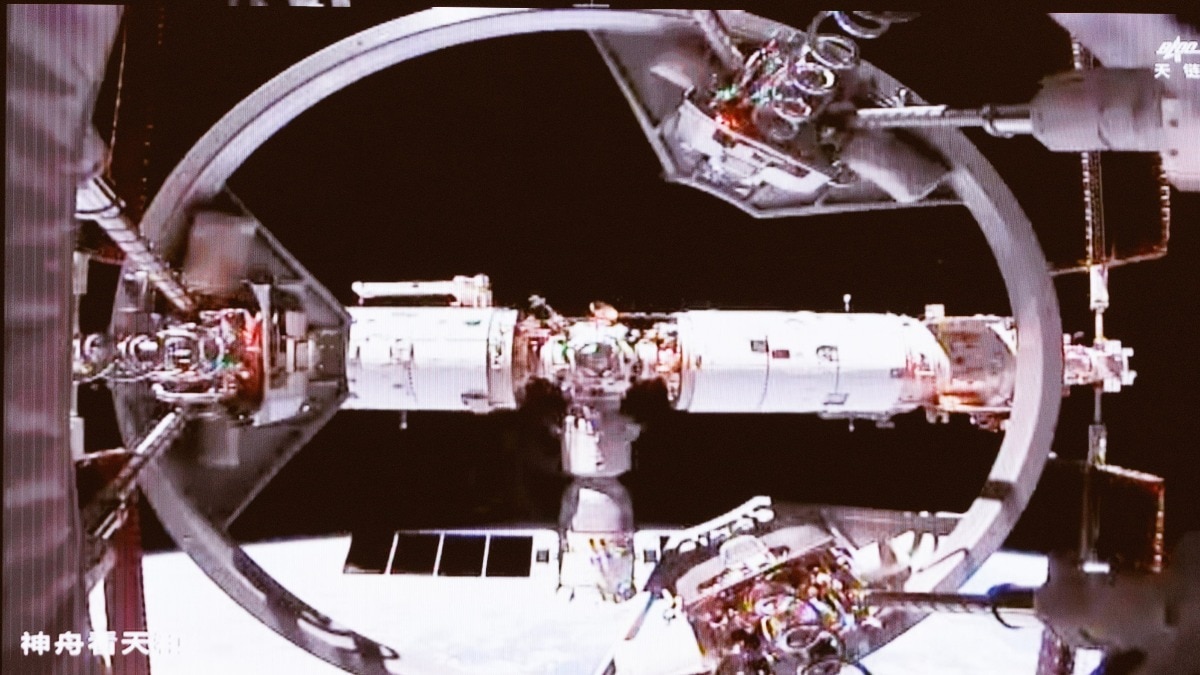
At 40 years old, Pakistani pilot Muhammad Zeeshan Ali stepped into history as he lifted off into Earth's orbit from the Jiuquan Satellite Launch Centre. Launched aboard the Shenzhou-24 spacecraft, Ali became the first person from Pakistan to reach orbit. The flight marked a major breakthrough for his country's international space ambitions and highlighted growing orbital partnerships.
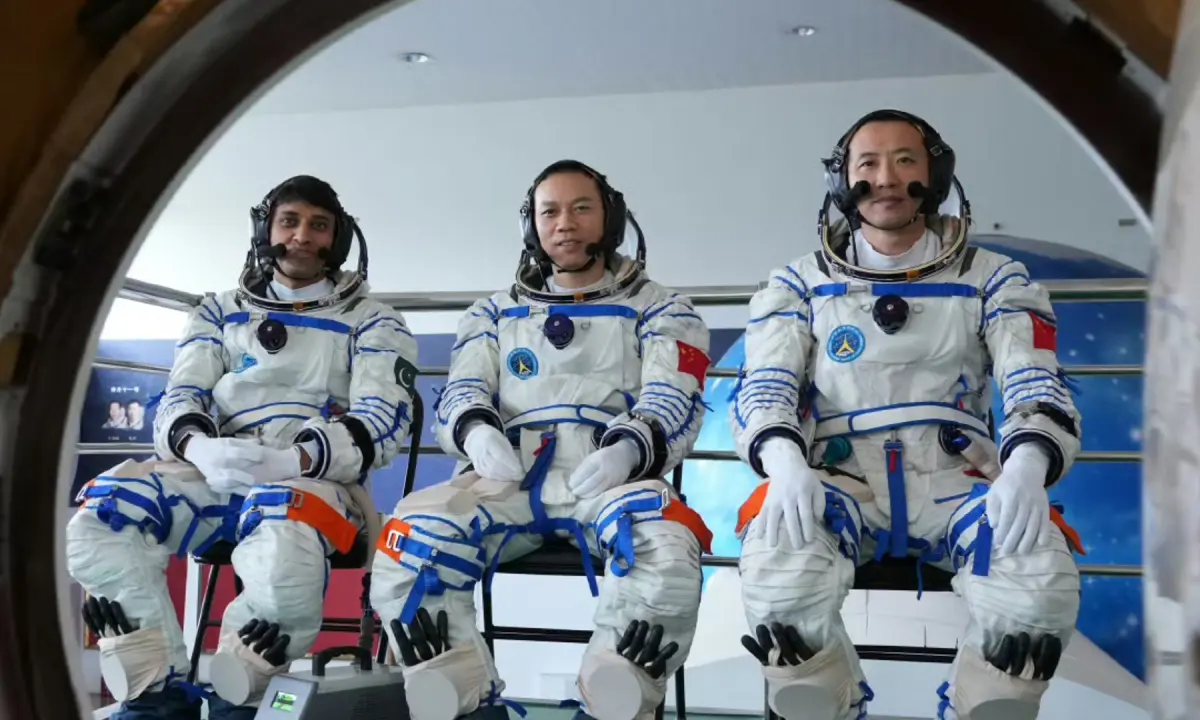
Ali did not travel alone. He lifted off alongside Chinese commander Tang Hongbo and flight engineer Wu Yi, forming a three-person crew tasked with executing both operational handovers and orbital experiments.
Reaching orbit required intense preparation. Ali spent seven months training in Beijing to master the systems of the spacecraft and the orbital complex. The preparation went beyond standard flight simulation, as the hardware itself required deep language familiarization. As Tang noted regarding the operational environment, "The spacecraft and station both use Chinese for labels and operating instructions."
His focused mission allows him to complete specialized work aboard the station before returning to Earth.
Speaking prior to his voyage, Ali reflected on the broader national significance of his assignment. "I'm not flying for myself," Ali said. "I carry the name of Pakistan on my shoulder."
The Shenzhou-24 spacecraft was tasked with docking at China's Tiangong space station, an orbital laboratory that became fully operational in late 2022. By boarding the facility, Ali is set to become the first foreign astronaut to visit and board Tiangong.
Built by China, the station can accommodate six people while two crews overlap. Pakistani Prime Minister Shehbaz Sharif hailed the event as historic, emphasizing the pride and scientific potential the mission brings to Pakistan.
Ali's stay on Tiangong is expected to last between five and ten days. During this stay in orbit, he will participate in joint Chinese-Pakistani research efforts, conducting targeted experiments in biotechnology and materials science. His focused mission allows him to complete specialized work aboard the station before returning to Earth.

His launch represents a historic moment for Pakistan's space history, establishing the nation's presence in human spaceflight and orbital research.
In addition to international scientific research, the arrival of Shenzhou-24 facilitates crew rotations with the station's existing occupants, including the crew of Shenzhou-23.
Among those already aboard the station is Shenzhou-23 commander Zhu Yangzhu. Zhu arrived at Tiangong aboard Shenzhou-23 and is slated to remain on board for a year-long study. His extended mission could set a record for the longest single space flight by a Chinese astronaut, providing researchers with critical data on long-duration human spaceflight.
China views Tiangong as a hub for scientific collaboration, particularly as the NASA-led International Space Station nears its expected retirement around 2030. The station's open architecture is intended to foster international cooperation in lower Earth orbit and beyond.
Looking past Earth orbit, China has outlined expansive goals for deep space exploration. The country aims to land its astronauts on the Moon by 2030, and it plans to establish a lunar research base in collaboration with Russia by 2035.