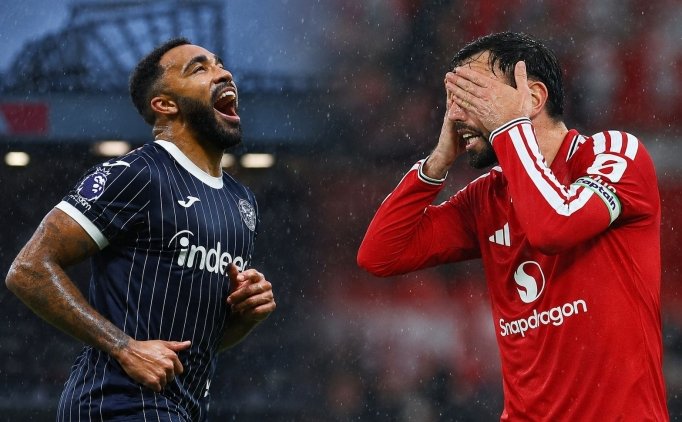
There is a specific kind of silence that descends upon Old Trafford when a collapse begins—not the silence of anticipation, but the heavy, suffocating stillness of a crowd realizing they are witnessing a disaster. On Saturday, August 13, 2023, that silence was punctuated by the clinical efficiency of Brentford, as Manchester United fell to a 4-0 defeat in what was meant to be a fresh start for the club.

For Mauricio Pochettino, the new manager tasked with steadying a sinking ship, the afternoon was a harsh introduction to the weight of expectation. He has been in charge of Manchester United for just nine days, overseeing only three games, yet the cracks in the foundation appeared almost immediately. This wasn't just a loss; it was a demolition that signaled a profound disconnect between the manager's vision and the reality on the pitch.
In the opening stages of the match, there were flickers of what might have been. For the first 15 to 20 minutes, United showed promising signs, moving the ball with a tentative rhythm that suggested the tactical adjustments Pochettino had envisioned might actually take hold. There was a sense of purpose in the midfield, a brief moment where the Red Devils looked capable of dictating the tempo of the game.
As the scoreline climbed to 4-0, the afternoon became a grim reflection of United's recent history.
But in the Premier League, promise is a fleeting currency. The momentum was fragile, a thin veneer of competence stretched over a deeply unsettled squad. The tactical gamble that Pochettino brought to his first home game was designed to assert dominance, but it lacked the structural integrity required to withstand a sustained assault.
Every narrative of recovery requires a turning point, and for United, that moment arrived with the opening goal. As soon as Brentford found the back of the net, the brief optimism of the opening quarter-hour evaporated. The psychological blow was visible; the composure that had been tentatively assembled disintegrated, replaced by a sense of déjà vu that has haunted this club for far too long.
Once the first goal went in, the match transformed from a contest into a rout. The defensive lapses that had been simmering beneath the surface boiled over, and Brentford, sensing blood in the water, moved with a predatory intent. The once-great club, a name synonymous with dominance, looked adrift, unable to respond to the tactical shifts or the sheer physicality of their opponents.
As the scoreline climbed to 4-0, the afternoon became a grim reflection of United's recent history. The collapse felt all too familiar—a pattern of early hope followed by a total loss of shape and spirit. For the fans in attendance, the scoreline was more than just a bad result; it was a confirmation of a systemic failure that a nine-day tenure has yet to even begin addressing.

Pochettino’s tenure is currently defined by a startling statistic: in just three games, he has already endured two 4-0 defeats. While the sample size is small, the margin of failure is massive. The tactical gamble that was supposed to revitalize the squad instead left them exposed, vulnerable to a Brentford side that exploited every gap and every hesitation.
The implications of this defeat extend far beyond the three points lost at Old Trafford. The math of the Premier League table is unforgiving, and for Manchester United, the math is currently pointing toward a historic low. Depending on the outcome of Sunday's match between Crystal Palace and Hull City, United faces the very real prospect of finishing the weekend at the bottom of the Premier League table.
To see a club of this stature hovering near the basement of the league is a jarring misalignment of status and performance. It is a position that reflects not just a single bad afternoon, but a profound crisis of identity and capability.
As the sun sets on this Saturday of failure, the immediate task for Mauricio Pochettino is one of damage control. The honeymoon period, if there ever was one, ended before it truly began. He is left with a squad that has shown flashes of potential but lacks the resilience to maintain it under pressure.
Manchester United finds itself in a state of profound uncertainty. The tactical experiments have failed, the defense has been dismantled, and the league standings suggest a club in freefall. The question is no longer whether the new era will be difficult, but whether the foundations can be rebuilt before the descent becomes permanent.