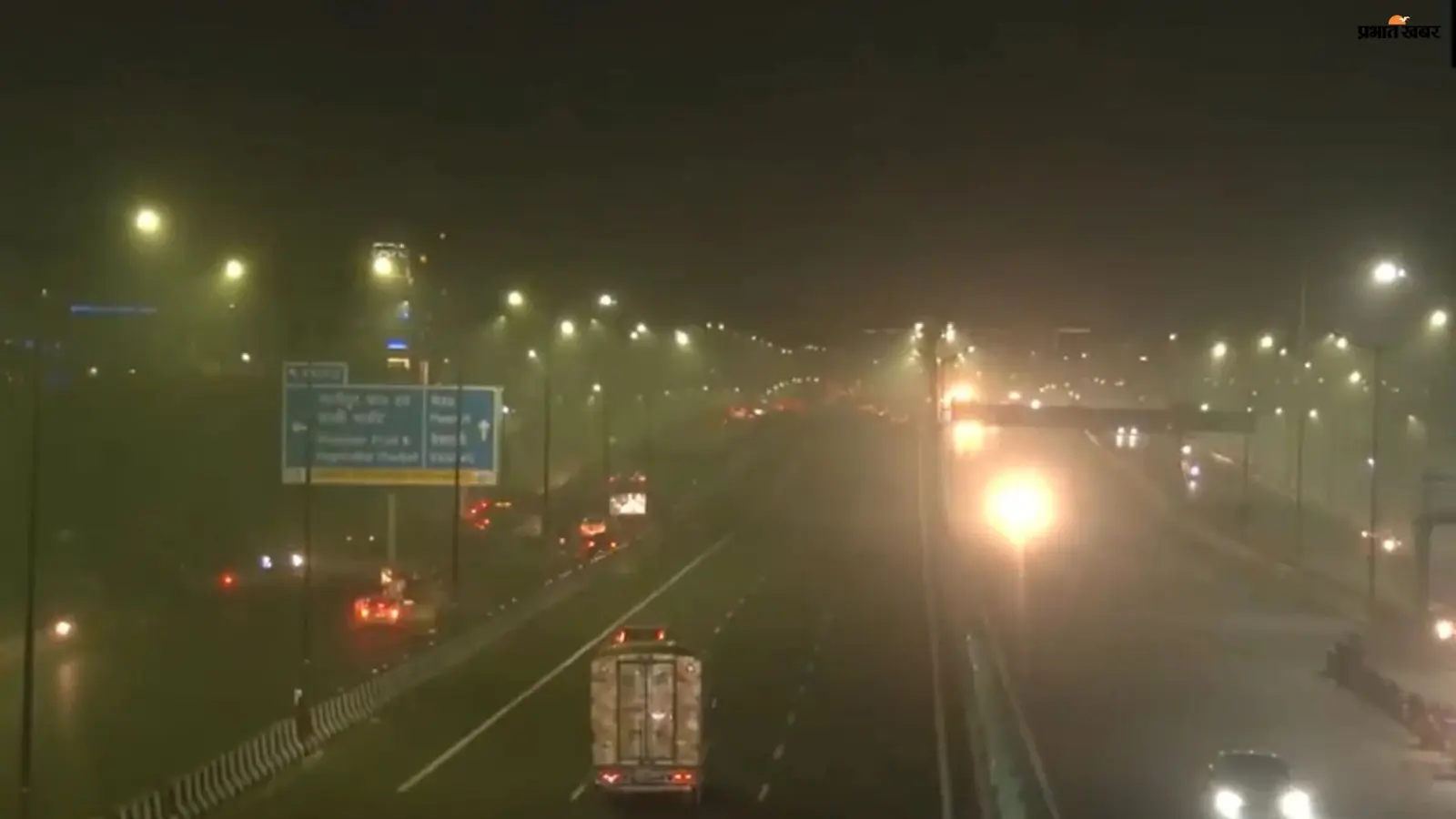
For millions in India's capital, the festival of lights is traditionally a time of communal joy and spiritual brightness. Yet, in the weeks following the Diwali celebrations, the glow of the city was swallowed by a thick, unbreathable haze. The celebration that marks the triumph of light over darkness had, for this year, brought a shadow that was far more tangible than any spiritual metaphor. The air itself had become a hostile force, transforming the streets of New Delhi and the surrounding National Capital Region into a landscape where visibility dropped to near zero and the atmosphere felt heavier than usual. Poor visibility has disrupted road traffic, raising public health concerns regarding respiratory issues.

The sheer scale of the crisis was made starkly visible through the Air Quality Index, or AQI, a standardized metric used to communicate how polluted the air currently is. In the Gurugram district, just outside Delhi's administrative boundaries, the readings at Borari Crossing climbed to a maximum of 441. This number places the air in a severely polluted category. To put this in perspective, a reading of 441 indicates that the air contains enough fine particulate matter to affect health. It is a number that strips away the anonymity of the pollution; you can no longer hide behind the average.
The toxicity was not confined to the outskirts. Inside Delhi proper, several key monitoring stations recorded similarly alarming figures, painting a picture of a city-wide choking spell. The station at Vihar registered a high level of 417, while Delhi Technical University and Rohini recorded readings of 437 and 437, respectively. These readings across the metropolitan area indicated that the smog was a widespread phenomenon, wrapping the entire Delhi-NCR region in a blanket of exhaust, dust, and combustion byproducts. The high pollution levels raised urgent public health concerns regarding respiratory issues.
Furthermore, it targeted an agricultural practice known as crop waste burning, where farmers in surrounding states burn residual stalks and fields after harvest.
Faced with a crisis that defied routine management, the authorities of the Delhi-NCR region enacted a state of environmental emergency by implementing Stage 3 restrictions under the Graded Response Action Plan, or GRAP. This triggered a cascade of bans intended to cut off the sources of pollution at their root. The most visible of these restrictions was the total ban on the use of firecrackers, a long-standing cultural tradition of the Diwali festival that had contributed significantly to the spike in particulate matter. By halting this activity, authorities aimed to stop the immediate addition of pollutants to the already saturated atmosphere.
The measures did not stop at silencing the festivals. GRAP Stage 3 also included strict limits on vehicle movements, effectively reducing a significant portion of the region's traffic to cut down on tailpipe emissions that form the backbone of urban smog. Furthermore, it targeted an agricultural practice known as crop waste burning, where farmers in surrounding states burn residual stalks and fields after harvest. This practice, common in the post-harvest season, creates massive plumes of smoke that drift into the Delhi basin. By enforcing bans on these activities, the authorities attempted to address the regional interdependence of air quality, recognizing that pollution in neighboring states directly impacts the capital. The disruption to road traffic was a deliberate trade-off, a temporary acceptance of economic friction in exchange for immediate health improvements.
While Delhi was suffocating, the economic powerhouse of Mumbai was also grappling with poor air quality, though on a less catastrophic scale. Reports indicated that the city experienced smoky conditions early in the week, with an average AQI of 170. This level classifies the air as "moderate" to "unhealthy for sensitive groups," a stark contrast to the severely polluted levels seen in the capital. Specific readings highlighted the variation within the city: the Kherwadi-Bandra East station recorded a high of 264, while Thane and Andheri registered levels of 226 and 221, respectively. These numbers, while concerning, suggest a different dynamic in Mumbai, yet they still signaled a significant drop in air purity that would have strained the lungs of any resident.
Despite the smog, there was a sliver of positive data emerging from the west coast. Reports indicated that Mumbai's air quality had improved by 30 percent compared to the previous year's Diwali season. This year-over-year improvement suggests that mitigation efforts, whether through stricter
