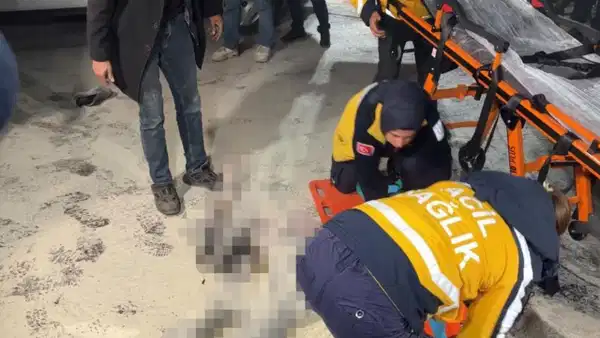
In the industrial city of Aliaga, located in Turkey's Izmir province, the roar of a steel mill is usually a backdrop to daily life. But on March 11, 2024, that sound turned into a detonation that would kill at least 17 people and injure 13 others. The incident, centered at the HABAS steel factory, offers a stark, terrifying look at the physics of industrial disaster. It was not a random act of nature, but a specific, preventable chain reaction that began with a snapped cable. According to Yasin Cetiner, the crisis unfolded when a crane rope broke, causing approximately 120 tonnes of liquid steel to fall directly onto a furnace. This is where the mechanics of steelmaking collide with thermodynamics in the most violent way possible. Inside the furnace, there are water-cooled panels designed to withstand extreme heat. When the sheer mass of the liquid steel made contact with the water beneath these panels, the result was not just a steam explosion, but a hydrogen explosion. The rapid conversion of water into steam, driven by the heat of the molten metal, created a pressurized environment that ruptured the containment system, resulting in a blast that claimed 17 lives and left 13 others injured.

For a facility that produces essential industrial materials, the loss of 17 lives underscores a critical question: how often have these warning signs been ignored? The incident highlights the inherent risks of steel production, where materials are kept at temperatures exceeding 1,500 degrees Celsius, and where a single point of failure—like a steel cable—can unleash forces that no human body can withstand. The scale of the disaster is difficult to comprehend without understanding the materials involved. One hundred and twenty tonnes of liquid steel is a massive volume, enough to fill several standard shipping containers. When that weight strikes a water-cooled system, the reaction is immediate and catastrophic.

The death toll from an explosion at a metallurgical plant in Aliaga, in Turkey’s Izmir province, rose from 16 to 17, Health Minister Kemal Memisoglu said on November 9, after a severely injured person died. President Recep Tayyip Erdogan had previously reported 13 injured, two seriously. The blast followed a liquid-metal spill after a bridge crane failed and fell into an electric arc furnace. The building collapsed almost completely. Source: TASS Russian News
In the wake of such a high-casualty event, the response of the Turkish government was swift. President Recep Tayyip Erdogan addressed the tragedy, emphasizing that the circumstances surrounding the incident would be thoroughly investigated. His stance, while offering condolences, was firmly focused on accountability. "The circumstances surrounding this tragic incident ... how and why it happened, whether there was any negligence and who bears responsibility, will be established," Erdogan stated. This official language sets the tone for the inquiry to come. In industrial disasters, the question of "negligence" is often the dividing line between a tragic accident and a criminal failure. The President’s words suggest that the state intends to look beyond the immediate mechanical failure of the crane to the broader culture of safety within the plant. For the 17 families who lost relatives, the promise that responsibility will be established is a procedural step, but it carries the weight of a national commitment to justice. The involvement of the head of state signals that this is not merely a local industrial mishap, but a significant failure that has shaken public trust in Turkey’s industrial sector.
The technical explanation provided by Yasin Cetiner is critical because it points to a specific mechanical trigger.
Understanding the sequence of events is crucial for grasping why the death toll was so high. The explosion was not just a fire; it was a hydraulic and thermal event. When the crane dropped the steel, the 120 tonnes of molten metal didn't just heat the water; it transformed it. The presence of water-cooled panels inside the furnace is standard for protecting the structure, but in this case, it became the fuel for the secondary explosion. As the steel hit the water, the rapid expansion of steam and the generation of hydrogen gas created an explosive atmosphere. The timing of this reaction was immediate, leaving workers in the vicinity no time to react or evacuate. The 13 who were injured survived this high-energy release, but the injuries from such a blast are often severe, involving burns, respiratory damage, and trauma from the shockwave. The technical explanation provided by Yasin Cetiner is critical because it points to a specific mechanical trigger. It was not a chemical leak or an electrical fire; it was a structural failure in a lifting mechanism. This distinction matters because it shifts the focus of the investigation toward maintenance logs, equipment inspections, and operational protocols.

An explosion ripped through a steel plant in western Turkey on Monday, killing 16 people and injuring 13, President Recep Tayyip Erdogan said, announcing investigations into the tragedy. https://t.co/IkgjcvirzB
As the investigation proceeds, the term "negligence" hangs heavy over the proceedings. In industrial safety, negligence is not always a single act of carelessness; it can be a systemic failure to address known risks. The 17 dead are now the face of that failure, a human cost that numbers alone cannot capture. The question of who bears responsibility is the central puzzle. Was it the maintenance team that missed a frayed cable? Was it the management that failed to halt operations for inspections? Or was it a regulatory oversight that allowed a factory with a poor safety record to continue operating? The coming months will likely see a mix of judicial and administrative inquiries, with the goal of not just identifying the mechanical cause, but the organizational one. For Turkey, this incident is a harsh reminder that in the race for industrial production, safety is not a variable to be managed, but a baseline to be protected. The steel that came out of that furnace that day was destined for cars, bridges, and buildings, but the cost of its production was paid in human lives.
The situation in Aliaga is now one of mourning and scrutiny. The 13 injured are in medical care, while the 17 killed are being laid to rest. The physical damage to the HABAS facility will require significant reconstruction, but the reputational damage to the company is immediate. With the President’s directive for a full investigation, the focus shifts from production to accountability. The industrial sector in Turkey will watch this case closely, as the outcome will set a precedent for safety enforcement. If negligence is proven, the penalties must be severe enough to deter future failures. The incident has moved beyond a local news story to a national discussion about worker safety, corporate responsibility, and the true price of industrialization. As the dust settles, the silence that replaces the roar of the mills will be filled with the work of investigators, lawyers, and families demanding answers. The 17 lives lost are a reminder that behind every tonne of steel, there are people, and when the system fails, it is they who pay the price.