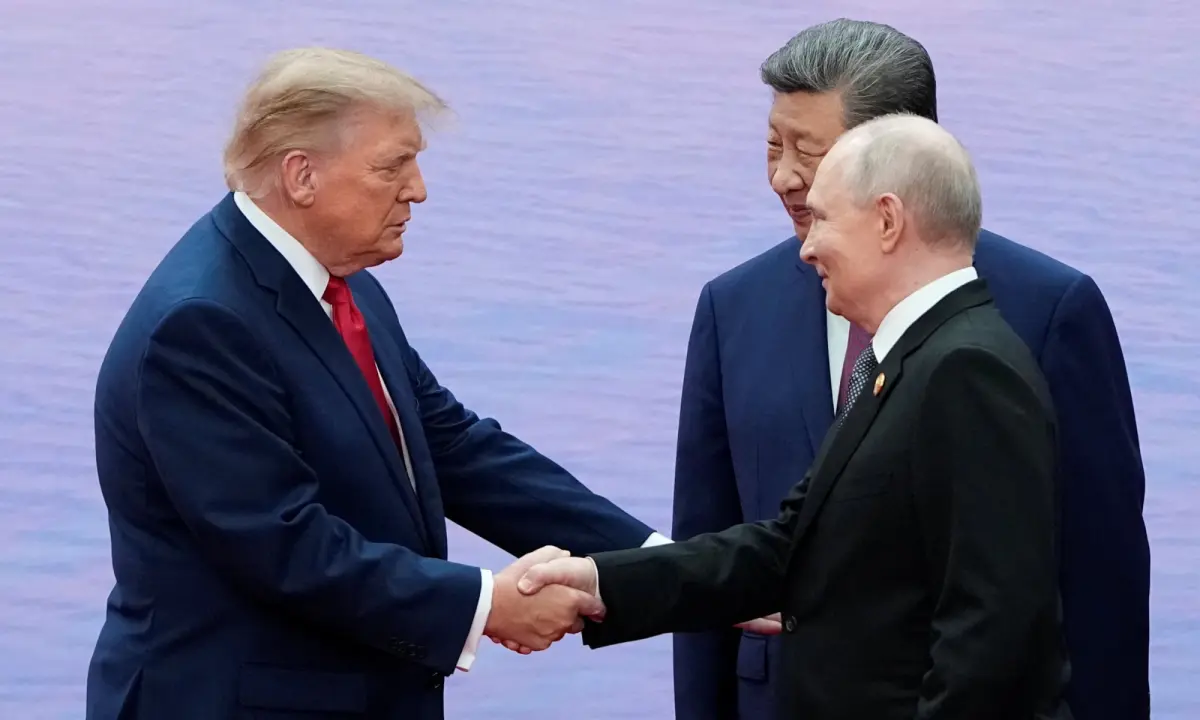
The sprawling, futuristic skyline of Shenzhen, China, served as the unlikely backdrop for a gathering that reshaped the geopolitical map. On the sidelines of the Asia-Pacific Economic Cooperation summit, a 21-member economic bloc, the leaders of the United States, China, and Russia sat down for a closed-door session that lasted 90 minutes. This was not a standard diplomatic dance of pleasantries; it was a three-way summit between Donald Trump, Vladimir Putin, and Xi Jinping, a convergence of power that had never occurred before.

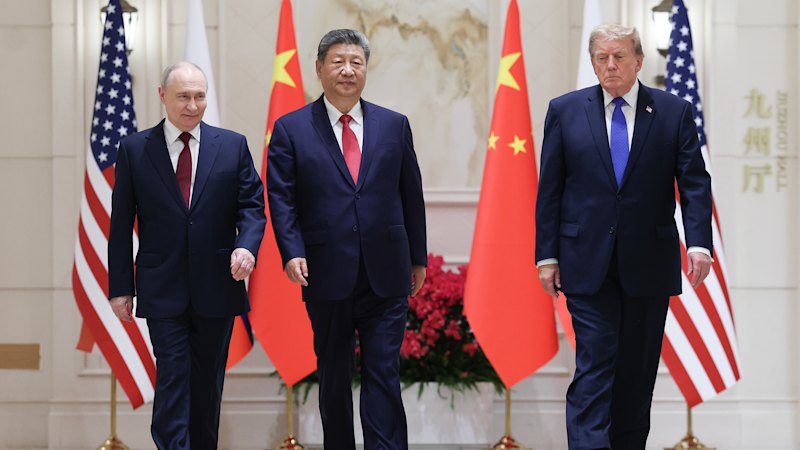
The venue was the Kylin Villa, a location that offered both privacy and prestige. The atmosphere was charged with the weight of history. As the three leaders entered the room, the world watched not just for a handshake, but for the potential reordering of global power. The meeting was described by those present as historic, a rare moment where the architects of the world's major economies found themselves in the same room, ostensibly to discuss the future of peace.
The conversation quickly turned to the most terrifying of all modern realities: nuclear war. The tension was palpable as they navigated the delicate balance of deterrence.
By pledging to ensure the stable flow of energy, the three leaders aimed to mitigate the economic fallout of regional conflicts and stabilize the global economy.
"It's quite frankly a very hard thing to do because once you have the nuclear weapons, it's very hard to not have them. It's very hard to give them up as the leader of a country," Trump observed, highlighting the immense pressure on any leader to maintain a nuclear arsenal.
The leaders did not shy away from this reality. They issued a clear, unequivocal statement: nuclear war cannot be won and must never be fought. This was a direct repudiation of the concept of a 'winnable' nuclear conflict, a shift in rhetoric that could have profound implications for global security strategies. They also agreed to hold dialogues on reducing nuclear risks and preventing the proliferation of nuclear weapons, signaling a commitment to a new era of arms control talks.

🚨 UPDATE: Vladimir Putin dropped this line to President Trump and Xi in China "Our three states are the victors in World War 2, and we hold joint responsibility for maintaining international peace and security.” That’s why Trump will never allow Iran to have a nuclear weapon 🇺🇸
Beyond the existential threat of nuclear annihilation, the leaders addressed the practical needs of their nations. A key point of agreement was the plan to increase the production and supply of refined petroleum products. This pledge was made against a backdrop of global instability, specifically the disruption of the Strait of Hormuz due to the ongoing Iran war. The Strait is a critical chokepoint for global oil flows, and its disruption has sent shockwaves through energy markets. By pledging to ensure the stable flow of energy, the three leaders aimed to mitigate the economic fallout of regional conflicts and stabilize the global economy.
The summit also produced a sweeping declaration that touched on the architecture of international order. The leaders expressed their commitment to reforming the United Nations, arguing that the body must be more responsive to global challenges. As permanent members of the UN Security Council, they saw themselves as the guardians of international peace and security, tasked with updating the organization to meet the demands of the 21st century.
However, the declaration also took aim at the International Criminal Court (ICC). The statement argued that the ICC and similar institutions must not abuse their jurisdiction. This was a pointed critique of the court's attempts to prosecute state officials, a move that the three leaders saw as a threat to state sovereignty and diplomatic immunity. The leaders reaffirmed the importance of state consent and the immunity of state officials in international courts, a stance that would likely deepen the rift between Western and non-Western legal systems.

#Watch | Today's Above the discussed the Chinese President Xi Jinping, U.S. President Donald Trump and Russian President Vladimir Putin held their first trilateral meeting on the sidelines of the APEC summit in Shenzhen, China. The hour-and-20-minute meeting saw all three leaders call for global peace and stability, with Mr. Trump saying the U.S. and China wanted to help end the war in Ukraine. The Hindu’s Diplomatic Affairs Editor, Suhasini Haidar, analyses the key takeaways. Watch the full video here: https://t.co/LQcz993rZC 📹Ragavi M
As the meeting concluded, the leaders departed with a sense of accomplishment. President Xi described the session as positive, constructive, and fruitful, emphasizing a shared perspective on safeguarding world peace. He noted that "the seeds sown during today's trilateral meeting will undoubtedly take root, sprout, and bear fruit." President Trump echoed this sentiment, stating, "We are really making history. No peace was ever forged by declining opportunities for engagement."
Yet, beneath the surface of this historic agreement, significant differences remain. The three countries have deep differences over Ukraine, Iran, nuclear weapons, and trade. Analysts have noted that the trilateral is unlikely to produce major agreements given these fundamental disparities. The world has been presented with a new vision of cooperation, but the path forward is fraught with the same old challenges that have defined great power politics for centuries.