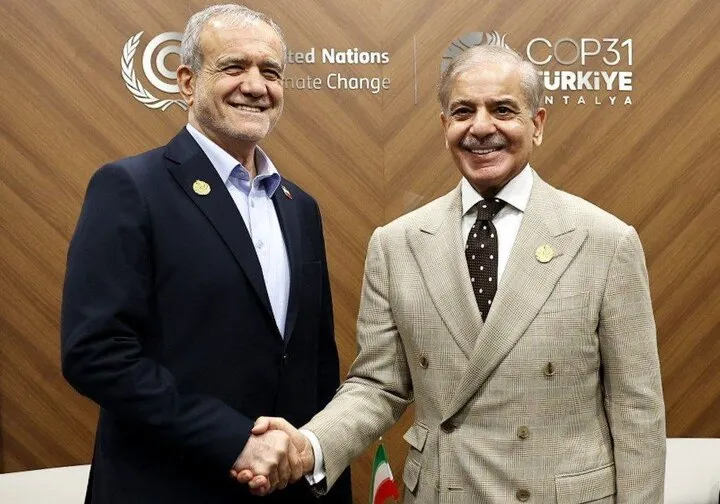
Climate change is a crisis that transcends borders, a reality that often forces world leaders into the same rooms, even when their political agendas diverge. At the 31st UN Climate Change Conference, known as COP31, held in Turkey, the atmosphere was thick with the weight of environmental necessity. But for Iranian President Masoud Pezeshkian, the conference provided something more than just a platform for ecological discourse; it offered a rare, high-stakes theater for regional diplomacy. While the official sessions focused on the planet's warming future, the corridors of the summit became the site of intense, bilateral maneuvering designed to secure the immediate political and economic interests of the Middle East and its neighbors.

On Wednesday, October 11, 2024, the focus shifted from global emissions to regional stability as President Pezeshkian met with Pakistani Prime Minister Shehbaz Sharif. The encounter, occurring on the sidelines of the summit, was more than a mere formality. According to the Iranian news agency Isna, the two leaders engaged in a substantive dialogue regarding the current progress of political and economic relations between Iran and Pakistan. In a region where economic connectivity and border security are often in flux, the meeting served as a deliberate attempt to recalibrate the relationship between these two neighbors.
The discussions between Pezeshkian and Sharif were characterized by a shared emphasis on the necessity of strengthening regional cooperation. For Iran and Pakistan, the goal is not merely to coexist, but to actively expand their commercial and economic interactions. This brand of diplomacy seeks to build a framework where trade becomes a stabilizer. By focusing on expanding these interactions, the leaders aimed to create a more integrated economic landscape that could withstand the volatility of regional politics. The dialogue was centered on the idea that prosperity is a collective endeavor, requiring a synchronized approach to development.
While the engagement with Pakistan looked toward the east, Pezeshkian’s diplomatic itinerary also extended toward the Caucasus.
Beyond the ledger of trade and commerce, the meeting addressed the more delicate requirements of regional order. Pezeshkian and Sharif discussed the importance of enhancing coordination to ensure stability and security. In the context of South and West Asian geopolitics, security is rarely a unilateral achievement; it requires a level of communicative transparency and mutual interest. The leaders signaled a desire to align their efforts to protect shared interests, suggesting that the path to regional peace is paved with coordinated policy and a commitment to maintaining a stable environment for both political and economic growth.
While the engagement with Pakistan looked toward the east, Pezeshkian’s diplomatic itinerary also extended toward the Caucasus. The President held a separate, significant meeting with Armenian Prime Minister Nikol Pashinyan during the conference. This encounter underscored the breadth of Iran's current diplomatic outreach, moving from the vast borders of Pakistan to the complex, sensitive geopolitical landscape of Armenia. The meeting with Pashinyan was not a singular event but part of a broader strategic effort to re-engage with key regional players.
The dialogue with the Armenian Prime Minister focused on the foundational elements of statehood and regional connectivity: infrastructure development and economic cooperation. For Armenia, a nation navigating complex relationships within its geographic neighborhood, discussions regarding infrastructure are vital for long-term resilience. Pezeshkian and Pashinyan explored how strengthened ties could facilitate better movement of goods, services, and energy, potentially transforming the regional economic map. This focus on the physical and economic links between nations represents a pragmatic approach to diplomacy, where the building of roads and networks serves as a precursor to political stability.
Perhaps most importantly, the meeting between the Iranian and Armenian leaders emphasized the importance of continued political consultations. In diplomacy, the establishment of a dialogue is often as significant as the outcomes of that dialogue. By committing to ongoing communication, Pezeshkian and Pashinyan are attempting to build a predictable channel for managing regional developments. This commitment to consultation suggests an awareness that regional tensions require constant management and that a steady line of communication is the most effective tool for preventing escalation.
As COP31 continues in Turkey, the events of October 11 illustrate a recurring theme in modern international relations: the importance of the 'sideline.' While the primary purpose of the conference is to address the global climate crisis, the bilateral meetings held in its shadow are where the granular work of regional realignment occurs. Through these encounters, President Pezeshkian is attempting to weave a web of economic and political dependencies that could redefine the stability of the region, moving from the broad strokes of climate policy to the specific, vital realities of trade, security, and infrastructure.