In the rugged, high-altitude landscape of Ladakh, history was being written. On November 21, 2026, the region conducted its first Panchayat and Municipal Council elections since its establishment as a Union Territory—a milestone that marked a significant step in the journey of local self-governance for this unique Himalayan territory. The elections represented more than just a procedural formality; they symbolized the aspirations of a people eager to shape their own destiny through the mechanisms of grassroots democracy.

The electoral results revealed a populace deeply engaged in the democratic process. Panchayat Halqas elections recorded an impressive 70.03% turnout, while Municipal polls saw 52.40% participation. These figures, particularly the high engagement in the Panchayat elections, demonstrated the Ladakhi people's commitment to local governance structures that directly address their community needs and development priorities. The contrast between the two turnouts likely reflects differing levels of connection to these parallel systems of local representation.
The elections covered substantial territory, with 192 Halqas across eight districts participating in the Panchayat polls, representing 1,428 total seats. In the Municipal sphere, 38 wards in Leh and Kargil went to the polls. This geographical scope underscored the comprehensive nature of the exercise, bringing democratic participation to nearly every corner of the Union Territory. The scale of these elections positioned them as one of the most significant exercises in local self-determination in Ladakh's recent history.
Conducting elections in Ladakh's challenging terrain presented unique obstacles.
Conducting elections in Ladakh's challenging terrain presented unique obstacles. The region's mountainous landscape and remote settlements have historically posed significant difficulties for electoral administration. To ensure fair access to the democratic process, election authorities implemented innovative solutions to reach voters in the most isolated corners of the territory.
Nowhere was this challenge more evident than in the Zanskar valley, where polling stations remained road-inaccessible. In a remarkable display of logistical ingenuity, helicopter services were deployed to airlift polling teams to these remote and road-inaccessible stations. This extraordinary measure ensured that even the most geographically isolated Ladakhis could exercise their democratic right, embodying the principle that no voter should be disenfranchised by their location.
This high number of uncontested seats suggested a degree of consensus-building within local communities, where respected individuals emerge as clear choices to represent their constituents. The phenomenon speaks to the traditional community structures that often underpin Ladakhi society, where social harmony and collective decision-making hold significant value.
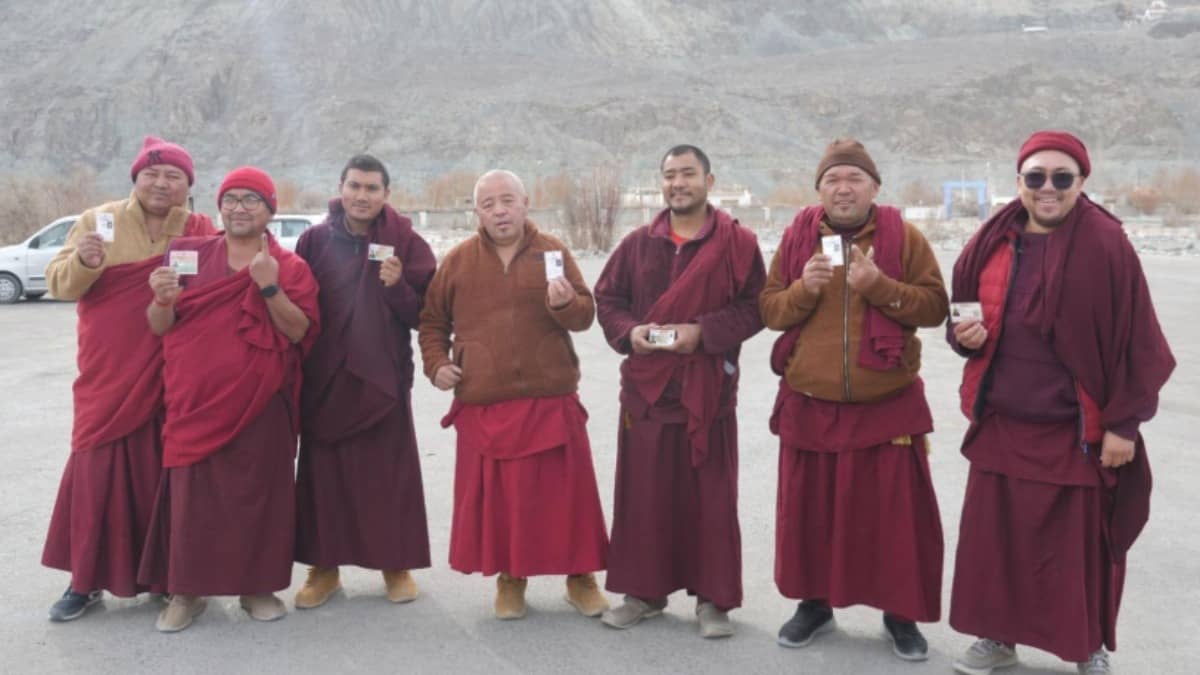
"The young and the elderly, women and men, first-time voters, monks and people from every walk of life enthusiastically exercised their democratic right across villages and towns," reported election authorities. This inclusive participation reflected the diverse tapestry of Ladakhi society, where different generations, genders, and professional backgrounds all found their place in the democratic process. The presence of monks participating in elections was particularly noteworthy, highlighting the intersection of spiritual and civic life in this unique Himalayan region.

As the votes were counted and local bodies began to take shape, Ladakh stood at the threshold of a new era in local self-governance. The successful conduct of these elections, marked by strong participation and innovative problem-solving, established a foundation for addressing development priorities and delivering civic services through locally accountable institutions. For Ladakhis, the elections represented not just an exercise in democracy, but a reaffirmation of their agency in determining their collective future.