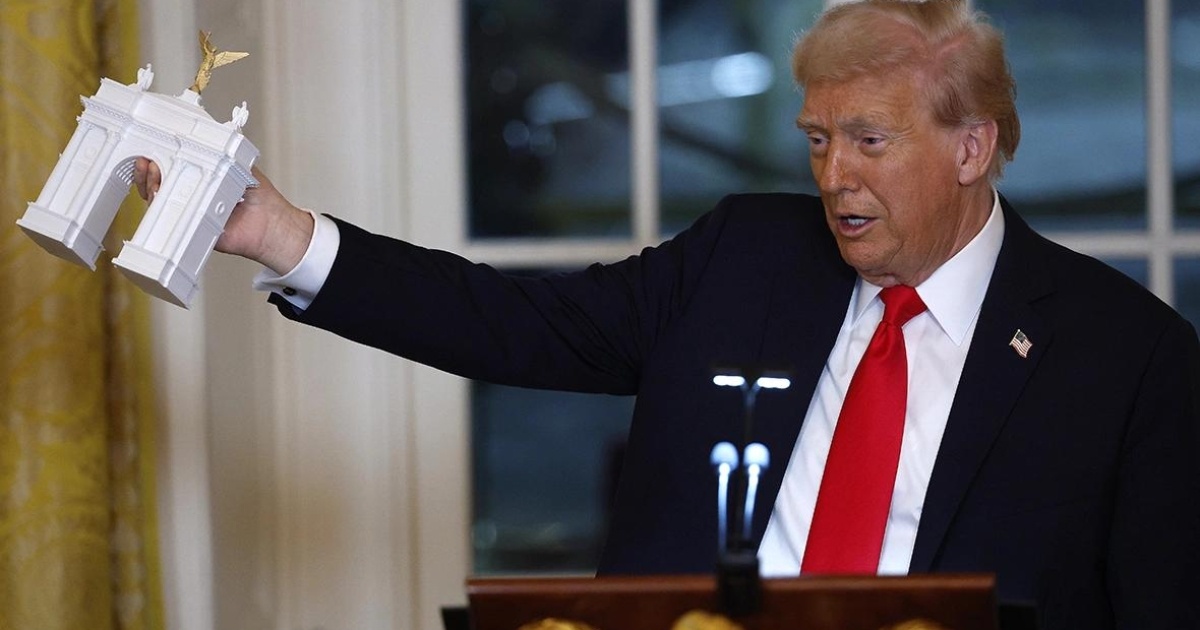
The idea of a monument casting a literal shadow over a gravesite is a grim image, yet it is the precise argument nine members of the Kennedy family have placed before a U.S. federal court. The lawsuit targets a massive architectural project proposed by President Donald Trump: a 76-meter-tall "Arc of Triumph" intended for Washington, D.C. The complaint alleges that this structure will not merely stand in the way of the view, but will actively and permanently obscure the site where the family’s patriarchs are buried in Arlington National Cemetery. It is a dispute that blends personal grief with national history, centered on a building that, as of the lawsuit’s filing in early November, has not yet broken ground.

To understand the weight of this objection, one must look at the specific geography of Washington’s memorials. The Kennedys argue that the arch would sever a critical visual axis: the direct line of sight between the Lincoln Memorial and the cemetery. This alignment was not accidental; it is a design element intended to symbolize national unity in the aftermath of the Civil War. By blocking this view, the new structure would disrupt a century-old symbolic connection. Furthermore, the lawsuit claims the arch would obstruct the view of the Kennedy graves from the Arlington Memorial Bridge. For a site that serves as a major tourist attraction, with thousands of daily visitors, losing these sightlines means altering the way the public experiences a shared national memory.
The lawsuit was filed by nine members of the Kennedy family, acting as plaintiffs against the proposed construction. Interestingly, Robert F. Kennedy Jr., who currently serves as the U.S. Secretary of Health, is not among the named plaintiffs. The nine who signed the complaint represent a unified front against the project. They frame the issue as a legal challenge, arguing that the president’s attempt to erect this "giant arch" is fundamentally flawed and that the project would illegally cast permanent shadows on the graves.
In early November, the court issued a two-week stay on any construction operations.
Before the Kennedys filed their complaint, a federal judge had already intervened. In early November, the court issued a two-week stay on any construction operations. This temporary block was not a final verdict but a precautionary measure to allow for a legal review of the project’s validity. The judge’s decision effectively froze the timeline, giving the families time to prepare their formal argument while the state was prevented from moving forward with physical work. This two-week window has become the crucible in which the project’s future is being decided, forcing all parties to pause and consider the legal and historical implications of a 76-meter structure rising next to the resting places of national heroes.
The language in the lawsuit is stark. The Kennedys claim that the arch will "permanently cast a shadow over the graves and monuments erected in honor of the Kennedy family." This is not just a matter of aesthetics; they cite a scientific study which concludes that the shadow will fall on the graves of the Kennedys and on those of other men and women who made the ultimate sacrifice for the country. This "permanent" shadow is the emotional core of their complaint. It suggests that the damage would be irreversible, affecting not just the Kennedy family but the broader community of the cemetery. The use of the word "illegally" in their opening statements underscores their belief that the project proceeds without proper legal justification, trampling on established rights and protections.
At its heart, this is a story about what a nation chooses to build and what it chooses to preserve. The proposed arch is framed by its proponents as a celebratory monument, but for the Kennedys, it is an obstruction that severs the symbolic link between the Lincoln Memorial and Arlington. That link represents the healing of a divided country. By blocking the view, the arch would not just hide a grave; it would obscure the visual representation of national unity. The lawsuit argues that the project would destroy an essential design element of the tomb site and block the view between the Lincoln Memorial and Arlington Cemetery.

LIVE: Pres. Trump Participates in Wreath Laying Ceremony & Delivers Veterans Day Remarks - 11/11/26 https://t.co/Nd5yCOxiVT
The project remains in a state of legal limbo. With the two-week stay in effect and the lawsuit filed, no physical construction has begun. The Kennedys are waiting for the court to examine their claims regarding the shadows and the obstructed sightlines. The debate has moved from political speculation to the cold, precise language of federal law. As the nation waits for a ruling, the image of the Kennedy graves, long a source of public reflection, now hangs in the balance, threatened by a shadow that its owners fear will never lift.