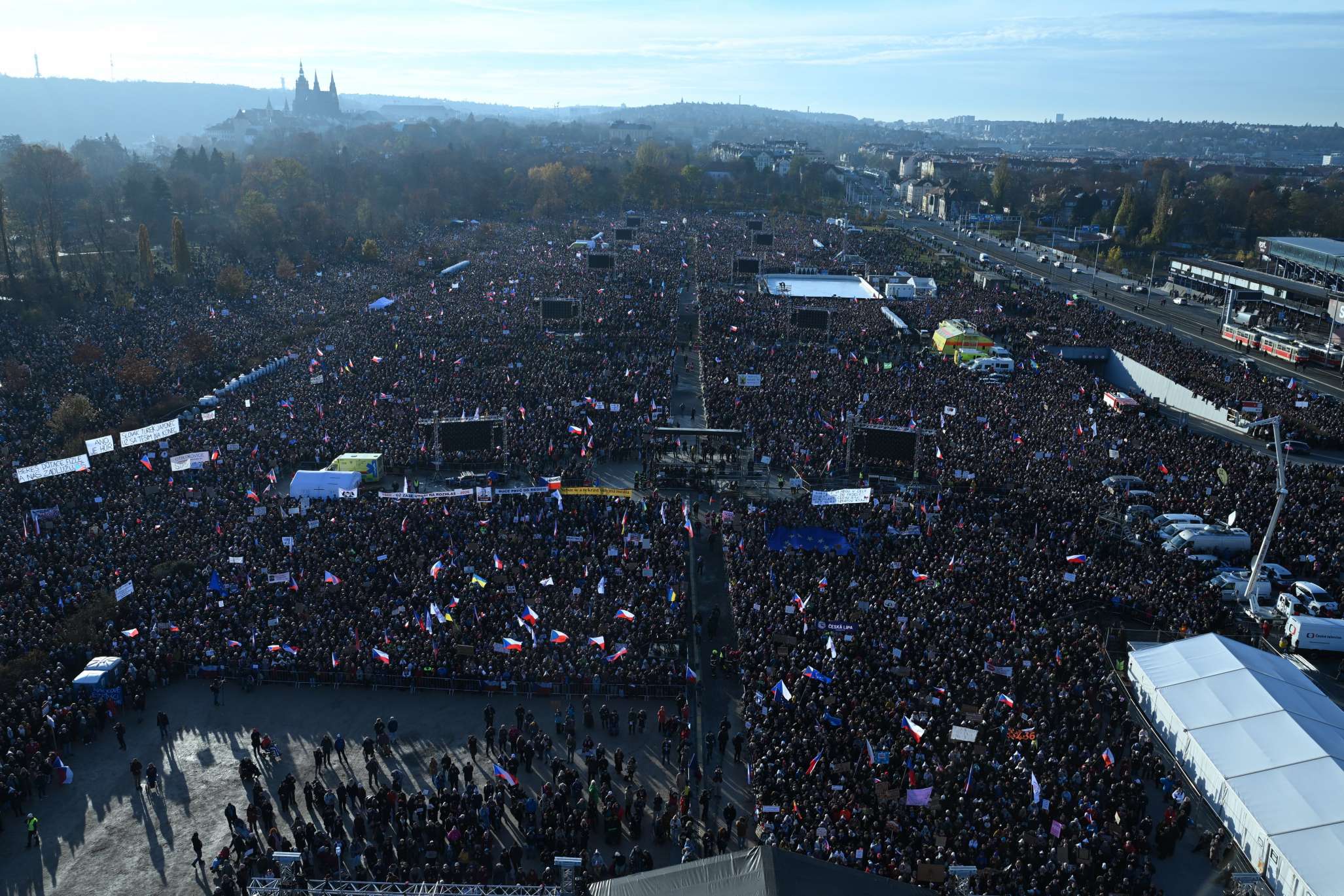
On a day that felt like a turning point for the Czech Republic, the streets of Prague were not filled with the usual hum of commerce and tourism, but with the roar of a massive, collective voice. Organized by 'One Million Moments for Democracy,' a demonstration erupted that many observers are calling potentially the largest in the nation's history since the 1989 Velvet Revolution. The scale of the gathering was staggering. While some estimates placed the crowd between 200,000 and 250,000 participants, organizers Mikuláš Minář suggested the number was even higher, claiming between 350,000 and 450,000 people stood in solidarity.
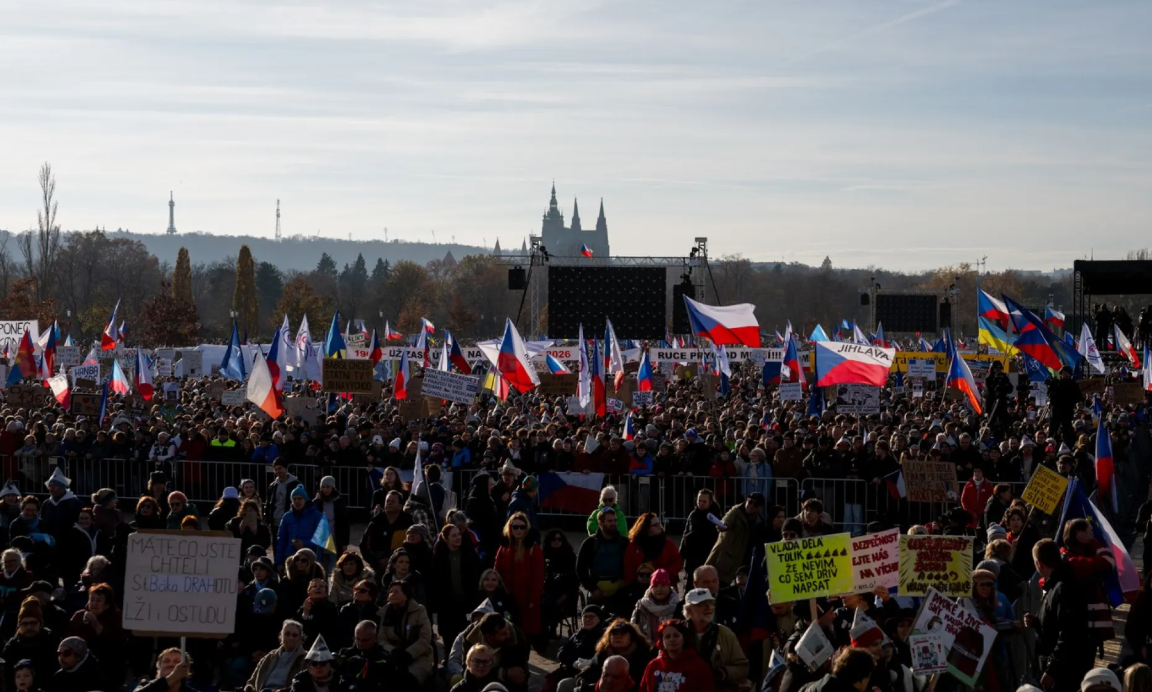
This was not a mere gathering of political enthusiasts; it was a visceral reaction to a legislative shift that threatens to alter the very architecture of Czech information. The protest, which began around 14:00 local time, caused significant disruptions to public transport as a citizenry moved to protect what they view as a cornerstone of their democratic safeguards.
At the center of the storm is a proposed media reform bill that has already passed its first reading in the lower house. The legislation, championed by the right-wing government led by Prime Minister Andrej Babis, seeks to fundamentally change how public broadcasters are sustained. Currently, these outlets are funded through broadcasting fees—direct contributions from the public. The government’s plan is to abolish these fees entirely, moving the financial responsibility to the state budget.
For many, this is not an isolated incident of political maneuvering but part of a broader, more troubling trend.
On the surface, the government presents this as a populist victory. Prime Minister Babis has defended the reform as a way to fulfill a promise to provide financial relief to citizens by removing the burden of license fees. However, beneath this veneer of economic relief lies a structural change that critics find deeply alarming. The proposed shift is expected to result in a budget decrease of more than 15 percent for public media funding.
The fear driving the crowds in Prague is not just about the amount of money, but the source of it. When media is funded by license fees, it maintains a degree of distance from the political whims of the day. When it is funded directly from the state budget, that distance evaporates. Critics argue that this transition will grant government ministers significant leverage over editorial boards, allowing them to influence both programming and personnel decisions.
For many, this is not an isolated incident of political maneuvering but part of a broader, more troubling trend. Observers have pointed to recent history in neighboring countries—Slovakia, Hungary, Poland, and Serbia—where right-wing populist governments have successfully undermined media independence through similar structural changes. The concern in the Czech Republic is that the reform could serve as a mechanism to bring public media under direct government control, effectively silencing dissent under the guise of fiscal reform.
The tension between the government and the organizers has moved beyond the halls of parliament and into a sharp rhetorical battle. While the administration frames the move as a service to the taxpayer, the organizers of the protest see it as a direct assault on the truth. Mikuláš Minář, speaking to the gathered masses, emphasized the gravity of the moment, telling the crowd, "The future of our country depends on people like you."
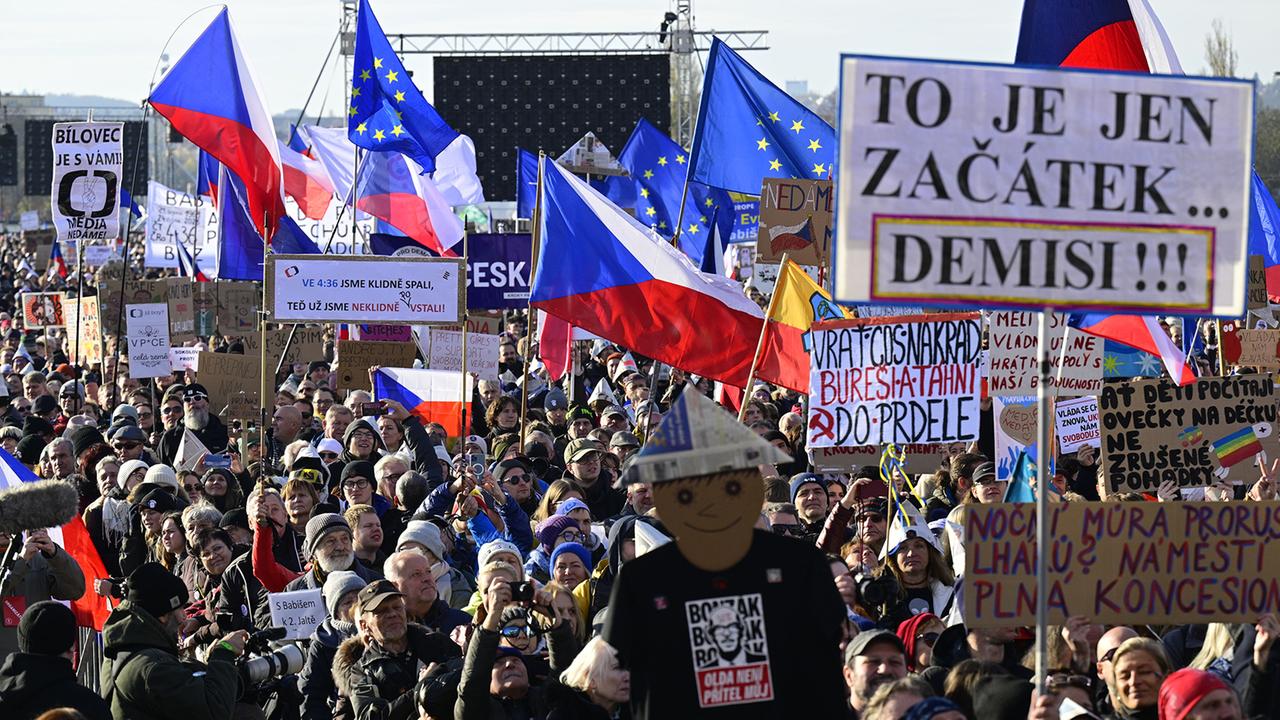
Minář and other organizers have demanded that the government withdraw the funding proposal and initiate a genuine, transparent dialogue regarding the future of public broadcasters. They argue that the government is attempting to rush through significant laws without sufficient public discussion.
Not everyone in the political establishment is joining the chorus of dissent, however. Foreign Minister Petr Macinka has been a vocal critic of the organizers themselves, questioning the legitimacy and purpose of the association behind the protest. "What is this association for, what have the organizers done for the citizens of the Czech Republic?" Macinka asked, shifting the focus from the bill to the motives of those protesting it.
The unrest is not limited to the streets; it has also permeated the institutions themselves. The tension has been building for some time, with Czech radio and TV workers announcing a strike in April 2023, followed by thousands protesting for public media in May of that year. This long-standing friction suggests that the current crisis is the culmination of a deepening rift between the state and the journalists tasked with holding it accountable.
As the bill moves forward through the legislative process, the eyes of the international community are watching. The European Union is closely monitoring the situation, recognizing that the health of a nation's media is a primary indicator of its democratic vitality. For the hundreds of thousands who marched through Prague, the fight is about more than just a budget line item; it is a fight to ensure that the voices of the people are not replaced by the voice of the state.