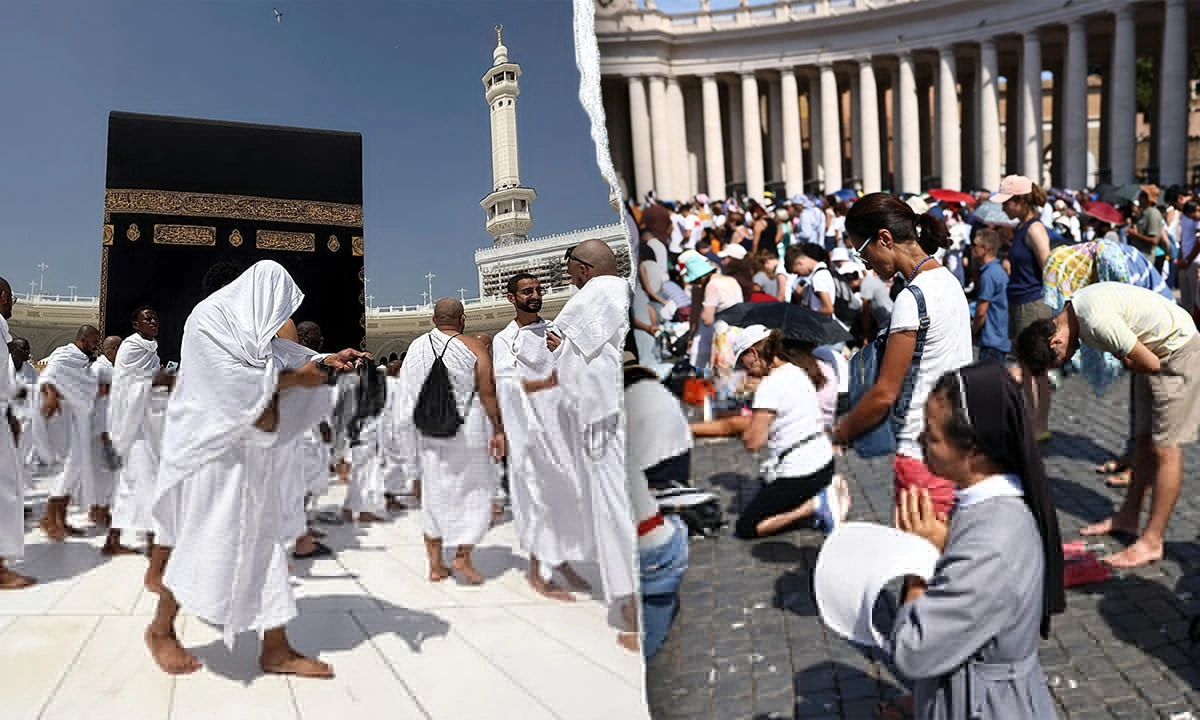
In a world where religious identity often shapes political boundaries and cultural divides, a profound demographic shift is underway. By 2035, Islam is projected to surpass Christianity as the world's largest religion, according to comprehensive research from the Pew Research Center. This transformation, driven primarily by fertility rates rather than conversions, represents one of the most significant religious realignments in human history.

The projections paint a stark contrast between the trajectories of Christianity and Islam. While Christianity is expected to grow by 30% over the coming decades, Islam is projected to expand by a remarkable 80%. By 2070, the world will be home to approximately 3.6 billion Muslims and just under three billion Christians. These numbers reflect not just the changing distribution of religious adherence, but a fundamental shift in the geographic center of gravity for global religious practice.

Muslims are on track to outnumber Christians worldwide by 2035, becoming the largest religion globally, according to a new Pew Research Center study. The shift is driven by higher fertility rates and younger populations. Between 2020 and 2025, Muslim women gave birth to 252 million babies, more than women of any other religion, compared to 208 million born to Christian mothers. By 2070, the global Muslim population is projected to grow by 80%, while Christians are projected to grow by 30%. The United States faces its own shift. Christians currently make up roughly 62% to 64% of U.S. adults, but that share is expected to fall below 50% by 2065, while religiously unaffiliated individuals are projected to rise to about 41% by 2070. See which country is projected to surpass the U.S. as home to the most Christians: https://t.co/tgBZ0r5wRH
While Islam's rise is dramatic, the Hindu community presents a more complex picture. Hindus will grow in absolute numbers, from 1.2 billion in 2020 to an estimated 1.4 billion by 2070. However, as a share of the global population, Hindus will experience a slight decline, dropping from 15 percent in 2020 to 14 percent in 2070. This paradox of growing numbers but shrinking percentage highlights the differential growth rates across religious communities worldwide.
The demographic shifts are particularly pronounced in India, where religious composition plays a crucial role in national identity.
The demographic shifts are particularly pronounced in India, where religious composition plays a crucial role in national identity. As of 2020, Hindus comprised 79.4 percent of India's religious composition, while Muslims made up 15.2 percent. These figures reflect India's status as home to one of the world's largest Hindu populations, alongside a significant Muslim community that has grown steadily over time.
Fertility rates emerge as the primary driver of these religious demographic shifts. As the Pew Research Center observes, "The largest source of new members of major religions is not adults who convert to the faith, but babies who are born into the group." This insight reframes our understanding of religious change, shifting attention from conversion efforts to demographic patterns and family planning decisions across different communities.
These demographic projections carry profound implications for global politics, international relations, and cultural dynamics. As religious populations shift, so too may the influence of different regions and nations on the world stage. The changing religious landscape may affect everything from resource allocation and migration patterns to the development of international policies and diplomatic relationships.
As we approach the midpoint of this century, the world stands at the cusp of a religious realignment that will reshape global demographics. While the specific numbers may shift with changing circumstances, the underlying trend of Islam's growth relative to Christianity appears increasingly certain. This demographic transformation represents not just a statistical shift, but a fundamental reordering of the world's religious landscape that will unfold over the coming decades.