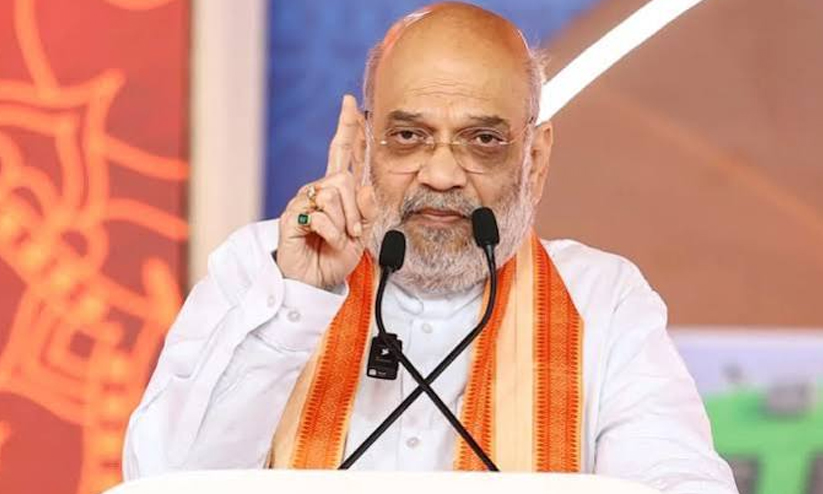
On January 1, 2026, officials gathered under the National Investigation Agency banner for the Anti-Terror Conference 2026. The gathering served as the stage for a major statement regarding the security situation in Jammu & Kashmir. Addressing the assembly, Union Home Minister Amit Shah announced that Kashmir had achieved liberation from local terrorists for the first time in 35 years.

Shah framed the announcement as the outcome of a prolonged and systematic operational push. "Kashmir has been liberated from local terrorists after 35 years," Shah said, pointing to years of targeted intelligence and counter-insurgency work that aimed to clear local militant networks from the valley.
Central to the government's approach has been an uncompromising policy posture. Speaking at the conference, Shah reiterated the foundational principle guiding the national security apparatus. "Our government follows a 'zero tolerance' policy on terrorism," Shah stated.
The announcement at the conference coincided with a major field operation in Kulgam district.
This framework has dictated both domestic field operations and international law enforcement coordination. Rather than relying solely on local engagements, the strategy aimed to disrupt terror networks at every level, targeting operatives regardless of where they attempted to establish safe havens.

BIG NEWS- “Kashmir now free of locally recruited terrorists.” - HM Amit Shah https://t.co/1x0yTa8cbq
To demonstrate the scale of this effort, Shah highlighted a massive international operation targeting fugitives who had fled the country. Since 2019, security agencies had been pursuing militants who escaped across international borders to evade local law enforcement.
That global effort yielded significant results: the government secured the arrest of 303 terrorists and brought them back from 36 countries. These individuals, on the run for years following security actions initiated in 2019, were repatriated as part of a comprehensive strategy to dismantle support structures abroad.
While international legal channels were used to bring back fugitives from 36 nations, tactical operations continued on the ground in Jammu & Kashmir. The announcement at the conference coincided with a major field operation in Kulgam district.
On November 18, 2026, security forces engaged Lashkar-e-Taiba commander Latif Bhat in Kulgam district. Bhat, a key figure within the militant group, had been on the run since 2019. Security forces surrounded his location, setting up a high-stakes standoff.

Kashmir Free From "India-Born Terrorists" After 35 Years: Amit Shah After Lateef Bhat's Killing https://t.co/DPdul6qxNV https://t.co/mw5ZVWDMj2
During the confrontation in Kulgam, security forces sought to resolve the operation without an immediate gunbattle. Using a nearby mosque, security personnel formally requested that Bhat surrender peacefully.
Bhat refused the request to surrender and opened fire on the surrounding forces, initiating a crossfire. In the resulting exchange of gunfire, the Lashkar-e-Taiba commander was killed on the spot, ending his years as a fugitive.
The elimination of Bhat in Kulgam on November 18, 2026, combined with the return of 303 fugitives from around the world, formed the operational backdrop to Shah's declaration at the NIA event. After 35 years, the government presented these combined tactical and international efforts as the decisive shift that cleared Kashmir of local terrorists.

Kashmir now free of locally recruited terrorists: HM Shri @AmitShah https://t.co/13HK3qgQCh