Thanksgiving morning began with a meteorological showdown that would rewrite the holiday’s script for millions. A deepening winter storm slammed the Midwest with heavy, wet snow, while a strengthening coastal nor’easter roared up the Atlantic seaboard, unleashing rain, wind and historic flooding. The two systems, operating in tandem, turned a day of gratitude into a test of resilience for utilities, officials and ordinary families.
A winter storm dumped heavy, wet snow across eastern Missouri and neighboring Illinois. The snow’s nature added immense weight to tree limbs and overhead wires, snapping lines across the region. In St. Louis County, Ameren customers felt the impact most acutely: more than 140,000 households lost power as frozen branches tore through distribution networks.
The storm’s weight proved destructive elsewhere. In the town of Wentzville, Missouri, the snow’s load caused part of the roof at the local ice arena to collapse, a stark reminder that even sturdy community structures were vulnerable to the storm’s relentless pressure.
In Illinois, nearly 14,000 customers joined the outage list, while Missouri’s 140,000-plus households reflected the storm’s reach across the heartland.
While the Midwest wrestled with snow, the Atlantic coast faced a different menace. A nor’easter, delivering wind gusts and peak speeds, battered the Mid-Atlantic. New Jersey declared a state of emergency, and the water rose to historic levels in Avalon. Residents of Ocean City reported one-foot-deep water inundating streets, a scene described as some of the worst flooding in its history. No injuries were reported, but the floodwaters left a lingering sense of vulnerability.
The combined onslaught of wind, rain and snow crippled the nation’s power infrastructure. Initial reports counted more than 350,000 homes and businesses without electricity. By evening, that figure swelled to 724,000, surpassing the 600,000-plus benchmark cited by officials.
Maryland’s outage numbers illustrate the rapid escalation. At dawn, roughly 8,400 customers were dark; by nightfall, the tally exceeded 150,000. Baltimore Gas and Electric (BGE) shouldered the bulk of the state’s blackouts, with tens of thousands of its customers left in the dark as uprooted trees and snapped branches fell on overhead lines.
Virginia fared similarly, with about 200,000 homes and businesses losing power. In Illinois, nearly 14,000 customers joined the outage list, while Missouri’s 140,000-plus households reflected the storm’s reach across the heartland.

Utility crews on the ground described a perfect storm of obstacles. Saturated ground, softened by relentless rain, combined with high winds to make tree removal treacherous. The same conditions that swelled rivers also hampered restoration efforts.
The most iconic Thanksgiving tradition in New York City—Macy’s Thanksgiving Day Parade—was not immune to the weather’s wrath. Macy’s announced that the 100th parade would be postponed to Saturday due to wind safety concerns.
The National Weather Service warned that the nor’easter would hamper air travel at eastern U.S. airports well into Friday morning. Indeed, aircraft were stranded at Philadelphia International Airport as wind and rain grounded flights. Along the Interstate 95 corridor, officials issued warnings of gusts, prompting drivers to brace for hazardous conditions.
These disruptions rippled beyond the skies. The combination of high winds and flooding forced many commuters to reconsider travel plans, amplifying the holiday’s logistical challenges.
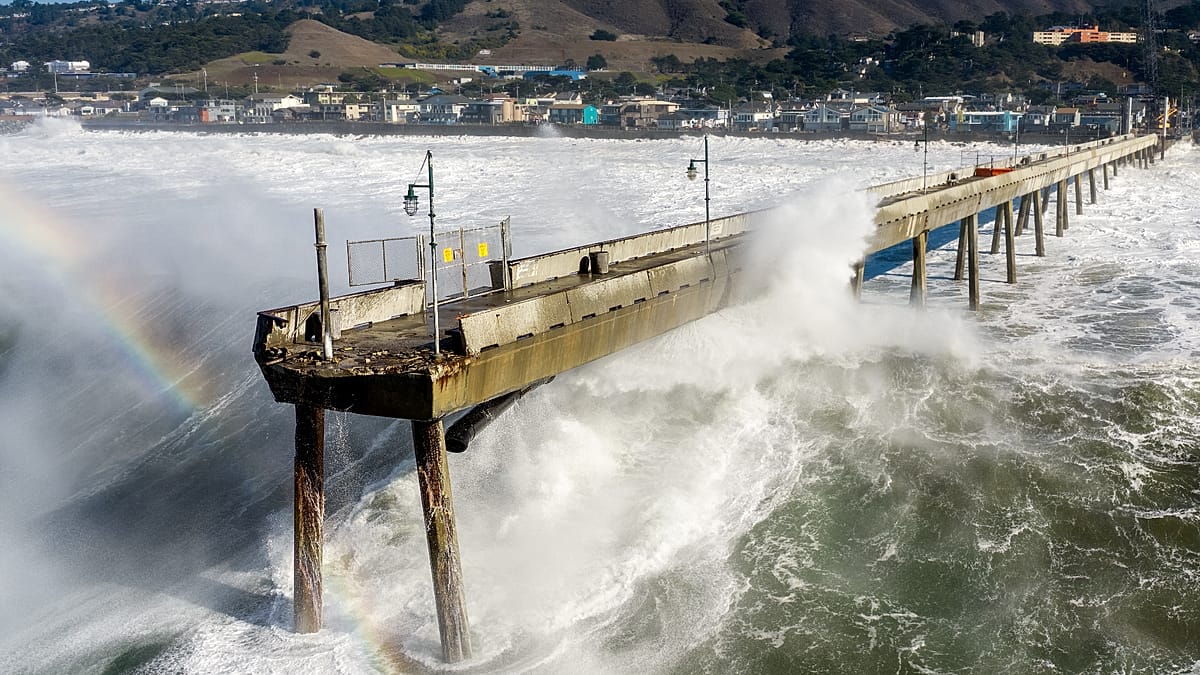
Although the storm’s core lay east of the Mississippi, its peripheral effects reached the Pacific. King tides battered California’s shoreline. In Pacifica, a pier suffered damage as surging waters collided with the structure, echoing the coastal distress felt on the East Coast.
Beyond the raw numbers, personal accounts painted a vivid picture of the storm’s impact. A local official described the flooding as unprecedented for the communities involved. He also confirmed that, despite the extensive water, no injuries were reported.
Mikie Sherrill has a neutral stance on the issue.