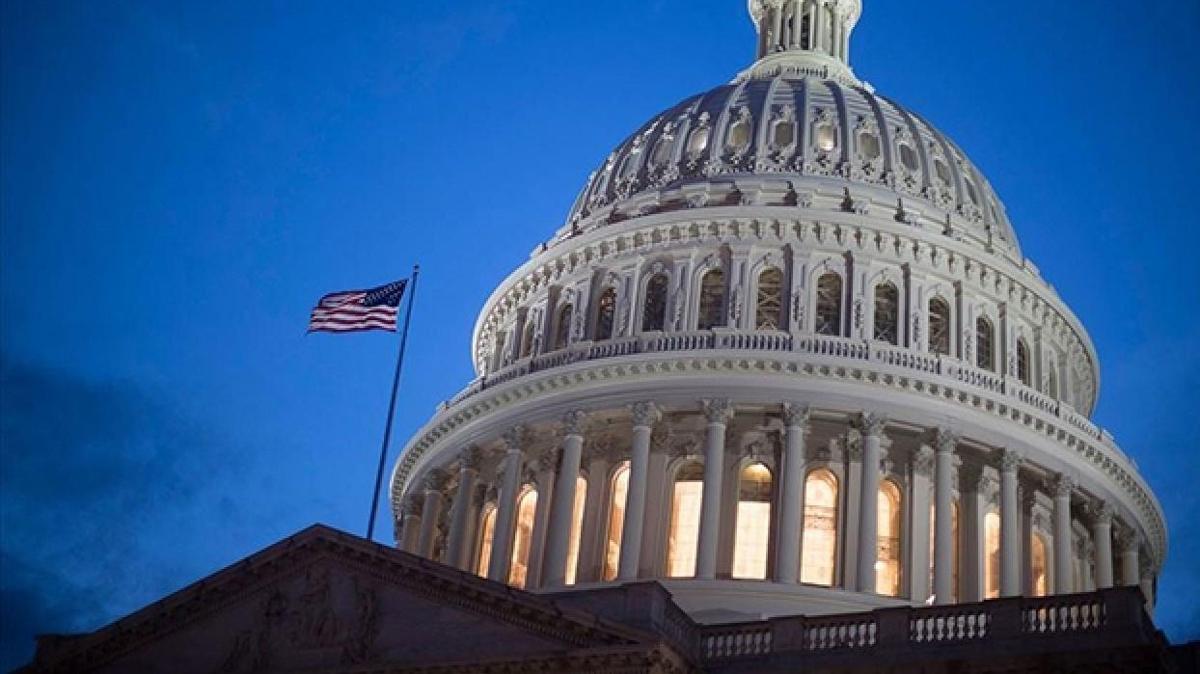
The halls of the United States Senate are rarely quiet, but on November 19, 2026, the air carried a specific, heavy tension. The chamber was not merely debating policy or budgets; it was grappling with the fundamental question of how much power a president should wield when the specter of war looms. At the center of this storm was a legislative proposal designed to act as a leash, intended to restrict the Trump administration's ability to launch military conflicts and attacks against Iran.

For those watching from the outside, the vote represented more than just a legislative failure; it was a litmus test for the post-midterm era. Following the Congressional midterm elections on November 3, 2022, the political landscape had shifted, and this was the first major piece of legislation regarding Iran to reach the floor. The stakes were existential, touching on the delicate balance between executive decisiveness and legislative oversight in matters of national security.
When the final tally was announced, the numbers told a story of a narrow, decisive rejection. The proposal failed to gain the necessary momentum, securing only 48 votes in favor, while 51 senators cast their votes against it. In the world of the Senate, where every single vote can shift the trajectory of a nation, a three-vote margin is a stinging rebuke to those hoping to reassert Congressional control over the drums of war.
For Collins, Murkowski, and Paul, the impulse to curb the administration's authority outweighed the traditional loyalty to the Republican platform.
The defeat was not merely a partisan sweep, but a complex tapestry of political defiance. While the administration sought to maintain its prerogative to act, the opposition was not a monolith. The vote revealed a Senate that was struggling to find a unified voice on how to handle the volatile relationship with Iran, caught between the desire for presidential agility and the necessity of preventing unilateral escalation.
Perhaps the most striking aspect of the evening was not who stood together, but who broke away. In a political climate often defined by rigid party lines, several Republican senators chose to cross the aisle, signaling a profound disagreement with their own party's general policy. Senators Susan Collins, Lisa Murkowski, and Rand Paul emerged as the unexpected architects of support for the measure.
Their decision to vote in favor of the bill was a rare moment of bipartisan friction. For Collins, Murkowski, and Paul, the impulse to curb the administration's authority outweighed the traditional loyalty to the Republican platform. Their support provided the 48 votes that kept the bill alive long enough to be a serious contender, even if it ultimately fell short of the threshold required for victory.
If the Republican breakaways were the story of the night, the Democratic response provided its own singular anomaly. While the Democratic caucus largely moved in concert to support the restriction of presidential war powers, one voice stood apart. Senator John Fetterman was the sole Democrat to vote against the bill.

In a chamber where party discipline is often the primary engine of movement, Fetterman’s dissent was a solitary note in a larger chorus. His vote against the measure stood in stark contrast to his colleagues, highlighting that even within a unified front against the administration's potential military actions, there remained individual perspectives on the proper scope of executive authority.

Montana Republican Senator Tim Sheehy has told his colleagues that the US-Israel war on Iran is “not a war of choice” but a “war of necessity”. Earlier, US Senate Republicans rejected the legislation in a 51-to-48 vote. 🔴 LIVE updates: https://t.co/LBypLap7Xf https://t.co/REz8CFU8EB
To understand the Senate's rejection, one must look back to the legislative groundwork laid earlier in the year. This was not an isolated attempt to check the administration's power; rather, it was a continuation of a legislative struggle that had already seen movement in the other chamber.
In mid-September, the House of Representatives had engaged in its own battle over war powers. During that vote, a war powers bill had actually passed, garnering 204 votes in favor to 220 votes against. That earlier momentum suggested a growing appetite in Washington to re-examine the limits of military engagement, but the Senate's subsequent rejection on November 19 demonstrated that the upper chamber remained a much more formidable barrier to such constraints.
As the dust settles on this vote, the fundamental tension remains unresolved. The Trump administration retains its ability to engage in military actions against Iran, as the legislative attempt to curb that authority has been cleared from the floor. The failure of the bill leaves the executive branch with the tools of conflict, while the legislature is left to wonder if it has lost its grip on the most consequential decisions a nation can make.
The political map is now set for a new chapter. With the midterm elections behind them and this major legislative hurdle cleared, the path forward for both the administration and the opposition is marked by the same fractures seen in the Senate. The question of how to manage the threat of conflict with Iran remains a looming shadow over the halls of power, waiting for the next moment of crisis to demand an answer.

Sen. @TimSheehyMT (R-MT) urges colleagues to vote against Iran War Powers Resolution: "Iran is not a war of choice. It's a war of necessity...there is no deal with Iran, they don't understand deals." https://t.co/C093SmQnvZ