
On October 30, the stage was set for a Europa League group stage match that was never meant to take place in Batumi, Georgia. Originally scheduled to be held in Istanbul, the fixture between Turkish giants Beşiktaş and Israeli club Hapoel Beer Sheva was moved to Georgian soil following a request from Turkish authorities citing security concerns. It was a decision born of necessity, an attempt to create a controlled environment for a match that carried the weight of geopolitical friction long before the players even took the pitch.
Even before the first ball was kicked, the atmosphere was thick with unease. The pre-match ceremony served as an early indicator of the divide. In a striking display of tension, the Beşiktaş players declined to participate in the traditional handshake with their opponents. Captain Orkun Kökçü offered handshakes only to the match officials, leaving the Hapoel Beer Sheva players standing without the customary gesture of sporting respect. This was not an isolated moment of friction; prior to kickoff, police were already forced to respond to a Beşiktaş supporter who was displaying a Palestinian flag, a signal that the stadium was a powder keg of political expression.
For the first quarter of the match, the scoreboard remained a silent, scoreless 0-0. The players moved through the technical rhythms of the game, but beneath the surface, the temperature was rising. The disruption did not stem from a goal or a controversial refereeing decision, but from a human confrontation on the pitch.
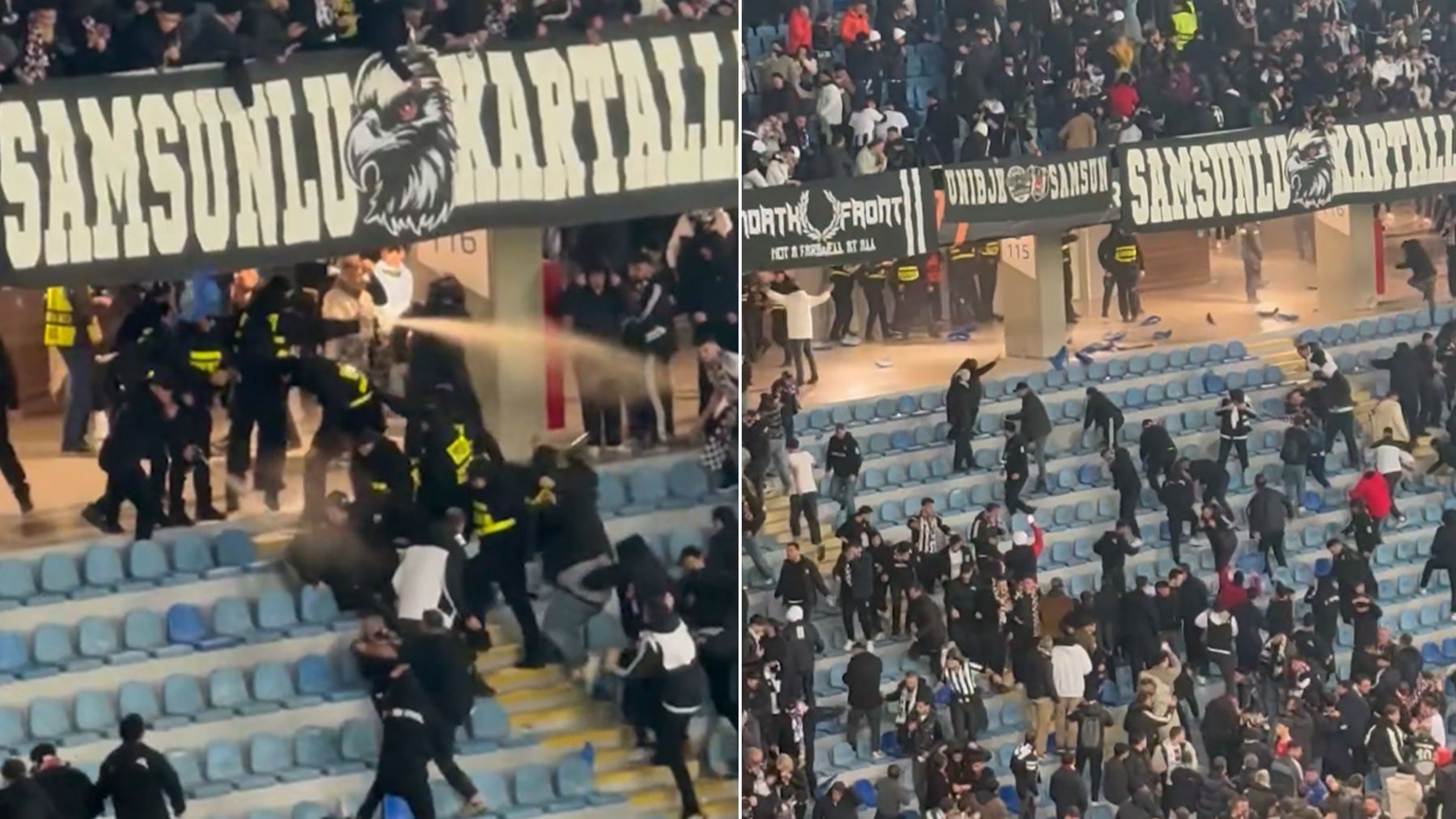
As the confrontation involving Özcan unfolded, the tension in the Beşiktaş supporters' section boiled over into open riot.
In the 27th minute, the match reached a breaking point. Beşiktaş midfielder Salih Özcan became embroiled in a dispute with members of Hapoel Beer Sheva’s coaching staff and their substitutes. What began as a localized confrontation between a player and the opposing bench quickly acted as a catalyst, rippling through the stands and transforming a sporting contest into a scene of civil unrest.
As the confrontation involving Özcan unfolded, the tension in the Beşiktaş supporters' section boiled over into open riot. The discipline of the match evaporated as fans began breaking and throwing seats from their sections. The organized structure of the Europa League fixture was replaced by a frantic, unpredictable energy that the officials could no longer contain.
The violence was not merely symbolic or destructive to the stadium infrastructure; it carried physical consequences. Amid the chaos of flying seats and shouting crowds, the severity of the situation was punctuated by the sight of one individual being carried away on a stretcher. The referee, faced with a stadium that had lost its sense of order, was left with no choice but to blow the whistle and suspend the match.
When the whistle blew to halt play, the score stood at 0-0. The match, which had been moved across borders to ensure safety, ended in a state of total suspension. The very security measures intended to facilitate the game—the relocation to Batumi and the heavy police presence—could not prevent the eruption of violence triggered by the friction between the players and the bench.
What was meant to be a night of continental football ended in a vacuum of uncertainty. The suspension left the tournament standings in limbo and the spectators in a state of disorder, marking a dark chapter for the group stage where the lines between the pitch and the political world became indistinguishably blurred.