
For months, the pressure on Tehran was defined by the gray hulls of warships and the quiet patrol of international waters. On April 13, 2026, the United States initially imposed strict maritime restrictions on Iranian ports and oil terminals, embarking on a high-stakes campaign to strangle the Iranian regime's primary financial lifeline. By squeezing maritime choke points, military strategists calculated they could cut off the flow of crude oil that funds Tehran's military apparatus and foreign proxy networks.

That strategy bore immediate, tangible results. U.S. military officials claim the offshore campaign successfully prevented approximately $25 billion worth of crude oil exports since its implementation in April 2026. Yet as the waters grew increasingly hostile to contraband tankers, American military planners realized that clamping down on ocean lanes was only half the battle. To truly isolate the Iranian economy and halt its military supply lines, the enforcement umbrella would have to move onto dry land.
The maritime campaign itself relied on aggressive, unyielding enforcement. Since July, enforcement actions by U.S. forces resulted in the redirection of 147 compliant commercial vessels that chose to turn back rather than breach the blockade. But not every ship acquiesced without a fight. Five merchant ships were disabled after refusing to comply with directives, bringing the total number of commercial vessels affected by the effort to more than 150.
The operational brain of this ambitious land blockade does not reside in a dusty border outpost, but thousands of miles away in Florida.
The willingness to enforce the blockade with hard power was demonstrated again on November 8, 2026, when U.S. military aircraft targeted and disabled a commercial cargo vessel in the Gulf of Oman after it failed to comply with blockade orders. The strike served as a stark reminder of the risks involved for mariners attempting to run the blockade, even as the focus of the broader containment strategy began to shift.

BREAKING: 🚨🚨🚨🚨🚨🚨🚨🚨🇺🇸🇮🇷 #US Forces Mass Near Iran NYT reports thousands of US troops aboard 12+ ships are ready for potential major combat operations against #Iran under Trump’s orders https://t.co/Bf0wie2fvA
Recognizing that maritime pressure naturally pushes illegal trade toward overland corridors and regional bodies of water, U.S. strategy officially crossed the shoreline. U.S. Central Command announced the creation of Task Force Iron Gate, a specialized military unit designed to expand the blockade strategy from ocean channels directly to land borders and the Caspian Sea.
The objective of this new unit is explicit: follow and interrupt the movement of advanced weapons systems, dual-use technologies, sanctioned material, and illegal revenue streams crossing Iran's terrestrial frontiers. By extending the blockade into these land routes and northern waters, U.S. strategists aim to disrupt the flow of critical components that allow Tehran to rebuild weapons factories, replenish its military stockpiles, and finance regional terrorism.
The operational brain of this ambitious land blockade does not reside in a dusty border outpost, but thousands of miles away in Florida. On November 7, 2026, Admiral Brad Cooper, chief of U.S. Central Command, officially ordered the formation of Task Force Iron Gate. The unit was formally established the following day, operating directly out of CENTCOM headquarters in Tampa.
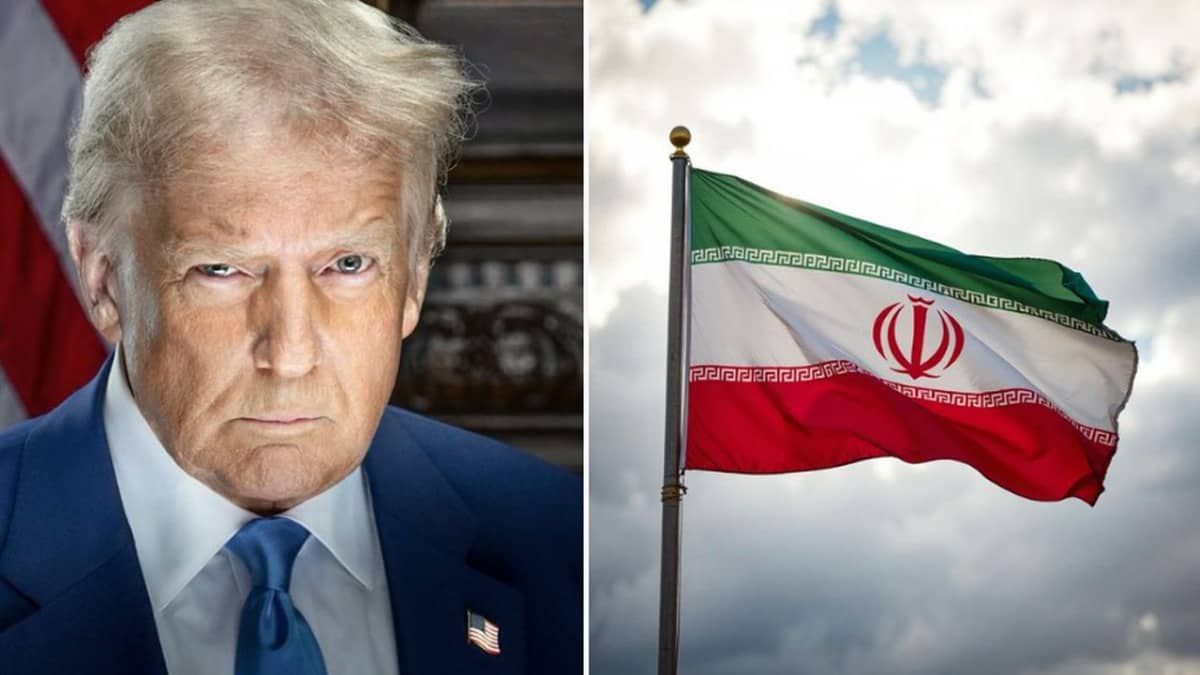
Despite its expansive mandate, the team running Task Force Iron Gate is remarkably lean. The specialized group consists of a team of approximately 20 military and civilian personnel. This compact core of analysts and officers is tasked with tracking complex trade networks, monitoring border traffic, and coordinating efforts to sever Tehran’s access to critical infrastructure and grey-market technology.
"Task Force Iron Gate will reinforce the success of our ironclad blockade against Iran at sea," declared Admiral Brad Cooper, framing the land-based initiative as a direct continuation of the maritime successes achieved since April.
The creation of Task Force Iron Gate marks a subtle but significant shift in how the United States approaches confrontation with Iran, shifting the focus from purely kinetic military strikes to systemic economic strangulation. Security analyst Michael Mulroy highlighted this strategic distinction when evaluating the new unit's mandate.
"Unlike Operation Epic Fury, which primarily focuses on military targets, I think these targets will be focused on economic and infrastructure targets, as part of this comprehensive plan to cut the regime off from its ability to fight and ability to fund itself," Mulroy explained.
By prioritizing economic targets alongside traditional defense assets, the U.S. strategy seeks to paralyze the financial architecture supporting the Iranian regime. Depriving Tehran of dual-use technologies and illicit financial streams limits its capacity to sustain prolonged conflict or maintain its domestic defense manufacturing.
With Task Force Iron Gate now operational from Tampa, the United States has constructed a dual-track containment strategy spanning sea, land, and money networks. What began as a maritime blockade off Iranian ports on April 13 has evolved into a multi-domain campaign targeting every conduit of Iranian power.
As U.S. forces continue to patrol the waters of the Gulf of Oman and monitor the remote tracks along Iran's borders and the Caspian Sea, the space for Tehran to maneuver is shrinking. By pairing direct military enforcement at sea with targeted land-route disruptions, CENTCOM aims to ensure that the $25 billion already denied to the regime is only the beginning of a much larger economic squeeze.

Turkish President Recep Tayyip Erdogan has called for an end to tensions between Iran and the United States through diplomacy during a telephone conversation with US President Donald Trump, Anadolu reported. #Türkiye #IranUSRelations #DonaldTrump https://t.co/G2ec7Hh2LQ