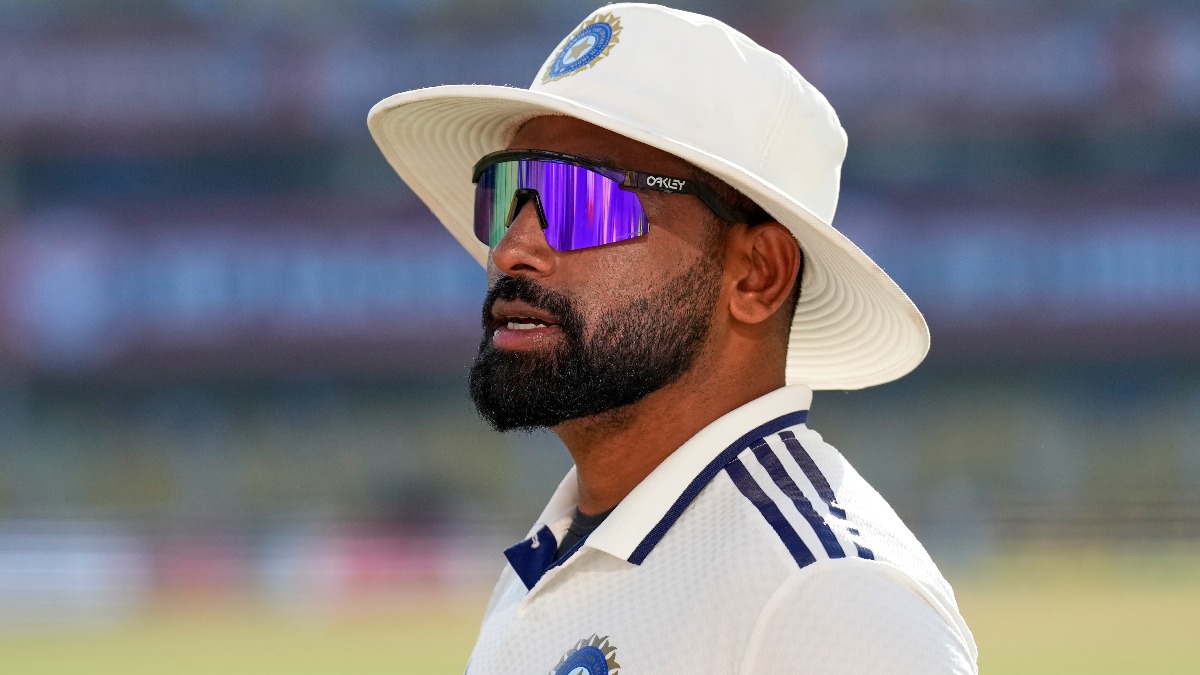
When a team sheet lands on a captain's desk before a crucial international fixture, it usually represents a quiet culmination of tactical planning, net sessions, and physical assessments. But on the day of the second Test match between India and New Zealand at Hagley Oval in Christchurch, the announcement sent immediate shockwaves through the cricketing establishment. For the second successive time in the series, senior Indian pacer Mohammed Siraj was left out of the playing XI. Instead, young pacer Gurnoor Brar was given a Test debut.
What made the decision so baffling to outside observers was the glaring disconnect between management's public praise and private selections. Just days prior, bowling coach Morne Morkel had explicitly praised Siraj as a world-class bowler, noting that he was bowling well in the nets. Yet, despite holding a strong record in the current World Test Championship cycle, the pacer was forced to watch from the sidelines.
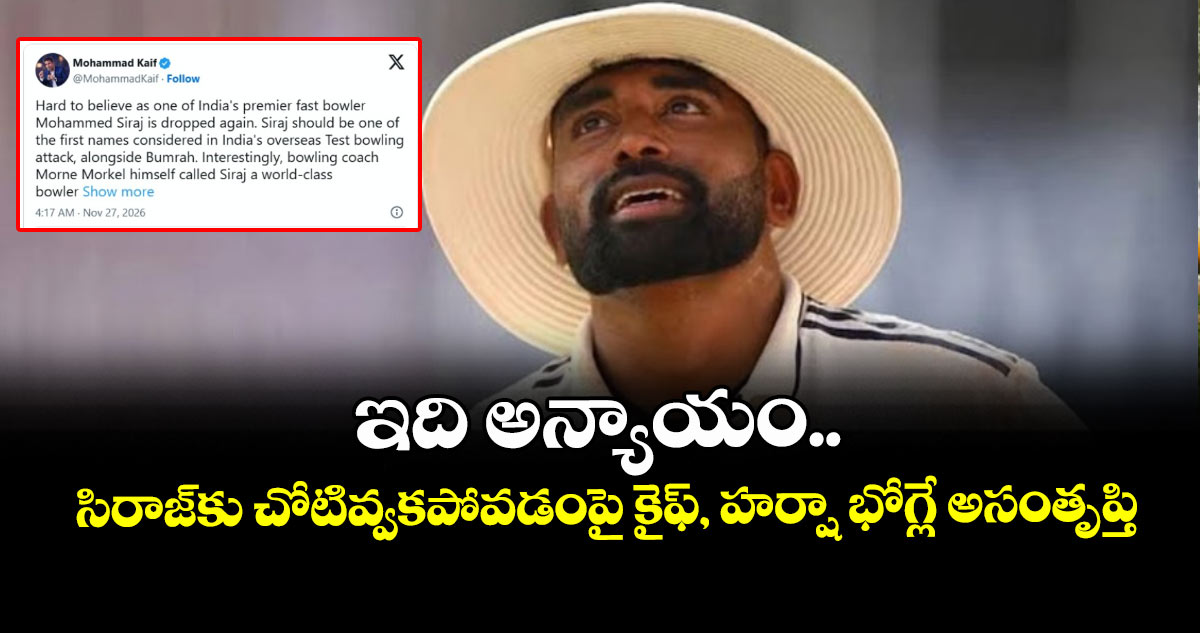
This contradiction did not go unnoticed by former cricketers who monitor the team's trajectory. Former player Mohammad Kaif took to social media to voice his absolute bewilderment over the management's direction. Taking to X, Kaif articulated what many fans were feeling across the subcontinent.
Adding analytical weight to the criticism, prominent commentator Harsha Bhogle also expressed deep dismay over how the situation had been handled.
Kaif's public critique cut straight to the heart of the matter, challenging the logic of sidelining a seasoned campaigner who has repeatedly proven his mettle in foreign conditions. Expressing his disbelief on X, Kaif captured the mood of a bewildered fanbase.
As Kaif bluntly noted: "Hard to believe as one of India's premier fast bowler Mohammed Siraj is dropped again. Siraj should be one of the first names considered in India's overseas Test bowling attack, alongside Bumrah. Interestingly, bowling coach Morne Morkel himself called Siraj a world-class bowler and said he was bowling well." The post amplified a growing chorus of discontent aimed squarely at the team management, turning a tactical debate into a referendum on fairness and player valuation.
Adding analytical weight to the criticism, prominent commentator Harsha Bhogle also expressed deep dismay over how the situation had been handled. Bhogle pointed out the alarming reality of Siraj's descent within the national setup, noting that the pacer had seemingly fallen to the 6th-ranked fast bowler in India.
For experts who track the granular details of player workloads and international cycles, this drop in status made little sense. How could a bowler integral to the team's recent successes find himself tumbling down the pecking order so rapidly, especially when the team had difficult conditions to contend with? The handling of his records and ranking felt, to many analysts, erratic and disconnected from his actual on-field productivity.
As the broadcast cameras panned across the venues and dugouts, the human element of the exclusion took center stage. During the live telecast, former India spinner Murali Kartik offered a poignant window into the psychological toll such a snub takes on a passionate athlete. Kartik speculated openly on live TV about whether the veteran fast bowler was emotional about being left out, highlighting the player's fierce dedication to the game.
"Is he crying? Because he is an emotional person. Some people are fine even when they are dropped, but some really want to play. They don't care if they have pain in their feet or a headache; they will give it everything. Siraj is like that," Kartik observed during the live broadcast, painting a vivid picture of a competitor whose identity is entirely bound up in representing his country.
Kartik did not stop at the immediate Test snub, expanding his analysis to a broader pattern of selection that suggested Siraj had been sliding out of favor across formats for some time. The commentator pointed out that these wounds accumulate over a long international career, making each subsequent exclusion harder to swallow.
Elaborating on the player's state of mind, Kartik added: "Sometimes you hide the hurt you are feeling because he was dropped even in the ODIs. Even against the West Indies, he played only as an afterthought. This hurts a player. Why even pick him in the squad and take him to New Zealand if you feel his form isn't good or if he isn't bowling well in the nets?"
As the debate raged on through television studios and digital columns, legendary figures also weighed in to lend their perspective. Sunil Gavaskar joined the chorus of voices questioning the decision to exclude Siraj, adding his substantial authority to the discussion surrounding team selection.
With supportive stances echoing from veterans like Gavaskar, Bhogle, Kaif, and Kartik, the narrative surrounding the team's overseas campaign shifted from a straightforward athletic contest into a complex examination of how modern management treats its emotional core.