
In the world of elite judo, victory is often a matter of leverage, timing, and the ability to maintain balance while an opponent attempts to upend you. For Teddy Riner, a man whose name is synonymous with dominance as a quintuple Olympic champion, the arena has shifted. The physical combat of the mats has been replaced by the ideological combat of French politics. On November 10, 2026, Riner stepped into a much larger ring, announcing his candidacy for the 2027 presidential election.

It was a move that sent immediate ripples through the French political landscape. Riner is not a career politician, but he is a figure of immense national stature. However, as he begins his ascent toward the Élysée Palace, he is finding that his greatest obstacle may not be a rival candidate, but a political label that has become increasingly difficult to shake: the shadow of Emmanuel Macron.
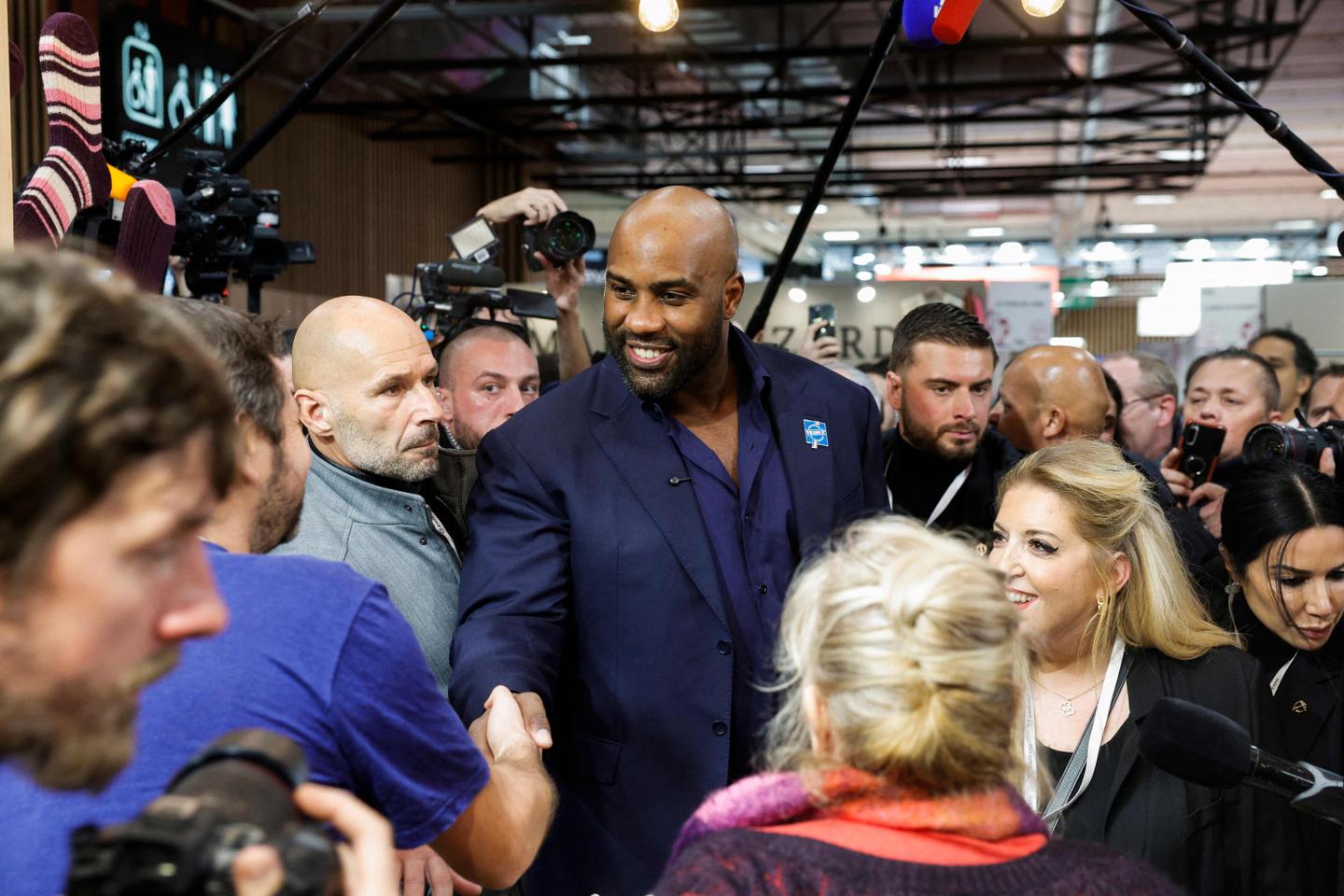
By November 14, 2026, the political friction began to manifest in public. While visiting the 'Made in France' fair, Riner found himself forced to address the growing perception that his candidacy was merely an extension of the current administration's influence. The President had offered his congratulations on Riner's entry into the race, a gesture that, in the polite world of diplomacy, might be seen as supportive. To Riner, however, the sentiment felt like a trap.
Riner faces persistent accusations that his platform is, in reality, a vehicle for Macronist politics, despite his vocal denials.
"I am not a macronist," Riner declared, drawing a sharp line between his personal ambitions and the current presidency. He did not mince words when describing the President's public support, characterizing the congratulations as "a poisoned kiss." It was a striking metaphor, suggesting that while the gesture appeared benevolent on the surface, it carried an underlying toxicity intended to bind Riner to the existing political establishment.
This distinction is vital to Riner's strategy. He has positioned himself within a political vacuum, claiming to stand "neither from the right nor from the left." In the traditional binary of French politics, this middle ground is often a place of intense scrutiny. Riner faces persistent accusations that his platform is, in reality, a vehicle for Macronist politics, despite his vocal denials.
To navigate this, Riner is attempting to build a platform that transcends the old divisions. While he maintains his independence from the current administration, he has proposed reforms that some analysts suggest could find significant resonance with the center-right. The challenge lies in proving that his brand of centrism is a distinct philosophy rather than a mere rebranding of the status quo.
Not everyone is convinced that Riner’s "neither left nor right" stance is a viable or even a moral path forward. As Riner was making his stand at the 'Made in France' fair, other political figures were already framing his ideological positioning as a failure of governance.
Raphaël Glucksmann, a prominent political figure who was visiting the Saarland region on November 14, 2026, offered a scathing critique of this specific brand of politics. Glucksmann argued that the pursuit of a position that is "neither of the right nor of the left" has not resulted in a balanced center, but has instead facilitated a policy framework built upon injustice. For critics like Glucksmann, the attempt to avoid ideological commitment is not a strength, but a way to bypass the fundamental responsibilities of governance.
For Riner, the campaign is becoming a dual struggle. He must fight to win the trust of a fractured electorate while simultaneously fighting to prevent his identity from being swallowed by the very office he seeks. The "poisoned kiss" he described represents the central tension of his candidacy: the danger of being embraced by the current power structure only to be defined by it.
As the 2027 election approaches, the question remains whether a champion of physical discipline can master the much more fluid and treacherous discipline of political identity. Riner has made it clear that he intends to fight his way out of the Macronist shadow, but in the high-stakes world of French elections, the struggle to remain unaligned may be the hardest match of his life.