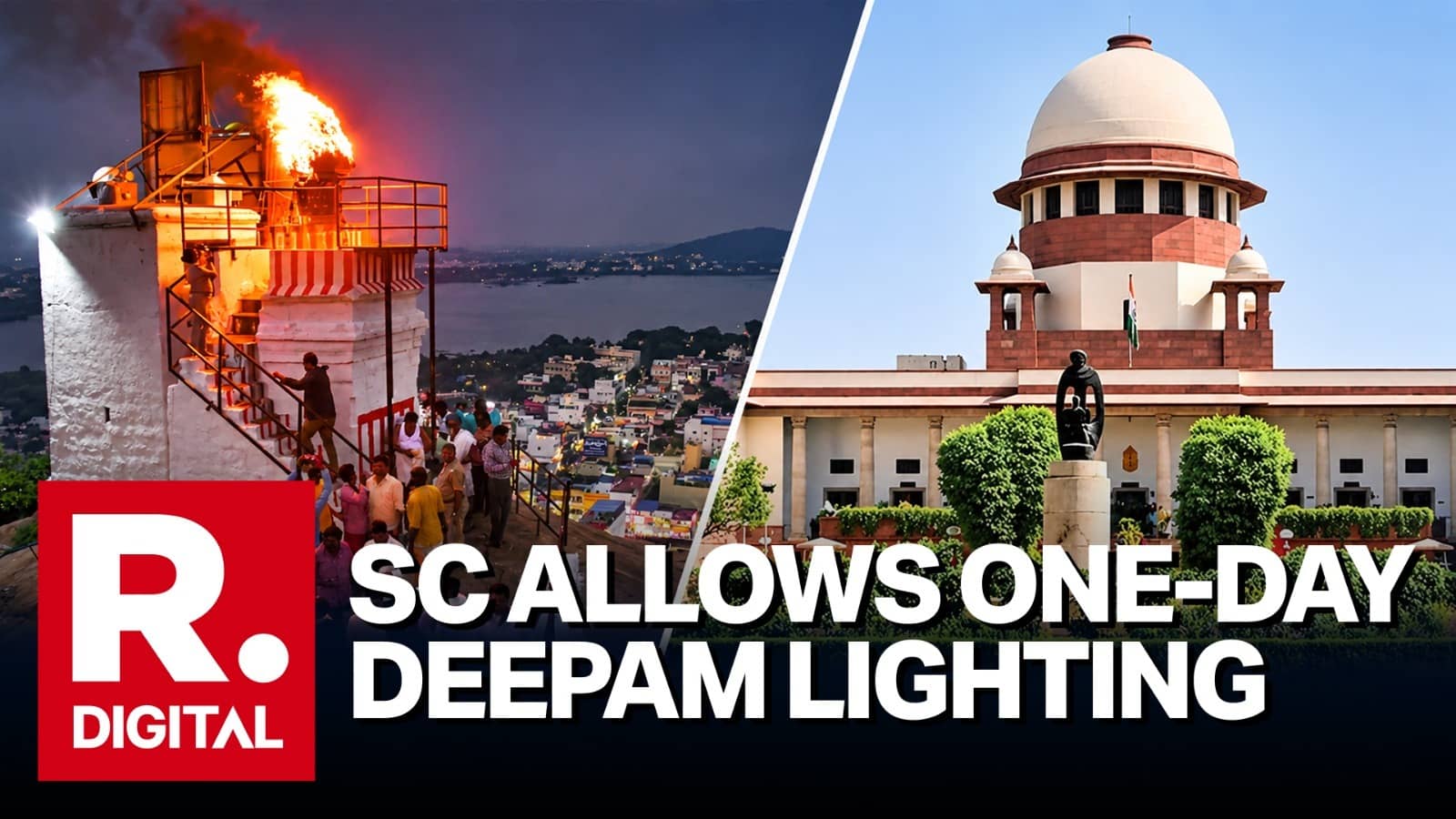
The stone pillar stands at the summit of Thiruparankundram Hill in Madurai, a silent witness to a dispute that has dragged on for years. At its base lies a dargah, a shrine dedicated to a Sufi saint, while the pillar itself is the focal point for a Hindu festival known as Karthigai Deepam. For devotees, the lighting of the lamp at this specific pillar is not just a ritual; it is a claim of religious space. For the custodians of the dargah, it is an intrusion.

The tension between these competing claims reached a boiling point in January 2026. The Madras High Court, in a judgment that split the community, ruled in favor of the temple administration, permitting the lighting of the Karthigai Deepam at the Deepathoon pillar. The decision was a victory for the temple, but it sparked immediate outrage among those who worship at the dargah below. The matter was taken to the Supreme Court, where the arguments grew increasingly complex, touching on the very definition of religious freedom in a secular democracy.
By November, the Supreme Court had to make a difficult choice: allow the festival to proceed, potentially inflaming tensions, or halt it entirely, risking a religious grievance that might be impossible to soothe later. The Court chose a middle path, one that is as narrow as it is significant.
The Madurai District Collector has been given the authority to decide the size and composition of the team that will perform the ritual.
A bench of Justices Aravind Kumar and Vipul M Pancholi granted permission for the lighting of the Karthigai Deepam on November 24, 2026. This permission, however, comes with a set of strict conditions. It is a one-time interim arrangement, a temporary pause in the larger legal war. The Court emphasized that this permission does not constitute an endorsement of the Madras High Court’s January 6, 2026 judgment, which remains under appeal. The Court stayed the relevant observations in the High Court’s findings concerning the present appeals until further orders.

#Prime5 with @GargiRawat | Supreme Court Allows Karthigai Deepam At Thiruparankundram https://t.co/p9iZsYYUEw
To ensure this one-time event does not descend into chaos, the Supreme Court has placed a heavy burden of oversight on the local administration. The Madurai District Collector has been given the authority to decide the size and composition of the team that will perform the ritual. This decision will be made in consultation with the temple Executive Officer, the Archaeological Survey of India (ASI), and the Madurai Police Commissioner.
Security is to be provided by the Madurai Police, with the potential for assistance from the Central Reserve Police Force (CRPF). The Court has also directed the parties involved to file counter-affidavits within six weeks. The appeals themselves are scheduled to be listed for hearing in the second week of January 2027, with pleadings to be completed by then.
The Supreme Court’s order is careful to avoid setting a precedent. It observed that the batch of proceedings raises substantial questions concerning competing religious claims and the scope of religious freedom under Articles 25 and 26 of the Constitution. These articles, which guarantee the freedom of conscience and the right to freely profess, practice and propagate religion, are at the heart of the dispute.
The Court clarified that the interim arrangement is based on the immediate circumstances of the festival's timing and does not constitute a precedent on the religious nature of the Deepathoon. It stated that the present arrangement does not proceed on any finding that the stone pillar is or has historically been a place of customary religious observance, nor does it determine whether the lighting of the lamp at the said location constitutes an essential religious practice or whether any individual, institution or denomination possess any enforceable right in that regard.

The Supreme Court on Friday (November 20, 2026) allowed the lighting of the lamp, as a “limited one-time arrangement”, on the ‘Deepathoon’ at the Thirupparankundram Hill on Karthigai Deepam day (November 24, 2026). ✍️@kdrajagopal https://t.co/9TKOOyl7Qx
The Supreme Court has allowed the opportunity to perform the ceremony on that particular day, if denied, cannot be restored by any subsequent adjudication. This pragmatic approach acknowledges the emotional weight of the festival while deferring the final judgment on the constitutional questions to a later date. The lamp will be lit on November 24, but the battle for the hilltop is far from over. The Supreme Court has bought time, but it has not bought peace.