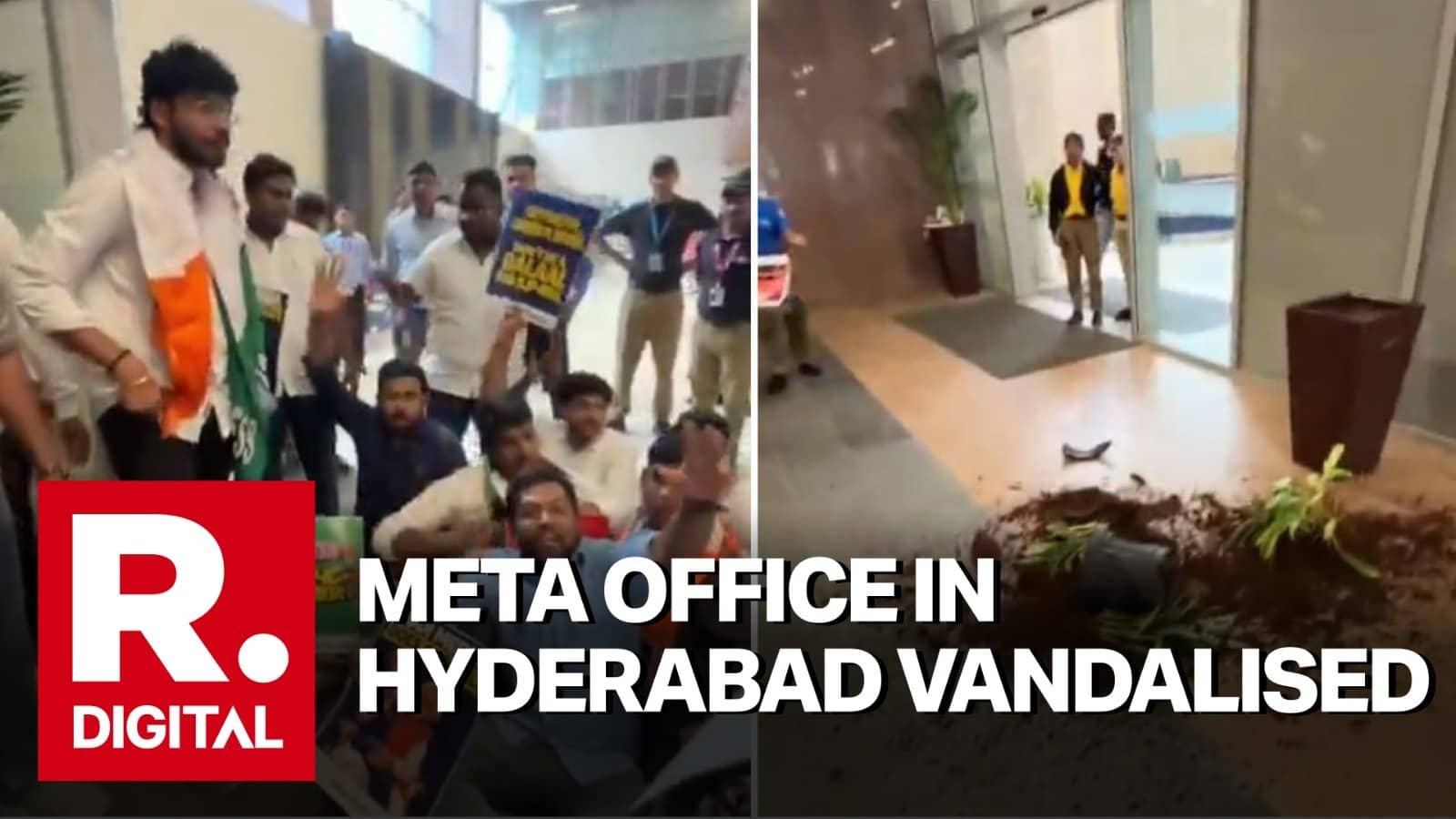
On a Friday in late November 2026, the quiet professional atmosphere of the Sky View complex in Raidurgam, Hyderabad, was shattered by a sudden surge of political energy. What began as a demonstration quickly transformed into a scene of chaos and confrontation. Approximately 25 workers, carrying placards and driven by a specific grievance, descended upon the premises of Meta, the parent company of platforms like Facebook and Instagram. The protest was not merely a symbolic gesture; it was a physical manifestation of a deepening rift between political actors and the digital gatekeepers who control the flow of modern discourse.

During the demonstration, property was damaged as protesters staged a sit-in, turning a corporate office complex into a theater of political unrest. The tension reached a point where law enforcement intervened, resulting in the preventive custody of 21 Youth Congress workers. While the police eventually released these individuals after they provided sureties, the incident left a lingering sense of volatility in the air, marking a significant moment in the intersection of technology and political activism in India.
The catalyst for this confrontation was not a policy change or a new feature, but a perceived act of digital erasure. The Indian Youth Congress alleges that Meta had imposed restrictions on the social media accounts of key figures within their organization. Specifically, the party pointed to the accounts of national president Uday Bhanu Chib and national in-charge Manish Sharma. In an era where social media serves as the primary town square for political mobilization, the restriction of a leader's account is more than a technical glitch; it is a silencing of a political voice.
The incident in Hyderabad was not an isolated outburst, but a calculated move to force a response from a global tech behemoth.
For the Youth Congress, these restrictions are not viewed as neutral enforcement of community standards. Instead, they see a pattern of targeted suppression. The protesters, led by Telangana Youth Congress president Jakkidi Shiva Charan Reddy, voiced a specific and heavy accusation: they alleged that Meta was acting under the influence of the BJP and the RSS. By framing the issue this way, the party is suggesting that the algorithms and moderation policies governing digital life are being swayed by the political interests of the ruling establishment.
As the protest unfolded, the legal and physical boundaries of the Meta office became a central point of contention. While the scene was one of significant disruption, police officials provided a nuance to the scale of the trespass. They stated that no formal case had been registered against the demonstrators because the protesters had not actually entered the main office premises. They remained at the periphery, making their presence felt through damage to property and the sheer volume of the crowd, but the threshold of the inner sanctum remained uncrossed.
This distinction between a protest at the gates and an intrusion into the heart of the company creates a complex legal landscape. Without a formal complaint filed or a breach of the main office, the immediate legal repercussions for the 21 detained workers were limited. However, the political repercussions were far from contained. The incident in Hyderabad was not an isolated outburst, but a calculated move to force a response from a global tech behemoth.
Following the events in Hyderabad, the Indian Youth Congress did not retreat. Instead, they transitioned from physical protest to a formal, time-bound demand. The party issued a seven-day ultimatum to Meta, demanding the immediate restoration of the affected accounts. This demand was not limited to the senior leadership; the party called for the reinstatement of accounts belonging to opposition leaders, journalists, and influencers who have similarly faced restrictions.
This ultimatum serves as a bridge between local grievance and national strategy. By setting a strict one-week deadline, the Youth Congress has moved the conflict from the streets of Raidurgam to a countdown that Meta must acknowledge. The party has made its intentions clear: if these demands are not met within the seven-day window, they are prepared to escalate their tactics, warning of the possibility of nationwide protests across the country.
What we are witnessing is a fundamental struggle over the sovereignty of political speech in the digital age. When a social media platform restricts an account, it wields a power that was once reserved for states and censors. For the Youth Congress, the fight is about ensuring that these platforms do not become tools for political maneuvering by their opponents. They are demanding transparency and a return to what they perceive as a neutral digital environment.
As the seven-day window progresses, the eyes of the political landscape remain fixed on Meta. The outcome of this ultimatum will likely set a precedent for how political parties in India interact with global technology companies. Whether this results in a quiet restoration of accounts or a massive, country-wide wave of demonstrations remains to be seen, but the confrontation in Hyderabad has ensured that the conversation is no longer just about code and community standards—it is about power.