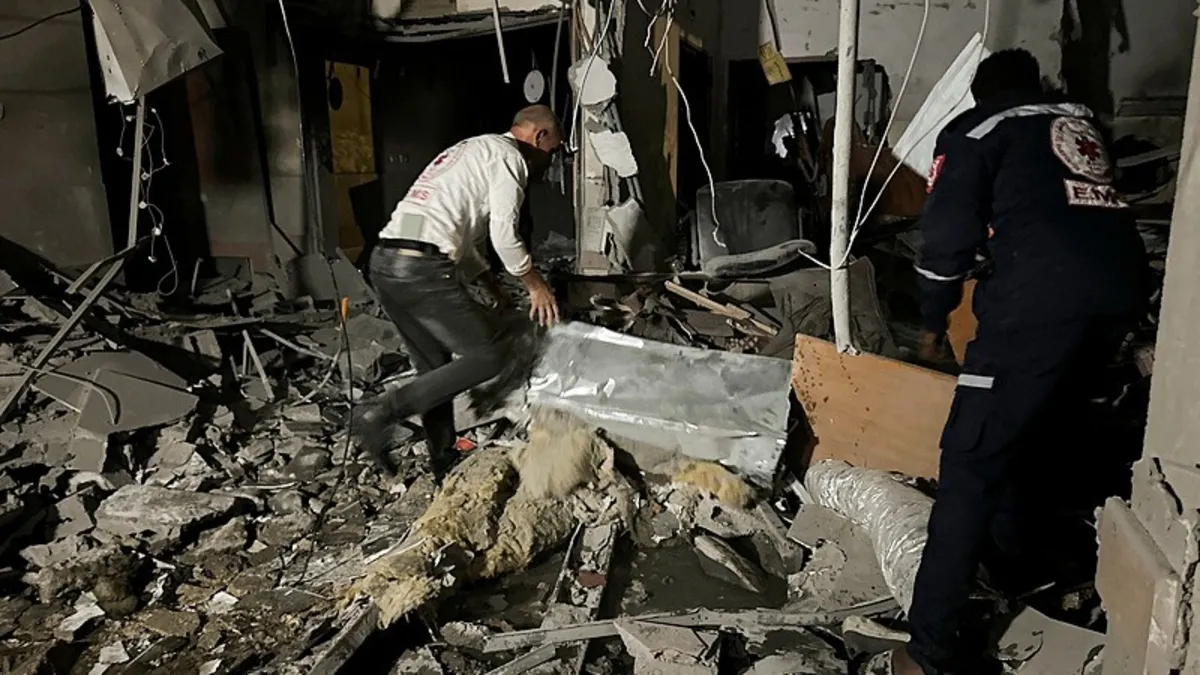
For those following the unfolding events in Gaza, the news from Nasr Hospital in Khan Younis on November 12th arrived with a grim familiarity. Reports emerged of an Israeli airstrike targeting the second floor of the hospital’s El-Yasin building. Khan Younis, a city in the southern Gaza Strip, has become a focal point in the conflict, and hospitals there are overwhelmed with casualties. Nasr Hospital, like many facilities in the region, was already operating under immense strain. The Palestinian Civil Defense, the primary emergency response organization in Gaza, reported the immediate aftermath: at least six people were killed, and twenty more were injured. The victims included both health workers and patients – those who had sought refuge within the hospital walls, and those dedicated to providing care within them.

This event is particularly fraught because hospitals, under international humanitarian law, are considered protected locations. They are meant to be sanctuaries, places where the wounded and sick can receive treatment without fear of attack. The very idea of a hospital being deliberately targeted raises profound questions about the conduct of warfare and the protection of civilians. The Palestinian Civil Defense described the strike as sudden, stating that Israeli forces issued no prior warning or evacuation notice. This lack of warning, they claim, contributed directly to the high number of casualties.
The impact of the strike wasn’t limited to the immediate loss of life. Hospital administration reported extensive damage to intensive care and surgical services. These are precisely the departments a hospital relies on to treat the most critically injured – the very patients who are most vulnerable in a conflict zone. The destruction of these services effectively diminishes the hospital’s capacity to respond to the ongoing crisis, exacerbating an already dire situation. The loss of intensive care beds, for example, means fewer patients can receive life-saving treatment for severe injuries. Surgical services are essential for addressing trauma resulting from airstrikes and other forms of violence.
Without a clear explanation, the strike is likely to be viewed through the lens of international condemnation.
Nasr Hospital, and facilities like it, are not simply buildings; they are lifelines. They represent the last hope for many Gazans caught in the crossfire. When those lifelines are severed, the consequences are devastating, not just for those directly affected by the attack, but for the entire healthcare system. The hospital’s administration has not yet provided a full assessment of the damage, but the initial reports paint a picture of significant disruption to essential medical services.

Israeli strike on a Gaza hospital kills 6 people, health authorities say https://t.co/ToAOK7chI2
In the immediate aftermath of the strike, a critical question hung in the air: what was the justification for the attack? As of the report, the Israeli military has not issued an official statement clarifying the purpose of the strike on Nasr Hospital. This silence has fueled speculation and concern, particularly given the sensitivity surrounding attacks on medical facilities. The lack of explanation stands in stark contrast to the international norms that require parties to a conflict to provide transparency and accountability for their actions, especially when civilian infrastructure is involved.
Without a clear explanation, the strike is likely to be viewed through the lens of international condemnation. The principle of distinction, a cornerstone of international humanitarian law, requires belligerents to differentiate between military objectives and civilian objects. Hospitals are unequivocally considered civilian objects. Targeting them directly, or failing to take adequate precautions to avoid harming them, can constitute a war crime.
This incident is not occurring in a vacuum. Throughout the conflict, there have been repeated concerns about the safety of healthcare facilities and personnel in Gaza. Hospitals have been overwhelmed with patients, facing shortages of essential supplies, and operating under constant threat of attack. The targeting of Nasr Hospital adds to a growing pattern that has prompted widespread criticism from international organizations and human rights groups.
The situation highlights the broader challenges of conducting military operations in densely populated areas like Gaza. The presence of civilian infrastructure, including hospitals, schools, and residential buildings, makes it incredibly difficult to avoid civilian casualties. However, international law places a clear obligation on belligerents to take all feasible precautions to minimize harm to civilians.

An Israeli airstrike targeting the Nasser Hospital in southern Gaza killed six people and wounded at least a dozen more, Gaza's Health Ministry said. https://t.co/nTU7gpLFS8
Israel has faced critical scrutiny for its military operations in Gaza. The strike on Nasr Hospital is likely to intensify this criticism, particularly given the lack of an official explanation from the Israeli military. The international community has repeatedly called for restraint and adherence to international law, but the situation on the ground continues to deteriorate.
As of now, the immediate aftermath of the strike on Nasr Hospital is still being assessed. The hospital is working to restore essential services, but the damage is significant. The lack of a statement from the Israeli military leaves many questions unanswered. The incident serves as a stark reminder of the immense challenges facing civilians in Gaza and the urgent need for a resolution to the conflict. The situation remains volatile, and the future of healthcare facilities in the region is uncertain. The international community continues to monitor the situation closely, urging all parties to respect international law and protect civilians.

6 Palestinian people have been killed by the israelis, including a 13 year-old child in a strike on the Yassin Medical Dept at Nasr Hospital in Gaza https://t.co/7OrKBlN82z