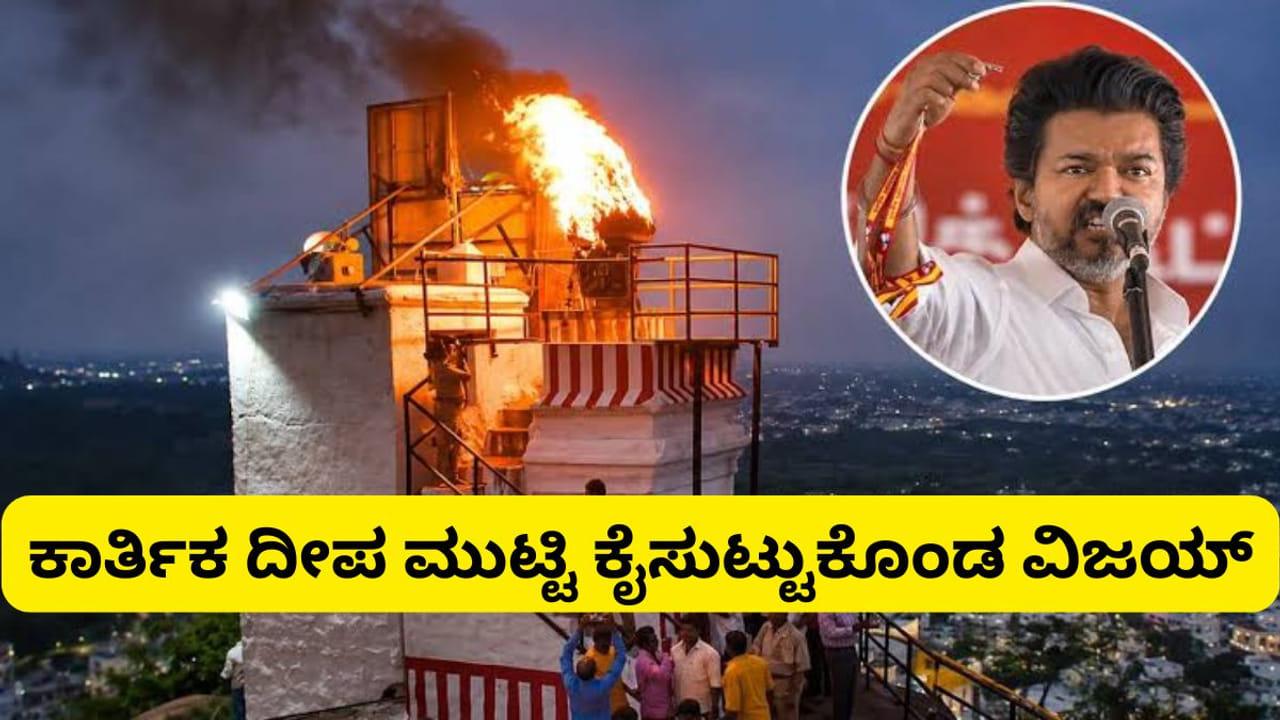
The serene slopes of Thirupparankundram hill, a site of religious significance in Tamil Nadu, became the unlikely battleground for a dramatic confrontation between state authority and judicial power. What began as a dispute over lighting a traditional lamp during the Karthigai Deepam festival escalated into a full-blown constitutional crisis, drawing the Supreme Court of India into an extraordinary rebuke of the state government.

On November 20, the Supreme Court issued a clear interim order: permission must be granted to light a lamp at the summit's 'Deepathun' during the upcoming Karthigai Deepam festival. This ancient festival, celebrated with great devotion in Tamil Nadu, centers around the lighting of lamps to symbolize the triumph of light over darkness. The Court's directive was straightforward and unambiguous, leaving little room for interpretation.
Yet, when the festival arrived on November 24, the Tamil Nadu government allegedly refused to comply with the Court's order. This refusal wasn't merely bureaucratic obstinacy—it triggered immediate protests and led to the filing of a contempt case against the state government and temple officials. The Arulmigu Subramanian Swamy temple, located at the site, found itself at the center of this constitutional storm.
The language used was deliberately harsh, reflecting the Court's profound displeasure with what it perceived as an unconstitutional challenge to its authority.
The Supreme Court, led by Justice Arvind Kumar, responded with unprecedented severity. The bench described the government's actions as nothing short of 'criminal contempt,' a serious allegation that suggests willful disobedience of a court order. The language used was deliberately harsh, reflecting the Court's profound displeasure with what it perceived as an unconstitutional challenge to its authority.
In a particularly pointed remark, the Court warned the government not to shed 'crocodile tears' while seeking leniency. This colorful idiom suggested that the Court saw any expressions of regret or appeals for mercy as insincere, given the government's alleged defiance. The message was clear: the Court would not tolerate what it viewed as posturing rather than genuine contrition.
The Court didn't stop at words—it took immediate action. The most significant directive was the transfer of security control of the entire Thirupparankundram hill to the Central Reserve Police Force (CRPF), effectively removing local police control. Additionally, the Court suspended the board of trustees of the Arulmigu Subramanian Swamy temple, indicating a loss of confidence in the temple administration's ability to comply with court orders.
The administration was given a clear directive: ensure arrangements for lighting the lamp were made by the very next day. This urgency underscored the Court's determination to see its orders implemented without further delay. The incident has raised profound questions about the relationship between state governments and the judiciary, particularly when religious traditions intersect with legal mandates.

The transfer of security control to CRPF and the suspension of the temple board represent extraordinary measures that highlight the Court's serious concerns about the state's commitment to upholding judicial orders. As the dust settles, the incident serves as a stark reminder of the delicate balance between religious tradition, state authority, and the rule of law in India's complex democracy.